Posts, pics, video and motivation on Travel Lifestyle, countries around the world! Addicted to adventure travel and photography, I'm on a mission to inspire your next journey with entertaining stories, beautiful images, fun travel videos, and useful tips.
This compact, creative shop-in-shop is a gallery, concept store and secret hair salon all in one. At the front of the sleek, white space, the Ninasagt gallery exhibits contemporary art and illustrations from internationally acclaimed artists such as Sara Andreasson, BD Graft and Olimpia Zagnoli. Behind the gallery, you’ll find curated lifestyle products and fashion pieces from up-and-coming designers – such as DAMUR and Odeur – in Not-a-Shop. To top off your look, make an advance appointment for a haircut at the hidden on-site two-chair salon.
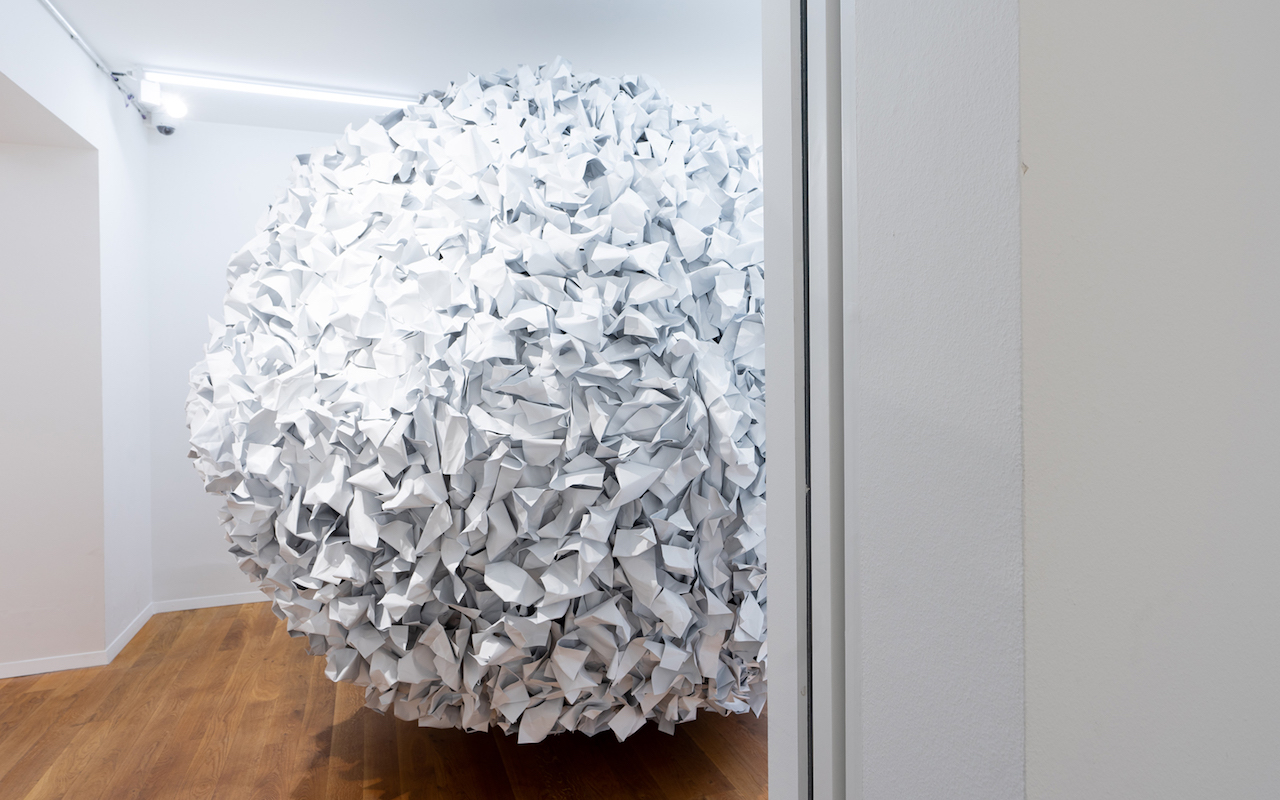
“Einmal ist Keinmal” by Daniele Sigalot, a conceptual artist
After the success of Anna Laudel’s first gallery in Istanbul, where she lived for almost two decades, she returned to her hometown earlier this year to open her second art space. Located close to the river Rhine at Mühlenstrasse 1, a creative hub since the 1960s, the bright, contemporary gallery showcases emerging Turkish and international artists through interdisciplinary art exhibits. On display until December is a solo exhibition – “Einmal ist Keinmal” (“Once is Never”) – by Italian conceptual artist Daniele Sigalot. The three floors of mixed-media installations explore the contrast between the nature of the materials Sigalot uses and the way they are perceived.
“Düsseldorf is a mixture of big city and small town. Shop designer clothes at the fancy Kö and visit a modern art exhibition at the K21. After that, drink a famous altbier (the local beer) at the traditional Uerige pub” – Mareike Peters, graphic designer
Firmly adhering to the ethos of buying less and choosing well, this spacious, modern concept store in the city centre stocks carefully chosen brands on seasonal rotations or flights. Catering to those with an eye for the innovative and sustainable, the store offers a choice of up to 20 lifestyle and clothing brands that aim to improve their customers’ way of life. Featuring sustainable Cologne-based fashion brand ARMEDANGELS, luxurious silk scarves from Berlin label MOCOMOCO and a range of innovative technological products, the autumn flight runs until 17 November, with the winter flight debuting on 23 November.
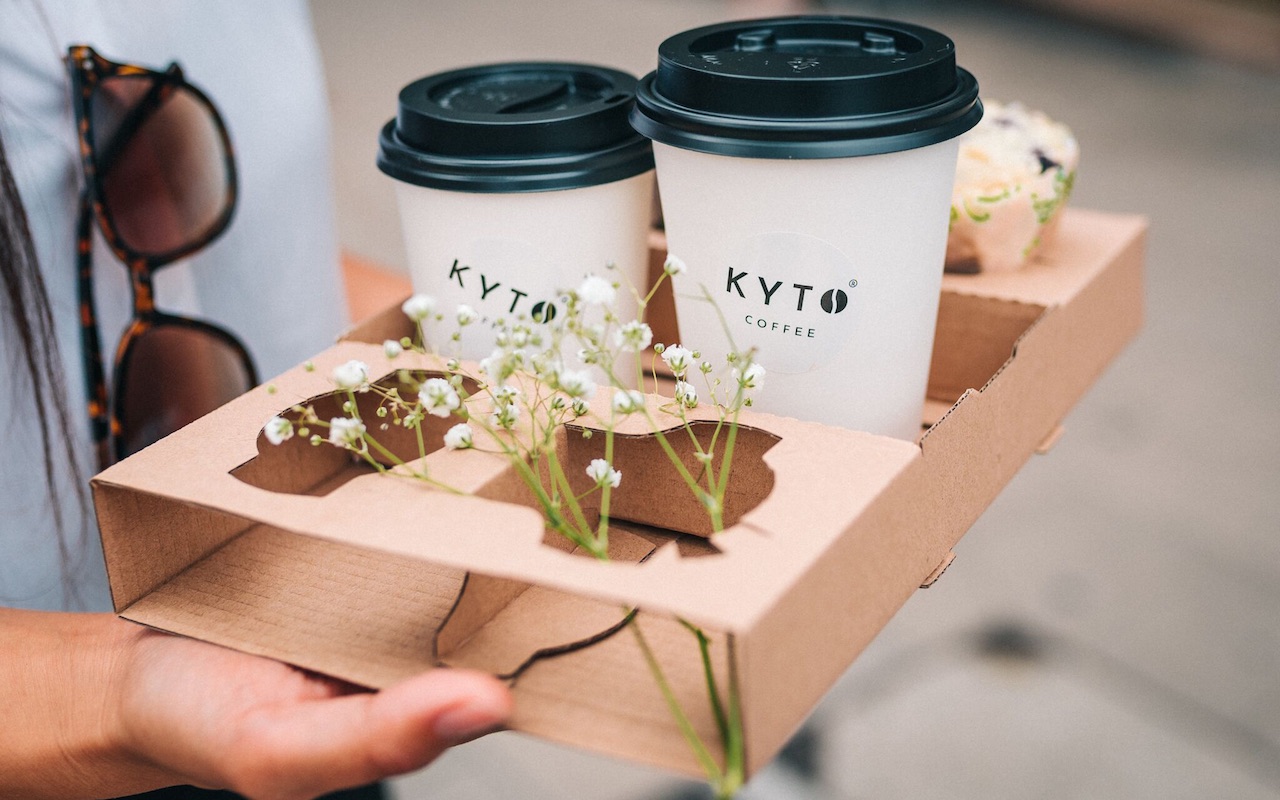
KYTO Coffee’s coffees come from local micro-roastery Schvarz Kaffee
Just outside the city centre, this small, contemporary café is an oasis of calm amid the noise and traffic of Am Wehrhahn. Order a hot drink and something sweet at the counter then head to the cosy space at the back to enjoy the relaxed atmosphere. The excellent coffees come from local micro-roastery Schvarz Kaffee, which creates speciality blends using sustainably sourced fair-trade beans. KYTO’s flat white uses a coffee blend developed uniquely for them – and it’s already legendary among Düsseldorf’s caffeine fiends. Different types of milk are available, and a selection of the sweet and savoury snacks are vegan.
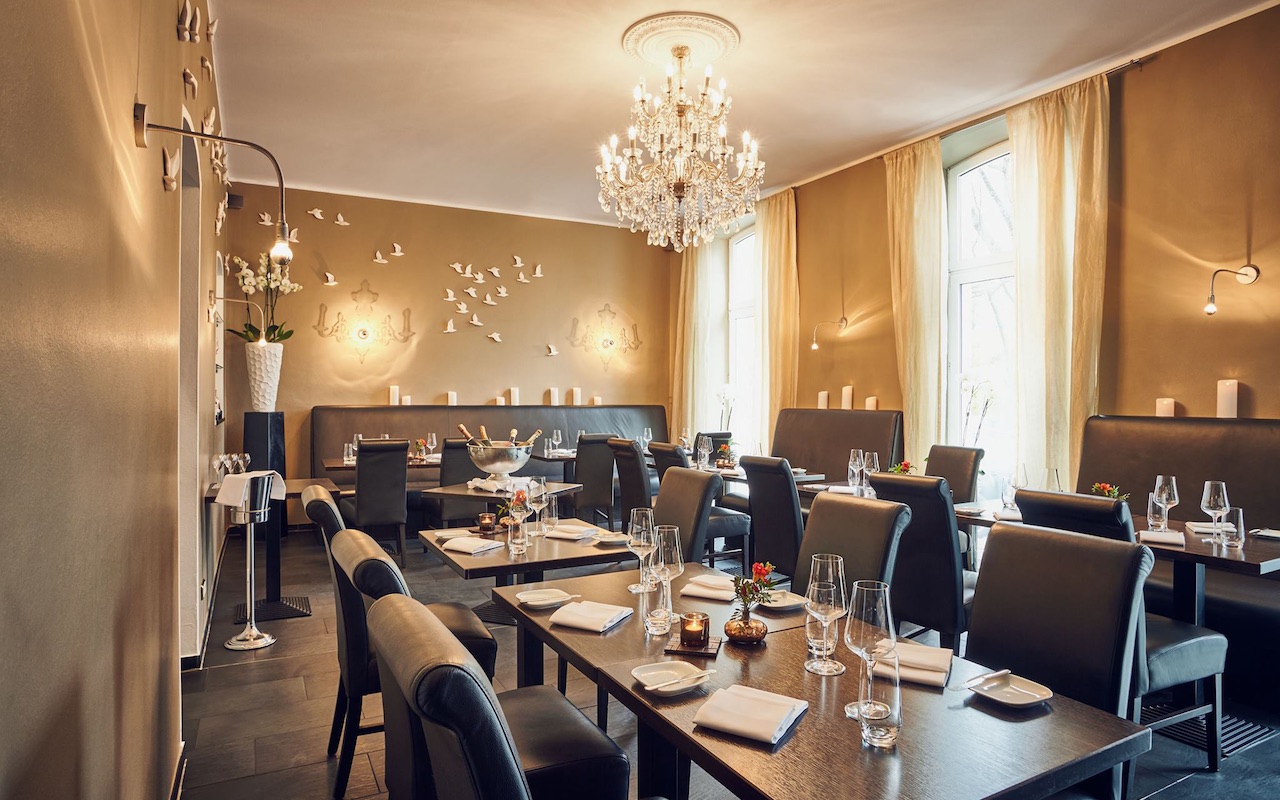
This cosy but stylish fine-dining restaurant in Düsseldorf’s cosmopolitan Pempelfort neighbourhood is the passion project of two long-time friends, Benjamin Arnswald and Hagen Wagner. Zweierlei offers a la carte German and southern European dishes as well as regularly changing menus of up to six courses. Both options feature creative twists on local specialities, such as the mashed celeriac with apple, onions and scallops – a refined version of Himmel und Ähd, a traditional regional dish of mashed potatoes, apple and black pudding. Sorbets, raw-milk cheeses and cocktails such as the classic German Hugo with fresh mint, elderflower and sparkling wine make for a delightful finish.
Visit Germany’s first major exhibition dedicated to the iconic French fashion designer, displaying 80 haute couture pieces from the 1960s and 1970s. Until 5 Jan 2020.
Nokogiriyama, also known as Mt Nokogiri is an interesting mountain to explore in Chiba prefecture. It’s a fun day trip from Tokyo with a ropeway, great views, hiking, a dose of culture, history, and Japans largest Buddha statue.
We’d had Mt Nokogiri on our tentative itinerary for our last couple of stays in Tokyo but for a variety of reasons, our plans hadn’t workout out. This time around, on a late spring visit, we decided the time was right.
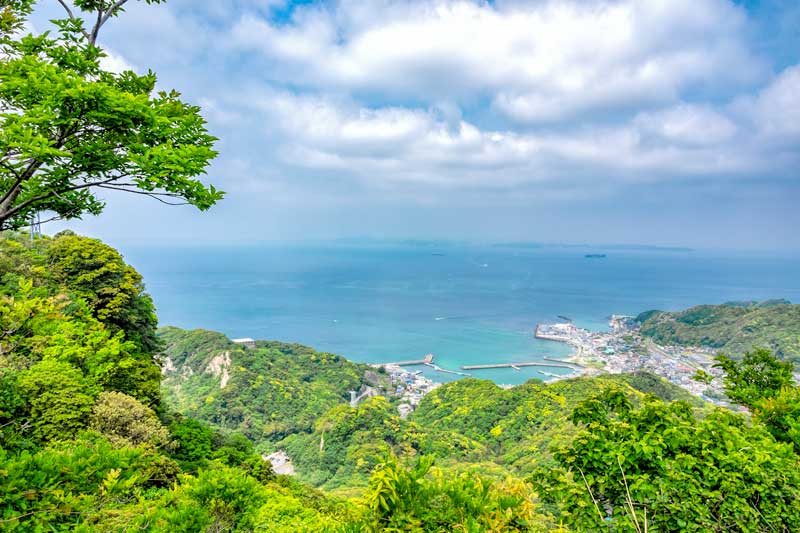
The weather was good but not as clear as we would have liked. You can get fabulous views from the mountain on the right day out across Tokyo Bay, the Boso Peninsula and as far as Mt Fuji. It’s an interesting destination slightly off the beaten path and one of our recommended days trips from Tokyo. I’d perhaps avoid a mid-summer visit when the climb could be very hot and humid but other than that it can be included in an itinerary for any season.
We had a free day in Tokyo with active JR Passes which made Nokogiriyama a very economical option. If the full JR pass doesn’t work for your itinerary you can use the SUICA card, individual tickets or something like the JR East Pass (Nagano / Niigata) which covers 5 days of travel in a 14 day period within the defined area.
From Tokyo to Nokogiriyama by direct train
If you are staying in central Tokyo and are heading out to Nokogiriyama on the weekend there is a direct JR Limited Express train. It’s called the Shinjuku Sazanami and will take around 90 minutes to travel direct from Shinjuku to Hama-Kanaya station. The Shinjuku Sazanami runs seasonally and on weekends but only a couple of times a day each way. The ticket price is Y3,870 one way with a reserved seat.
Other train and bus transport options
You can get to Hama Kanaya station and Mt Nokogiri from Tokyo station on other days and times using JR trains but it will take a little longer and involve at least one change of train along the way. Another alternative is to take either the Keisei or Nitto express bus from Tokyo station to Kisarazu station in Chiba which takes an hour then JR train from Kisarazu station to Hamakanaya Station will take an additional 40 minutes.
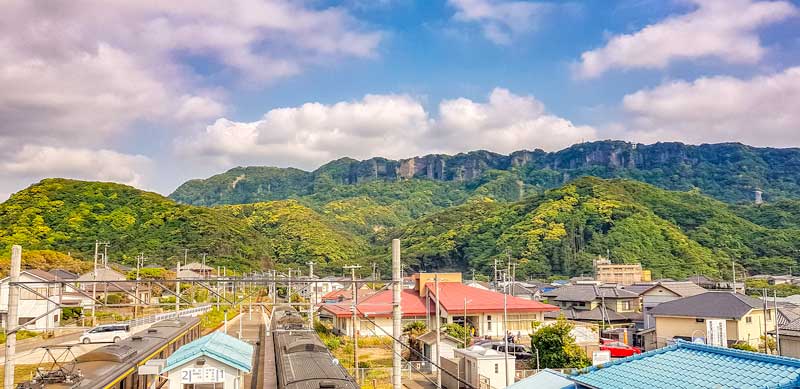
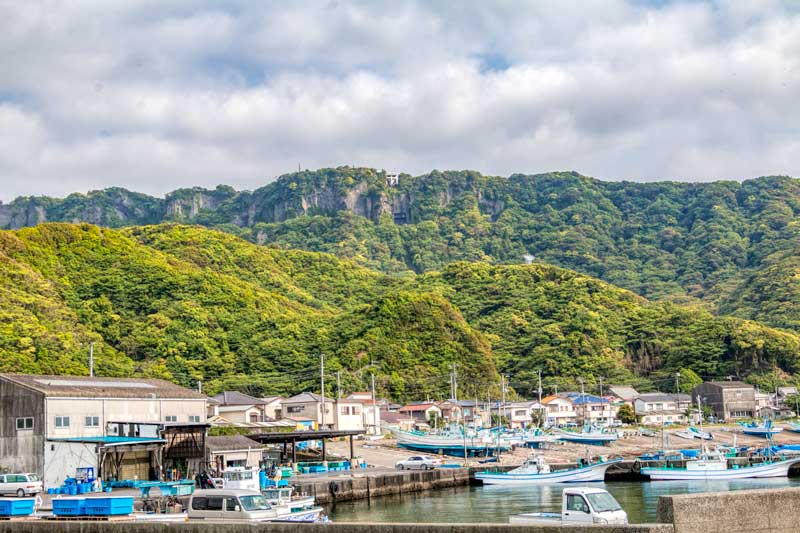
Looking at Mt Nokogiri (sawtooth mountain) from the railway station overpass
Getting to Nokogiriyama by ferry
The ferry across Tokyo Bay from the Kurihama ferry terminal in Kanagawa is another popular option, especially if you are coming from Yokohama. The train from Tokyo to the ferry terminal to begin the journey will take around 90 minutes and involves a couple of transfers along the way. You’ll want a fairly calm day to enjoy the 40-minute ferry crossing but it’s something quite different and an interesting perspective on the surrounding prefectures from the water, even better if you time your return trip for sunset.
Making your way to the ropeway
Finding your way up Mt Nokogiri on foot when you arrive by public transport isn’t recommended. The walking tracks are on the far side of the mountain from the port and train station. There is car parking on that side for anyone arriving by private vehicle but access is via a road that is not intended for pedestrians.
The ropeway is part of the experience, reasonably priced and you are going to get plenty of opportunities to hike up and down the mountain while seeing the sites. Whether you hike from the carpark or the top of the ropeway you are going to cover the same sites and distance. The paths and stairs are well-formed but this is an active day trip.
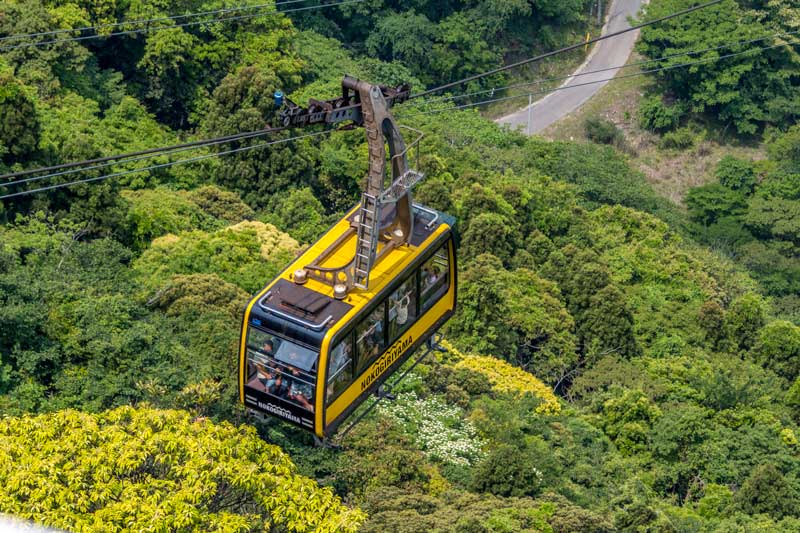
Nokogiriyama Ropeway
We were looking forward to the ropeway, while some may see it as ‘cheating’ for a day on the mountain for us it is part of the experience. We’ve used them in various forms at Mt Takao in Tokyo, Mt Rokko in Kobe and Mt Misen on Miyajima, they’ve always been fun and offered some great views.
Walking to the lower station from Port Kanaya is only slightly further than the walk from the train station. It’ll be slightly over 10 minutes to walk from the Port, a fraction under 10 minutes from the train station.
You’ll follow the waterfront around, it doesn’t matter if you are a block back, you can see the mountain and the ropeway pylons from the station and along the road. It’s easy to see where you’re headed from within the narrow band of flat township between the mountain and sea.
A large sign indicates when you turn left to get to the lower ropeway station. There is no walking track that goes up the mountain from here. This is the Sanroku Station, there’s a large parking area, bathrooms, ticket sales and a few snacks and souvenirs.
How much are Nokogiriyama Ropeway tickets
There are some discounts for children and groups but the Adult fare is Y500 to travel one way or Y930 return. We opted for the return fare were pleased we did.
Mt Nokogiri was far from crowded in May when we visited but the ropeway was full. We did this trip on a weekend which isn’t something we’d normally do but it’s easier to get here with the direct train and also you’ll find the few cafes and stores that are around town aren’t open every day but they do open on the weekend.
What hours does Mt Nokogiri ropeway open
The Mt Nokogiri ropeway operates two seasons. From mid-November until mid-February it opens at 9 am and closes at 4 pm. From mid-February until mid-November it opens at 9 am and closes at 5 pm.
The ride up Mt Nokogiri
The ropeway was built in 1962 at a cost of US$1.9 million. It’s a 680-metre ride from top to bottom and takes less than 10 minutes. With 2 cars operating on parallel lines, it’s only a 5-minute wait for the next boarding.
The upper station is midway up the mountain. From there you’ll climb up higher for the best lookouts, the sawtooth mountain outcrop and giant Kannon carved into the rock. You head down the mountain through pathways lined with hundreds of small carved Buddha statues, past a small waterfall to the Giant Buddha carved into the hillside.
Most all of the mountain is a temple and there is a temple entrance fee payable. There are entry points near the cableway and the top of the walking tracks. The fee is Y600 for an adult, Y400 for children under 12 years old.
Hiking up Mt Nokogiri
The main hiking routes start and end either from the ropeway or the carpark near the Great Daibutsu. We’ll include the highlights and a suggested route in this article from the ropeway but if you start from the temple carpark instead it only changes the start and end point, you follow a very similar circuit.
An alternative to the ropeway is to hike from the Hamakanaya Station and port side of the mountain, this is the northern route. Where you depart from the road there is a signboard beside the steps marking the starting point, we’ll include that on the map below in case you decide to skip the ropeway in one or both directions.
From these hiking trails, you will enter the temple complex at a small kiosk beneath the jutting outcrop ‘Jigoku Nozoki’ and in front of the Hyakushaka Kannon carving.
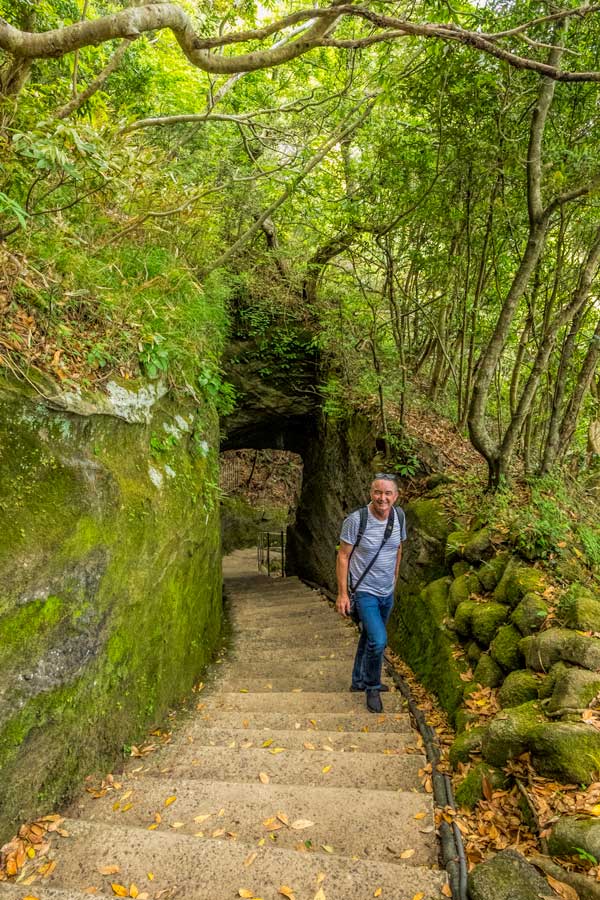
The walk will take about 90 minutes from the station and takes in artifacts of the depleted historical quarry. If you take the Shariki-Michi course it will take you past most of the attractions from the area’s mining past including the Kannon cave, along narrow paths between the rock walls and the stone stage.
These are remnants of the quarry where the rock was cut and removed. It gives an insight into the stone quarrying process that began during the Edo Period (1603–1868) and only ended in 1985 when the Suzuki Shiroenmon family stopped excavating from the Stone Stage site.
These quarry attractions are mainly at the upper end of the trail and can be viewed with a short detour from the temple area if you are interested but don’t plan to do the full hike. Leave through the temple gate at the Kannon carving and returning back the same way.
Hiking trails on Mt Nokogiri
There are a number of points of interest on Nokogiriyama and which ones you include will be guided by personal interest. As most visitors, both local and international, arrive via the ropeway it’s a good starting point and because the mountain is a large area to explore it’s good to break it into the area and sites that are above the ropeway and those that are below.
For the upper area loop from the ropeway you’ll need to allow at least an hour and the lower area at least 90 minutes. We’d highly recommend having significantly more time available if you want to explore as you go, spend some time appreciating the stunning views and carvings, stop for a drink and snack or possibly queue to stand on the edge of the sawtooth outcrop.
Thinking about it in the two sections should help you avoid unnecessary climbs up and down although in working this out for ourselves we did need to climb to the top twice. Being 2-dimensional the signboards and maps aren’t particularly clear so if you’ve made it to the top it’s worth ticking off that you’ve seen what you want to up there before making your way down.
For many of the attractions, you need to branch off and backtrack so it’s easy to miss something.
The Nokogiriyama upper loop and attractions
We decided to climb up first, breaking the uphill sections of the climb into two parts. Although it wasn’t a perfectly clear day, the morning usually offers the clearest view out over the bay and the best chance of a look at Mt Fuji in the distance.
You can climb up behind the top ropeway station to it’s viewing platform, if you don’t do it now it’s worth a stop before you take the trip back down. Follow the path from the ropeway and you’ll come to the entrance to the temple, there is a kiosk where you pay an entrance fee, the one fee covers the whole mountain. The fee is Y600 per adult and Y400 for children.
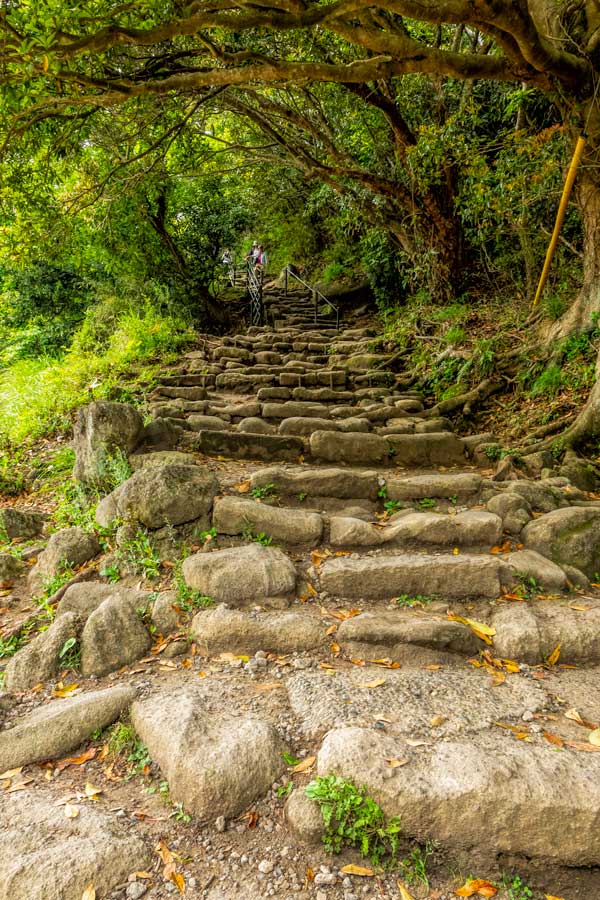
Hiking on the mountain is on well-defined paths and steps, some are more formal and smooth, others more rustic cut into the earth, they make for relatively easy walking but are uneven, unsealed and involve steps in many parts.
Jusshu Ichiran Observatory
View from Jusshu Ichiran Observatory
Our first stop is at the Jusshu Ichiran Observatory, a lookout area with views out over Tokyo Bay. You immediately start climbing steps behind the Temple ticket booth and at this stage, the steps are very well-formed and finished. These trails are not suited to wheelchairs or parents using strollers.
Each of the attractions branch off from a couple of loop trails up and down the mountain, for this one you’ll climb up and back down before continuing on. It’s a flat grassed area with a few small shrines and memorial boards, all are in Japanese but you don’t need Google Translate for that view.
The 100 Shaku Kannon
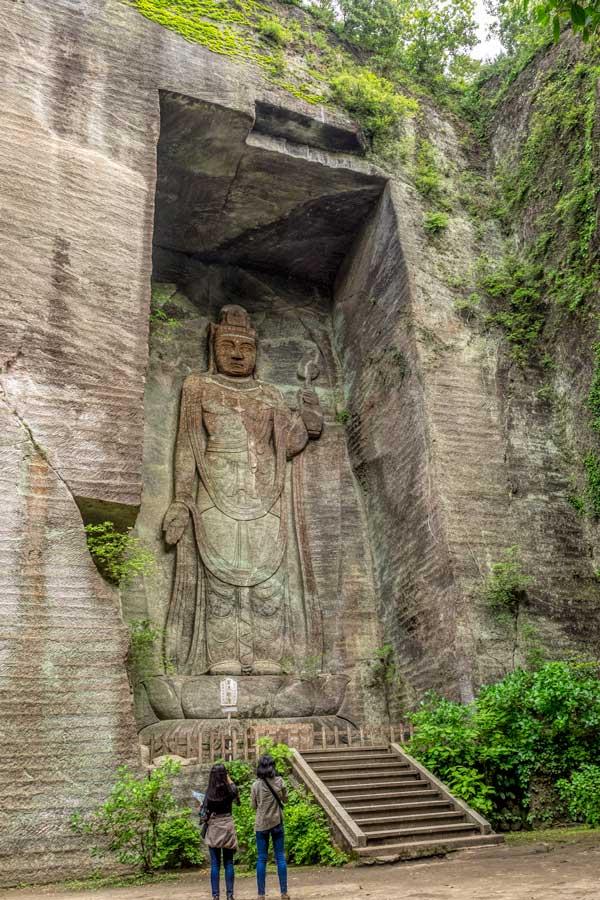
A couple stopped before the carving give scale to its impressive size
There are benches where you can sit for a while and reflect
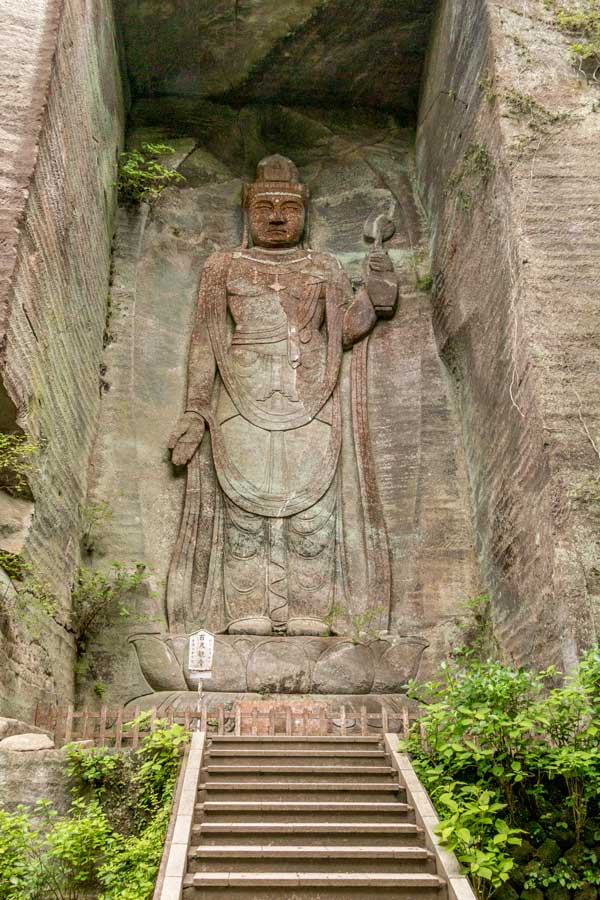
Continue following the loop and veer off to the left rather than climbing the steps up, this will take you to the impressive Hyakushaku Kannon. Hyaku is Japanese for 100 and shaku is an old Japanese measure that equates to 30.303 centimetres, therefore the carving is 30.3 metres tall, I didn’t measure it myself, obviously, but I understand it is accurate.
The carving is the image of Kannon, the Goddess of Mercy. A Boddhisatva in the Buddhist faith believed to encompass the compassion of all the Buddhas, she is known as Avalokitesvara in Tibetan practice or Guan Yin in China.
This carving is relatively new given Japans many ancient Buddhist relics. It was carved in 1966 with prayers for world peace.
You view the carving from a sheltered courtyard between the sheer rock walls and her steady gaze, you don’t need to be Buddhist to appreciate either the art or spiritual tranquillity of the space.
Ruriko Observatory
Walk back out to the loop and this time take the steps up to Ruriko Observatory, another lookout point on the mountain. There is some space to sit and rest up here and several lookout points.
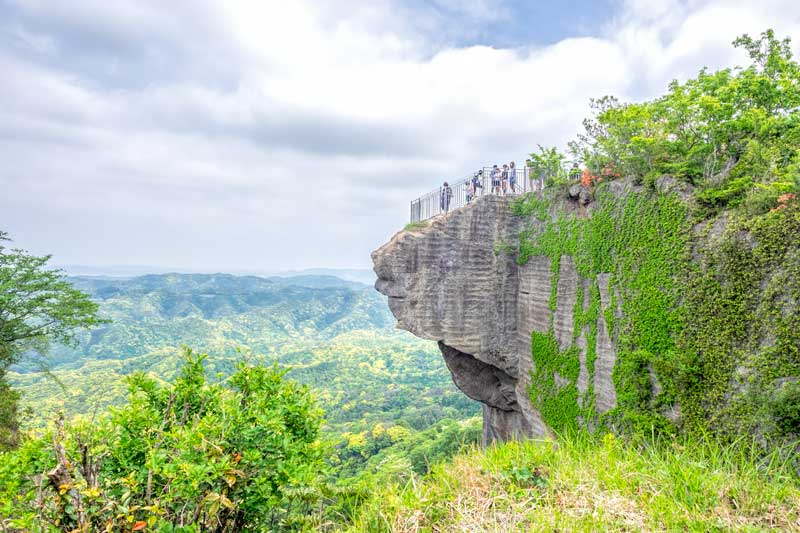
You continue onto the loop track down the other side. Before you do that this is also where you can climb up and out to ‘the view of hell’ one of the most photographed points on the mountain.
Hell’s lookout (Jigoku Nozoki)
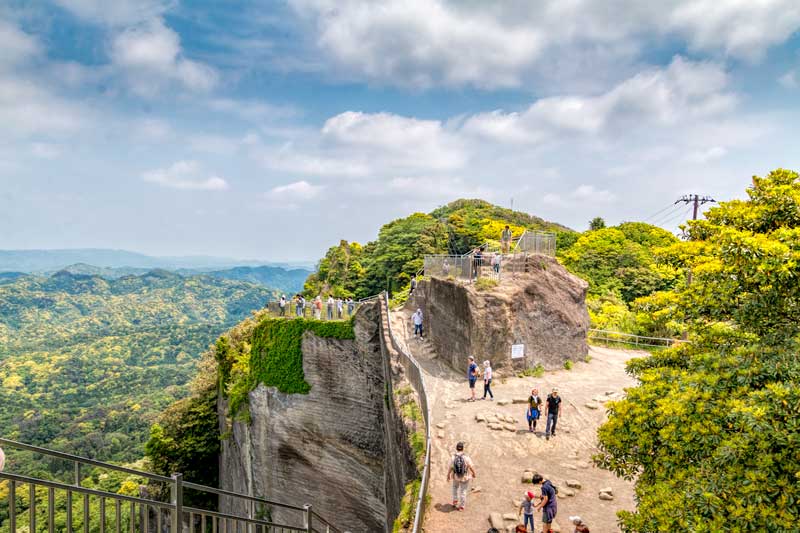
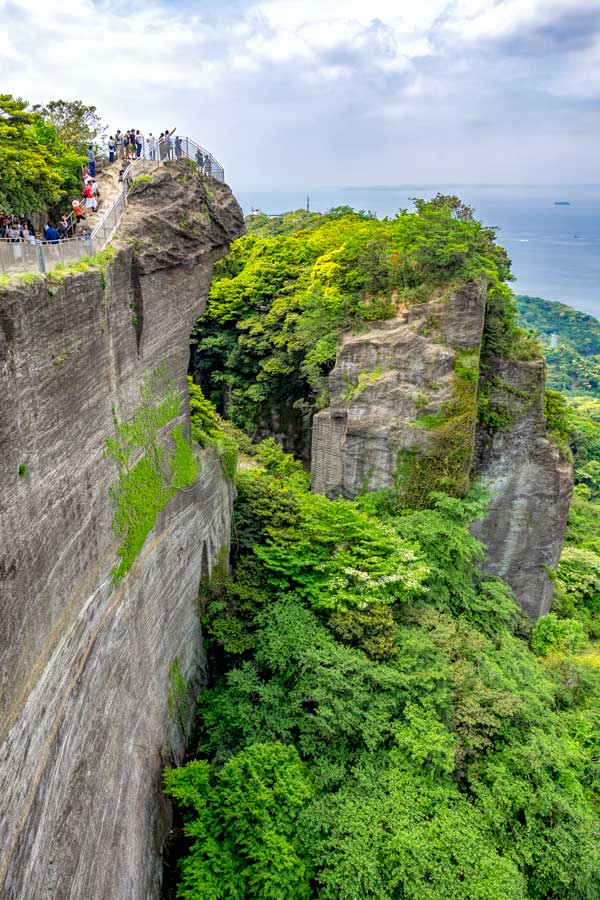
The ‘view of hell’ was the first image I saw of Mt Nokogiri and what inspired me to research a trip out there. The seemingly precariously hanging rock is a remnant of the stone quarrying history of the area, its jagged shape cut by the stonemasons tools.
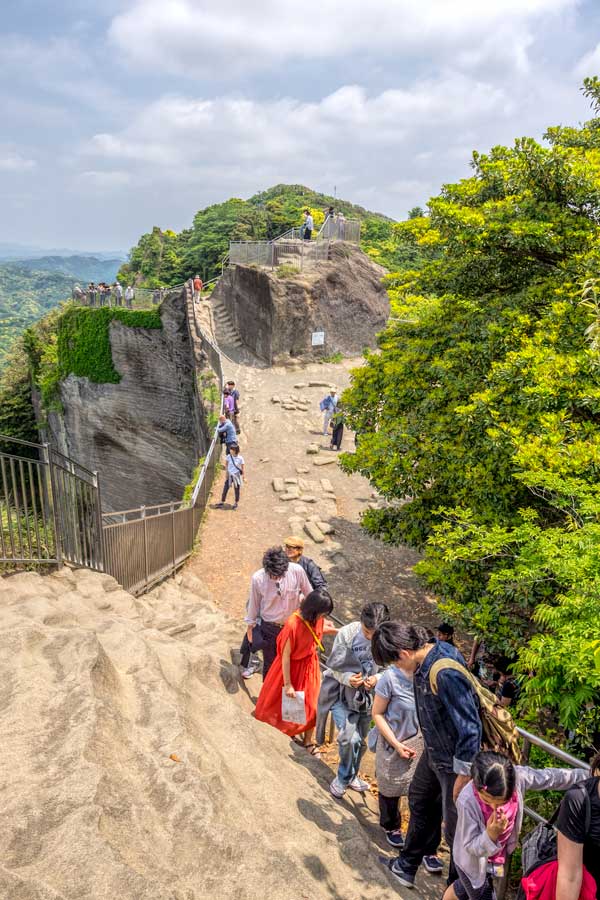
Everyone wants their turn looking out at the unobstructed view from here and down to the valley below. This was the most people we saw on the mountain all day and you might have to queue for 10 minutes or so to take your turn at the edge. In Japan queuing is part of the culture so everyone waits patiently before accepting the camera from the person in front of them when you get to the end to take a couple of photos of them and handing yours to the people behind you when it’s your turn.
Hell Lookout, that quite a steep slope down to the front edge
Queuing on the rock for our turn on the overhang
As the rock has hung there for such an incredibly long time despite the constant parade of hikers, families and young couples waiting for their photo on the edge it’s presumably fairly safe. It’s steeper than it looks at first glance though and barrier rails have been added to stop anyone falling and possibly to add some reassurance for those less comfortable with heights.
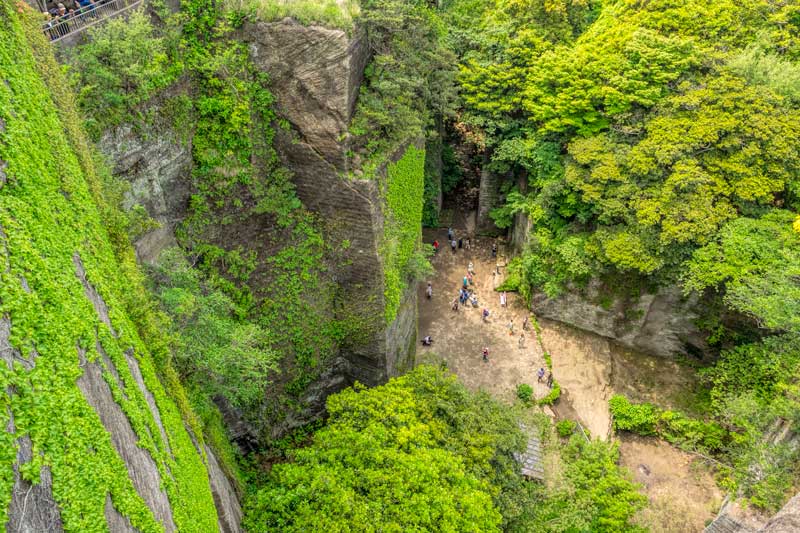
Looking down from the Hell Lookout on Mt Nokogiri, it’s actually an incredible view of this area below in front of the Hyakushaku Kannon carving, the mountain and Tokyo Bay beyond.
There were a couple of people in the queue who seemed a little anxious and two women ahead of us decided to crab crawl back down the rock on their bottoms feeling a little queasy after their peep over the edge. By the time we got back down after our turn on the edge their excitement at what they had done had won out over the nerves.
1500 Stone Arhat statues
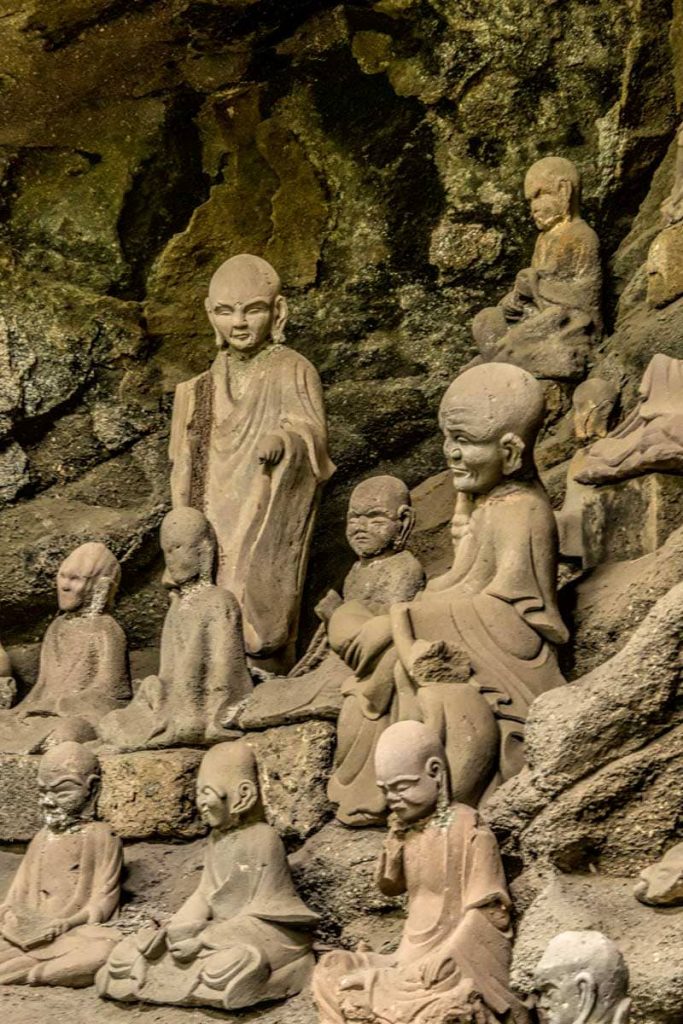
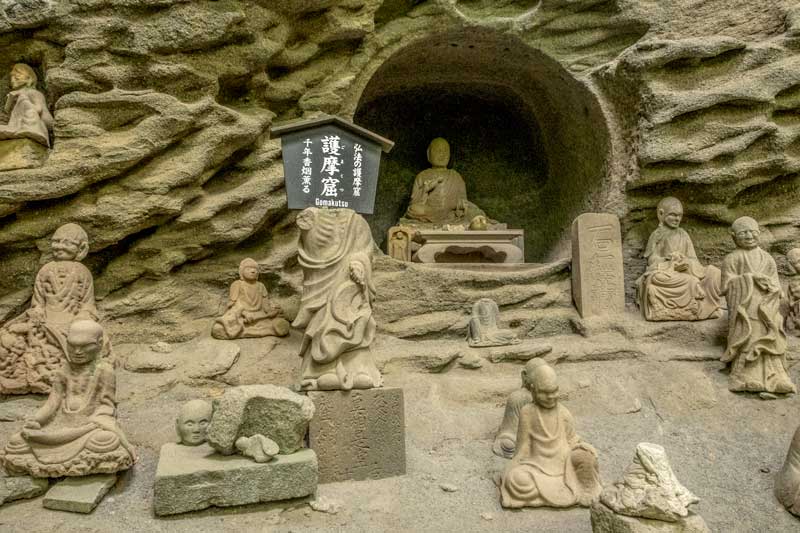
While Nokogiriyama is known for the enormous Buddha statue and Kannon carved into the cliff face, the 1500 small Arhat statues set into the mountain as you make your way down provide their own fascinating insight into Japanese history and culture to offer.
An arhat or rakan in the Buddhist faith is someone who has achieved enlightenment, an understanding of the true nature. The equivalent in of a saint in Christianity.
The statues depict the spirit of eternal benevolence and were the work of master carver Jingoro Eirei Ono and his 27 apprentices. They were created over a period of 20 years between 1779 and 1798. The special stone they are made from didn’t come from the mountain it was shipped in from Izu.
Why do the Arhat statues on Mt Nokogiri have no heads
You will begin to notice as you pass that many of the statues are broken, heads have been lopped off and that these historic religious statues have been vandalised but it’s not what you might think. This damage was done around 1868 at the end of the Meiji period and as part of the Meiji Revolution in Japan that saw the feudal system of Shoguns, samurai and ninjas end and Imperial rule return.
At that time Buddhism was more closely aligned to the Shoguns while Shinto was tied to the Emperor. As part of the restoration, the two faiths that had until then been tightly entwined were ripped apart and temples and shrines physically separated. The Emperor’s supporters smashed these sacred statues during this time of unrest. It was a relatively brief period in Japans history and today you will see Buddhism and Shinto again closely aligned. It is said in Japan you are born a Shinto and die a Buddhist, the majority of Japanese today identify as both and see no conflict in that.
In recent years work has begun to repair some of these statues and you will see joins where some have already been mended.
The Nokogiriyama lower loop and attractions
Japans biggest Buddha Statue
If you ask most visitors where Japans largest Buddha statue is many will say it’s the Great Daibutsu at Kotoku-in Temple in the ancient capital of Kamakura, the bronze statue is a masterpiece but at 13.35 metres it’s the 3rd largest in Japan. Others will say it’s in Nara, another ancient capital, at the stunning Todaiji Temple. We love Nara and suggest anyone who is passing through visits the UNESCO World Heritage site. The Todaiji great Buddha statue is 18.18 metres high and is Japans 2nd largest.
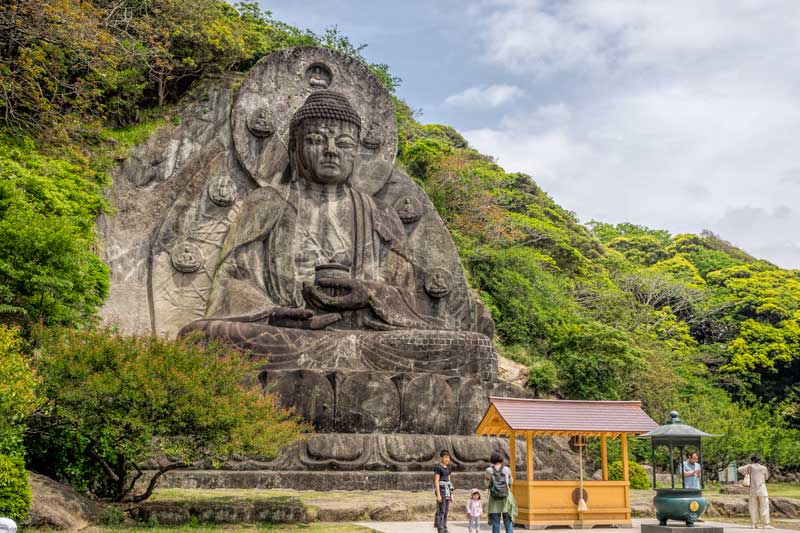
The largest Buddha Statue in Japan is here at Nokogiriyama in Chiba Prefecture and it’s sheer scale as you walk the length of the temple path towards it is impressive. The 28-metre statue (31.5 metres including the pedestal) was carved by Master Artist Jingoro Eirei Ono and his apprentices over 3 years. It was completed in 1783.
The most recent repairs to the statue were made in 1969 and took 4 years to restore it to its original condition.
The sacred Bodhi Tree
In Buddhist teachings, the historical Buddha sat in meditation without moving for 49 days under a Bodhi tree in India. In May 1989 the Indian Government gave Nihon Temple on Nokogiriyama a small sapling grown from the famous tree. It was planted here on the Daibutsu Mai in front of the Buddha statue.
Bodhi tree means ‘awakening tree’ but it is actually a Banyan fig also known as a Sacred Fig or a Strangler Fig. When fully grown it is a large and distinctive tree with a curtain of aerial roots growing down to the ground. The temple has placed a monument recognising the gift.
The Jizo surrounded by prayers
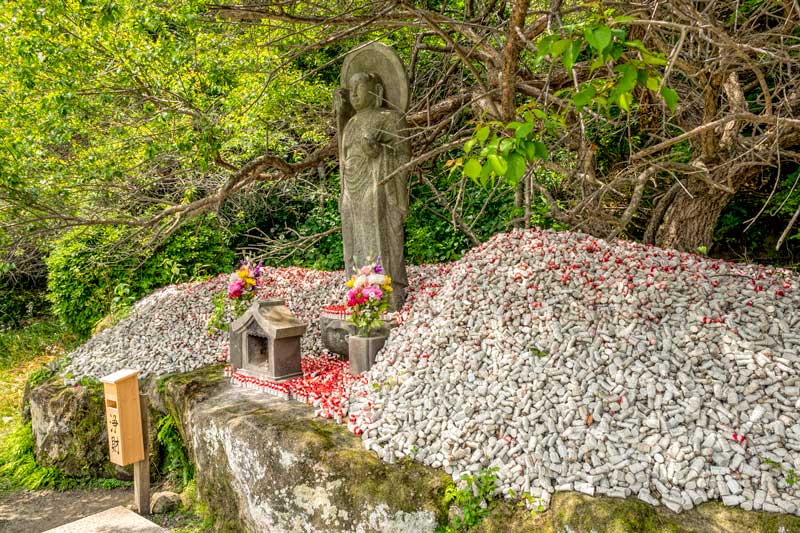
Nearby is a statue of Jizo Bosatsu. The Bodhisattva of children and travellers, he is a much-loved figure in Japanese Buddhism and is especially meaningful to those whose children or unborn children have died.
Usually depicted as a monk, Jizo vowed not to attain Buddhahood until all trapped in the hell realm are freed.
Jizu statues are regularly seen around hiking trails approaching mountain temples in Japan and you will often see a pile of stones near them. People pick up a stone, make a prayer and leave it near the statue.
Here at Nihon-ji Temple on Nokogiriyama, it is a little different and tiny while Onegai Jizo figurines are left instead. If you want to offer a prayer or make a wish, you can buy one at the small booth nearby.
Where to eat and drink on Mt Nokogiri
There is a cafeteria at the Sancho ropeway station, the upper station that offers a limited range of meal options. There is also a counter for icecreams that backs onto that near the stairs up to the viewing terrace behind the station.
I wouldn’t suggest relying on eateries on the mountain as they are not open every day or for long hours. We were there on a weekend and didn’t catch them open. Instead, you can either eat at one of the cafes down in town or bring a picnic with you. You can pick up a variety of options before you leave Tokyo, from the bakeries, shops selling bento boxes at the station or onigiri and other packaged snacks such as sandwiches and salads from the convenience stores.
Once you are up on the mountain there are several places to sit down and enjoy your picnic. We used the picnic tables towards the bottom near the Great Buddha and it was a good opportunity to interact with local families who had also come out for a day in the fresh air. There was another area near the top of the mountain with seating where people were eating and drinking.
Final thoughts on visiting Nokogiriyama
We really enjoyed this side trip from Tokyo. Chiba is an easy distance to travel for a day and yet opens up a very different side of Japan. Unlike some of the other mountainous hiking trails we’ve visited, Mt Nokogiri had very few tourists.
The lack of western tourists opened up opportunities for conversation and interaction with locals and Japanese visitors who were genuinely interested in why we had come, what we thought and trying out their English with us. It took us back to our early travels in Japan a decade earlier when that was something that happened all the time.
If you found this useful please consider saving it to Pinterest. It helps us and other travellers to find the information they need.
Across the river from the city’s nightlife epicentre of Pub Street and its bustling surrounds, the quieter Wat Damnak neighbourhood is slowly cultivating attractions of its own, from cosy restaurants serving up inventive dishes and boutique hotels offering more personalised service, to beautiful art spaces with international appeal.
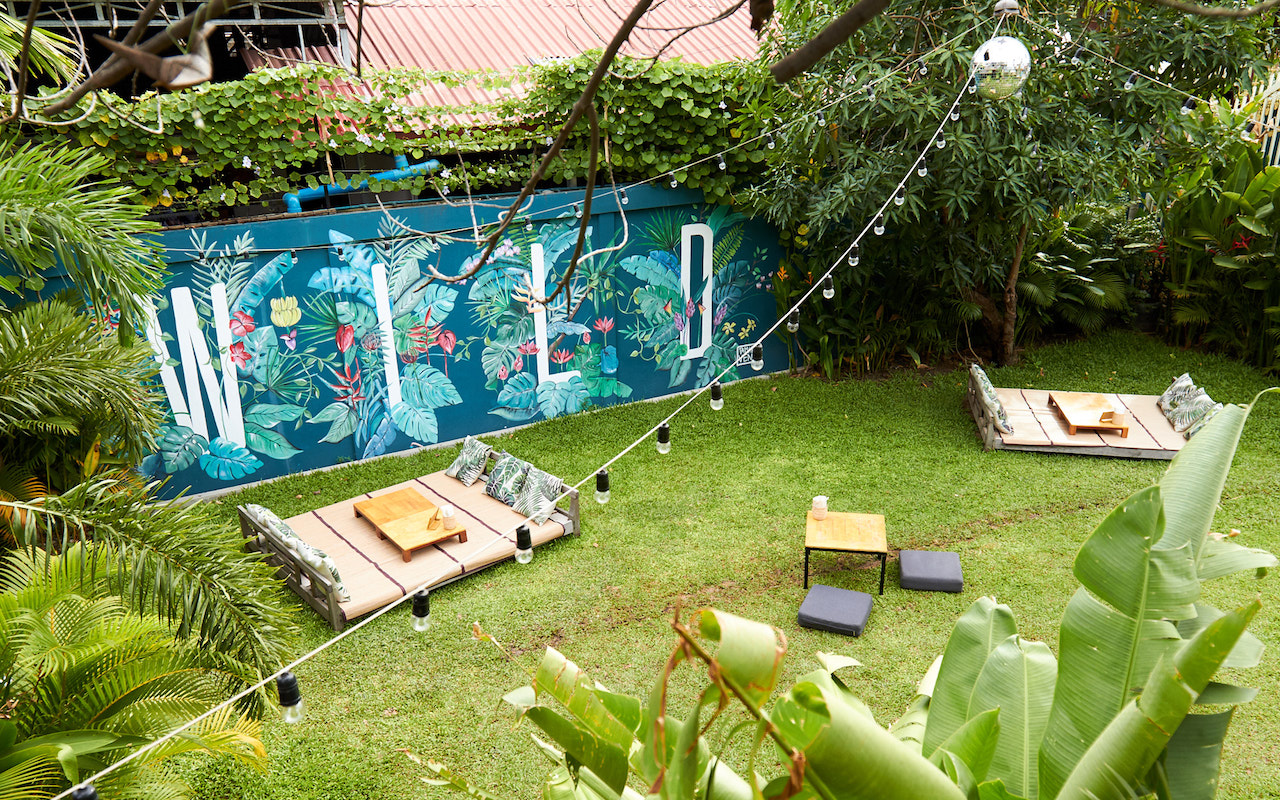
At Wild Creative Bar and Eatery, you can enjoy the green surrounds while with a drink in hand
Set in a beautiful garden space, everything in this floral-themed bar – from the wall art to the cocktails that incorporate local fruits and the small-bites menu (try the spring rolls with chocolate and Kampot pepper) – feels personally curated by owners Lorraine and Renaud Dion, who work alongside their all-Khmer staff. The small shop at the back sells handmade crafts, and all proceeds go to various NGOs – such as Soulcial Trust, which helps people with disabilities.
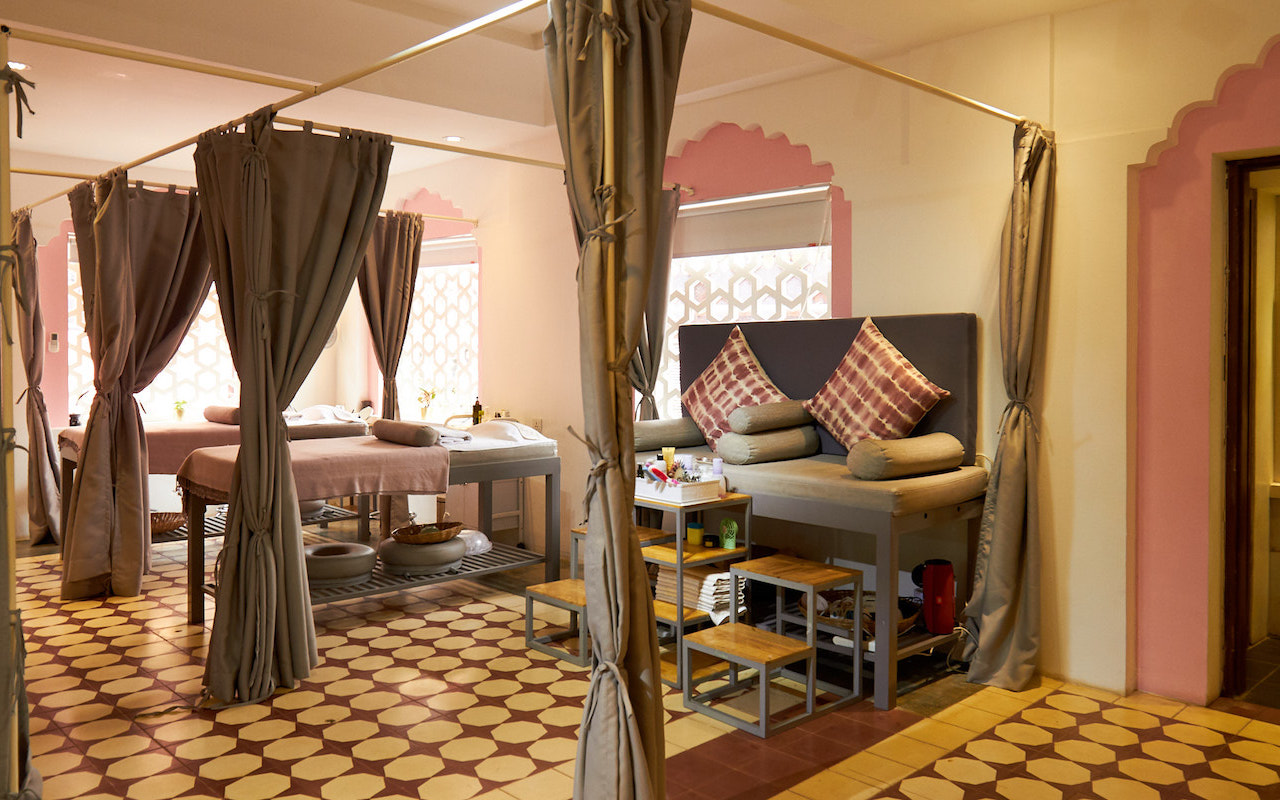
The Sugar Spa offers spa services for women as well as grooming services for the men
This bright and cheery day spa is a sanctuary in several ways: as an all-natural beauty salon, as a relaxing open-air yoga studio and as a social enterprise that provides gainful employment to local women. They also work with an NGO that helps trafficked girls reintegrate into society.
“How do I look?” by Sovan Philong is one of the exhibitions displayed at Batia Sarem Gallery
An upright slab of deep teal concrete by the entrance is one of the telling signs of this gallery’s contemporary slant. The main space, a renovated traditional Khmer wooden house complete with lotus-themed latticework for eaves, signals its Cambodian DNA. Gallery director Martin Phéline says, “We want to show the world that Cambodia has something to say, with very interesting aesthetics.”
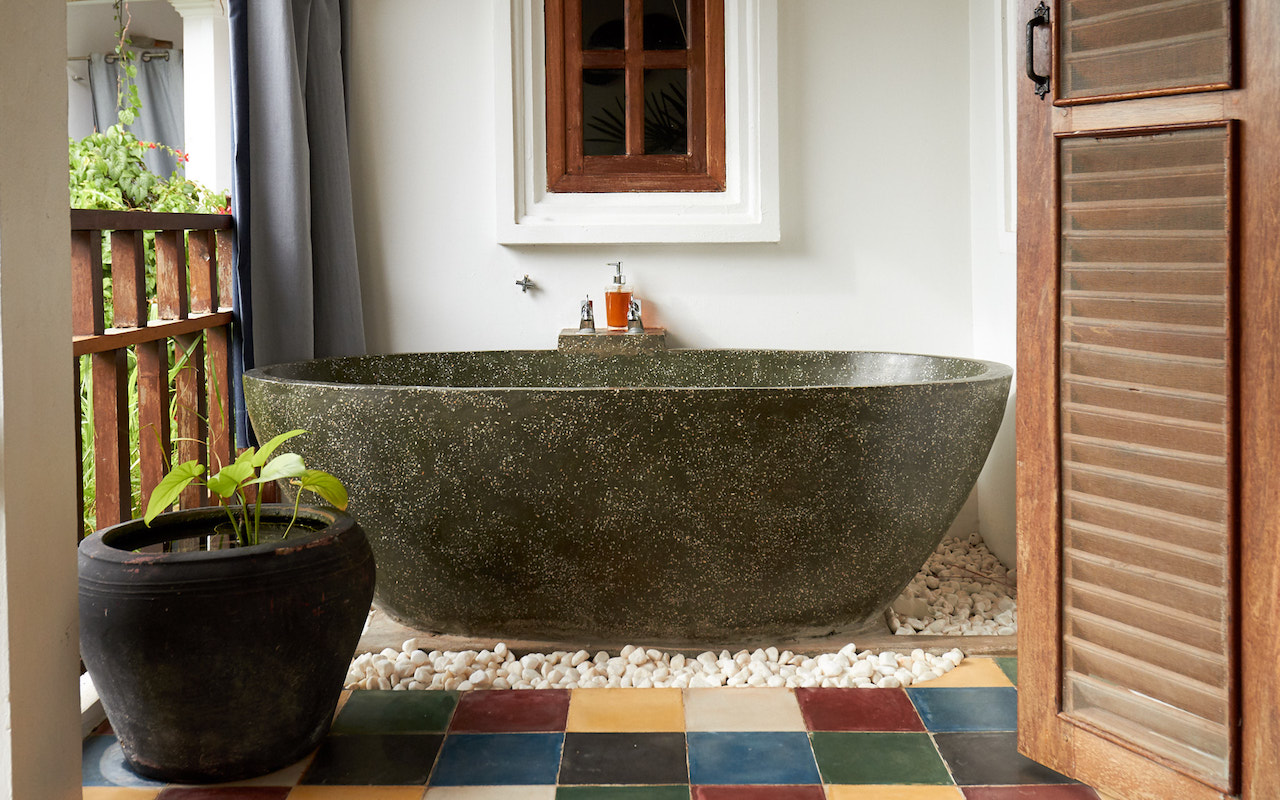
The gorgeous Rambutan Hotel and Resort also has its own restaurant, bar and spa
This charming boutique stay comprises Khmer-style villas built around two saltwater pools. Rooms feature hardwood furnishing and French windows, and many even have a stone bathtub out on your own terrace, obscured by bougainvillea.
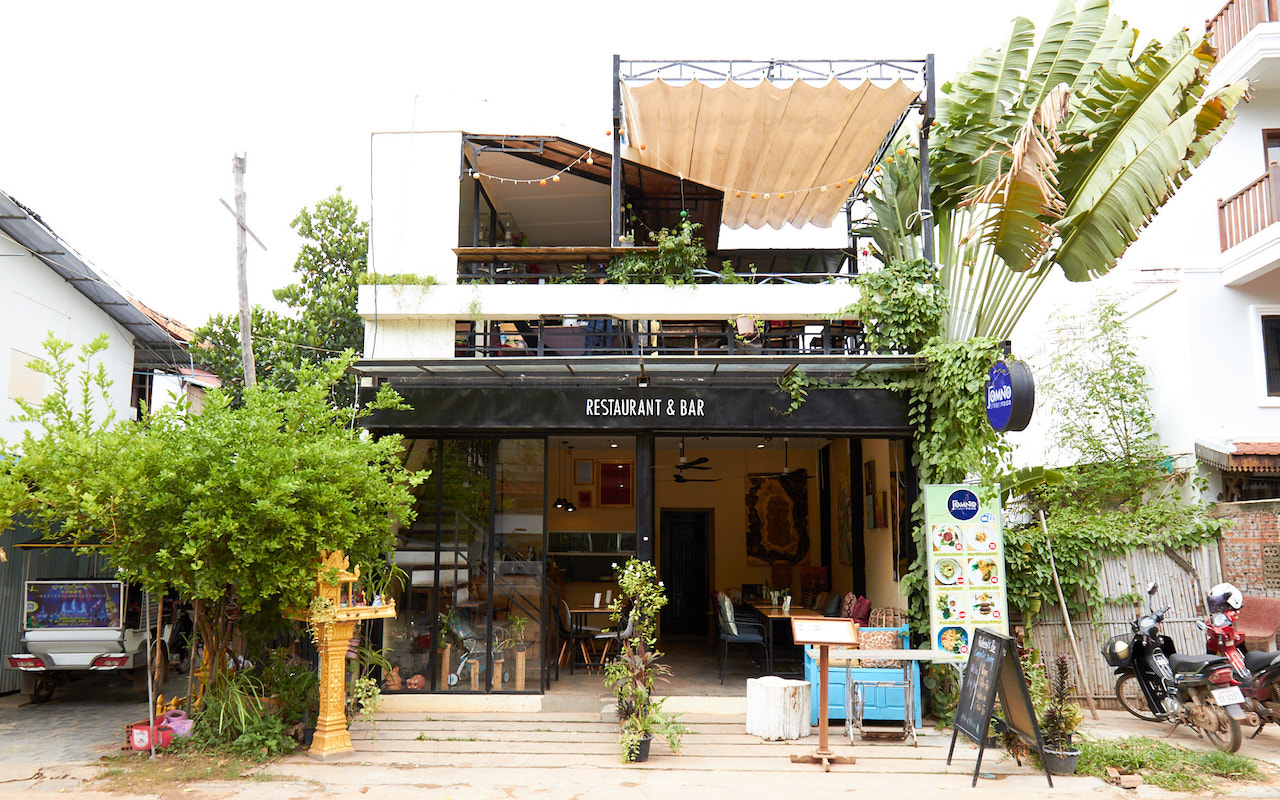
Jomno Street Food is known for its modern take on traditional street food
After years of working in some of Siem Reap’s finest kitchens, chef Seiha Chomnab ventured out on his own with this casual restaurant that opened in May. “I want to share Siem Reap street food and present [it] in more modern ways,” he says, and the results are delectable market classics that spotlight Khmer cooking and flavours. Don’t miss the teuk kreung (shrimp and fish in coconut gravy), based on his mother’s recipe, and the Battambang sausage (charcoal-grilled homemade pork and beef sausage).
SilkAir flies daily between Singapore and Siem Reap. To book a flight, visit singaporeair.com
Gondwana Game Reserve – a few hours’ from Cape Town – has just launched a three-day walking safari. The two-day Pioneer Trail sees campers covering 15 to 20km of open grassland that is home to unique plants, as well as lions, elephants, zebras and giraffes. Each night is spent at a different camp, where tents come with ensuite bathrooms and guests are pampered with delicious campfire meals.
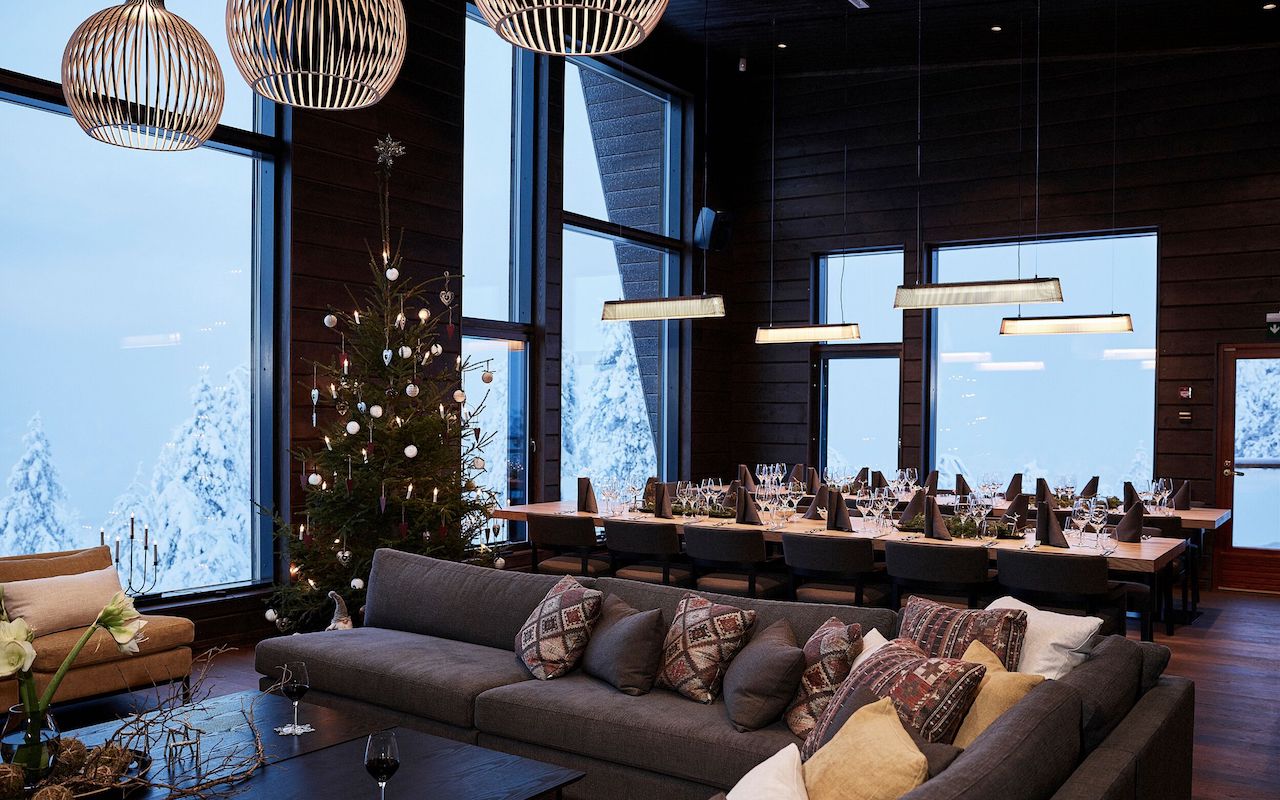
The luxurious living room at Octola
2. Chill in the arctic circle
Octola – a log cabin based on a traditional laavu (temporary shelter) in Finnish Lapland, inside the Arctic Circle – may be the most remote luxury retreat in the world. The large chalet, with 10 rooms, is set in 300 hectares of snow-blanketed wilderness yet offers a sauna, private butler, five-star cuisine and 24-hour concierge service.
3. Sail away
The 55m-long Prana – the world’s largest wooden phinisi yacht – can now be chartered to sail around Indonesia’s rugged Komodo Island, home to the famous komodo dragons, plus Rinca and Padar islands, where you can dive at some of the world’s most pristine coral reefs. The boat has its own spa, yoga deck and open-air cinema, along with a private chef and scuba instructor. The Prana can accommodate up to 18 guests.
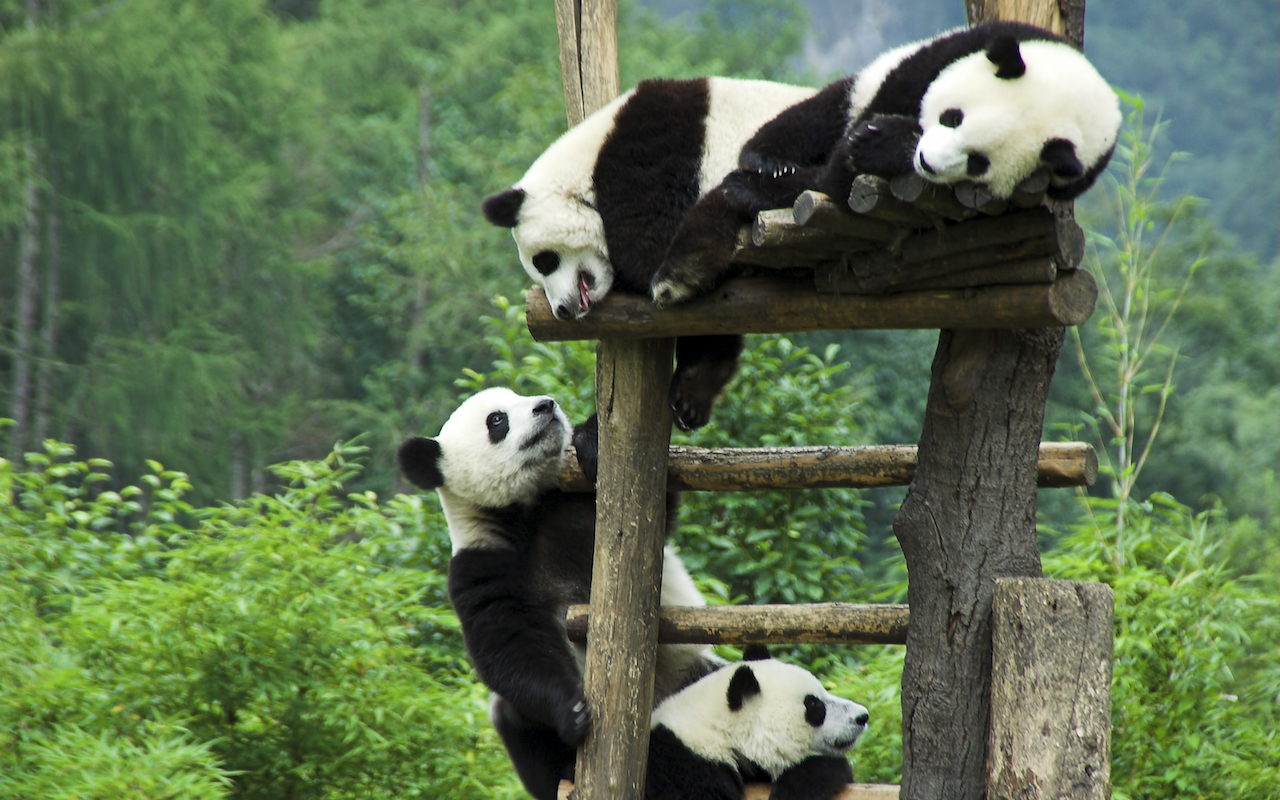
See giant pandas up close at this tour. Photo credit: demamiel62/shutterstock.com
4. Visit the pandas
Head to Chengdu for an extraordinary 12-day panda safari. Take the high-speed train to Qingchuan county to visit the 405km2Wild Panda Nature Reserve – one of the most diverse and intact forest ecosystems left in Asia. There are also visits to the newly rebuilt Gengda Wolong Panda Center, which reintroduces pandas into the wild, and the new Dujiangyan Panda Valley research centre.
5. Camp with penguins
This grand luxury five-day adventure starts by catching a Gulfstream G550 jet from Cape Town down to Whichaway, a luxurious camp (complete with an award-winning chef) on the edge of the Schirmacher Oasis in Queen Maud Land, Antarctica. Another two hours’ flight west of the camp takes you to Atka Bay, home to a colony of more than 6,000 emperor penguins.
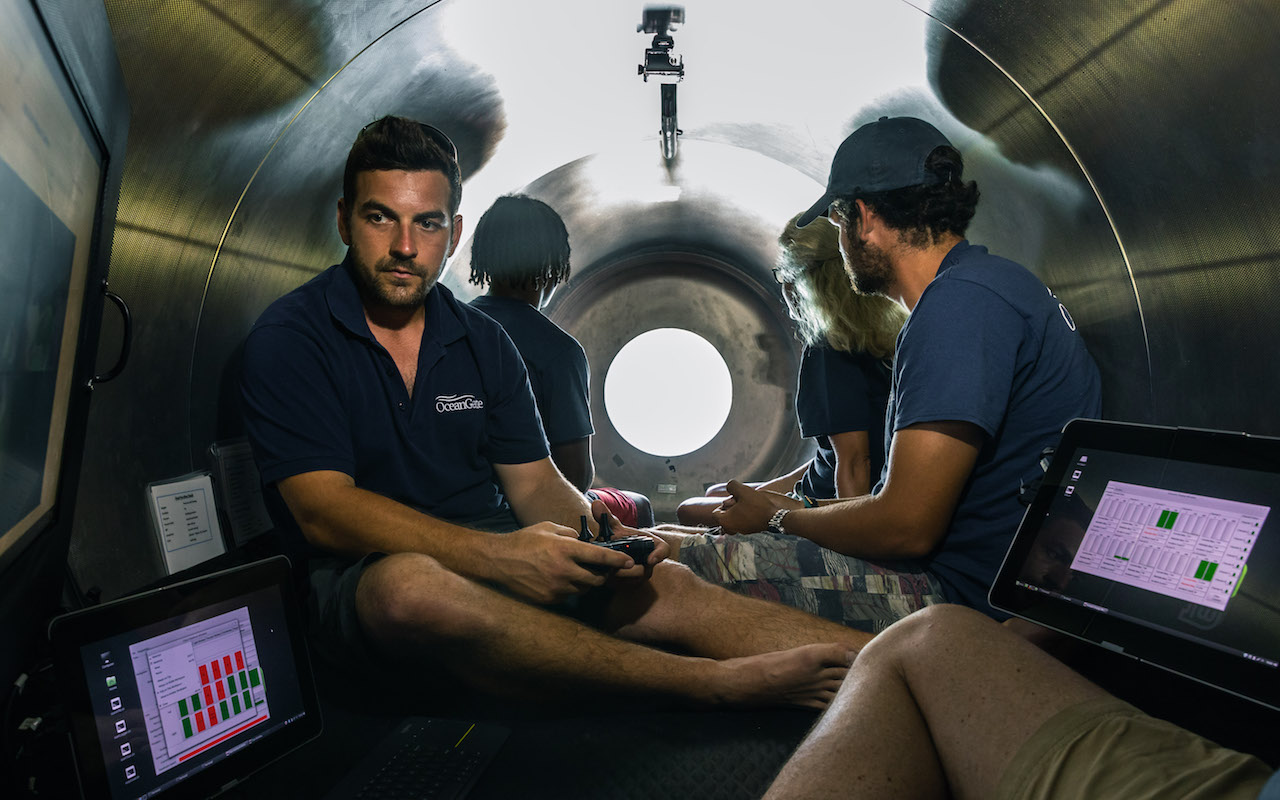
Journey 3,800 meters below the surface of the North Atlantic to inspect the condition of the Titanic
6. Dive into history
Two specialist companies have joined forces to offer “citizen explorers” the chance to join researchers on an 11-day expedition 3.8km below the surface of the North Atlantic, to the wreck site of the Titanic. The trip will depart from St John’s, Newfoundland in Canada next summer, with explorers able to watch scientists create a 3D model of the shipwreck, as well as document the condition of the ship.




 1.《太阳浩劫》
 2.《明日帝国》
 3.《疯狂富豪》