Posts, pics, video and motivation on Travel Lifestyle, countries around the world! Addicted to adventure travel and photography, I'm on a mission to inspire your next journey with entertaining stories, beautiful images, fun travel videos, and useful tips.
Set alongSouth Korea’senchanting southeastern coast, Busan is replete with natural beauty, rich history and vibrant urban culture. Singapore Airlines is resuming its route to Busan in August, so it’s the perfect time to plan that end-of-year holiday to this charming city. We’ve got four fantastic one-day itineraries, hand-picked to suit everyone.
Creative, cutting-edge culturalistas
Fans of the quirky and unexpected will loveGamcheon Culture Villagein the south of the city – a picturesque settlement with steep rows of colourful buildings that’s been transformed into a living gallery, with surprising art installations, murals and mosaics dotted along its labyrinthine alleyways. Formerly abandoned houses have been turned into galleries, creative workshops, cafés and restaurants.
Visitors are perhaps most familiar with Korean culture through its cinema, and Busan, as a UNESCO City of Film, is just the place to learn about it. Ten minutes’ drive from Gamcheon, film fans can visit theBusan Museum of Movies. Here you can learn the history of Korean film, and even make movie scenes yourself, battling with dinosaurs or jumping into an action sequence. The Trick Eye Museum upstairs is full of fun optical illusions that use augmented and virtual reality.
End your cultural exploration of Busan with the awe-inspiring Gwangalli M Drone Light Show. Photo: Korea Tourism Organisation
Continue chasing eye-catching spectacles a 30-minute drive away at Gwangalli Beach, where the uniqueGwangalli M Drone Light Showfeatures hundreds of drones flying in formation to create spectacular designs in the night sky. The 10-minute shows take place twice every Saturday evening, with a different theme every week. Watch from a table at one of the restaurants lining the beach and follow the show with some delicious grilled clams.
Nature-loving dynamos
Love riding the surf, or always wanted to try? The unique topography ofSongjeong Beach, to the east of Busan’s centre, makes it a popular destination for surfers. This long, beautiful curve of white sand has plenty of board rental and surf classes on offer, and its shallow waters make it a great spot for beginners to take to the waves.
An invigorating hour’s hike along a coastal path (or about a 20-minute drive) north brings you to the historicHaedong Yonggungsa Temple, which sits on rocks overlooking the ocean. The main temple area is reached down 108 steps. The reward: stunning views and beautiful serene grounds full of various statues and shrines where you can pray for everything from having sons to gaining academic success.
Experience a greener side of Busan at the Ahopsan Forest. Photo: Korea Tourism Organisation
After taking in the natural splendour of the coasts, take the car about 40 minutes inland to the lush greenery ofAhopsan Forest. This verdant nature reserve has been managed by nine generations of the same family for over 400 years, and is home to many centuries-old trees and dense plantations of statuesque ancient bamboo. Don’t forget to wear comfortable shoes and carry water and insect repellent as you explore the trails for an hour or two.
Insta-addicted view collectors
If scenic vistas, spectacular sunsets and colourful little streets are your reason to travel, you’ll find plenty to love in Yeongdo-Gu, a lush island just south of Busan. Start by strolling down theJeoryeong Coastal Trail, a three-kilometre route hugging the island’s western coast. Stop at its various lookout points for stunning sea views. For Insta-worthy photos, strike a pose by mosaic-tiled murals and the multicoloured Piano Stairs, painted like a colourful keyboard.
Jeoryeong Coastal Trail. Photo: Korea Tourism Organisation
After about 800m on the trail you’ll find yourself at the entrance to theHuinnyeoul Culture Village. This cliffside village was once home to Korean War refugees but has been transformed into a vibrant cultural destination. Take some time to wander the narrow alleys to spot colourful murals, street art and mosaics that make perfect selfie backgrounds.
A 25-minute walk from the village will take you toYeongdo Sky Observatory, a scenic perch that offers unparalleled coastal views – and views straight down through its glass floor! If you time your visit just right, you can end your day with snapshots of a spectacular sunset over the East China Sea.
Hungry shopaholics and mall prowlers
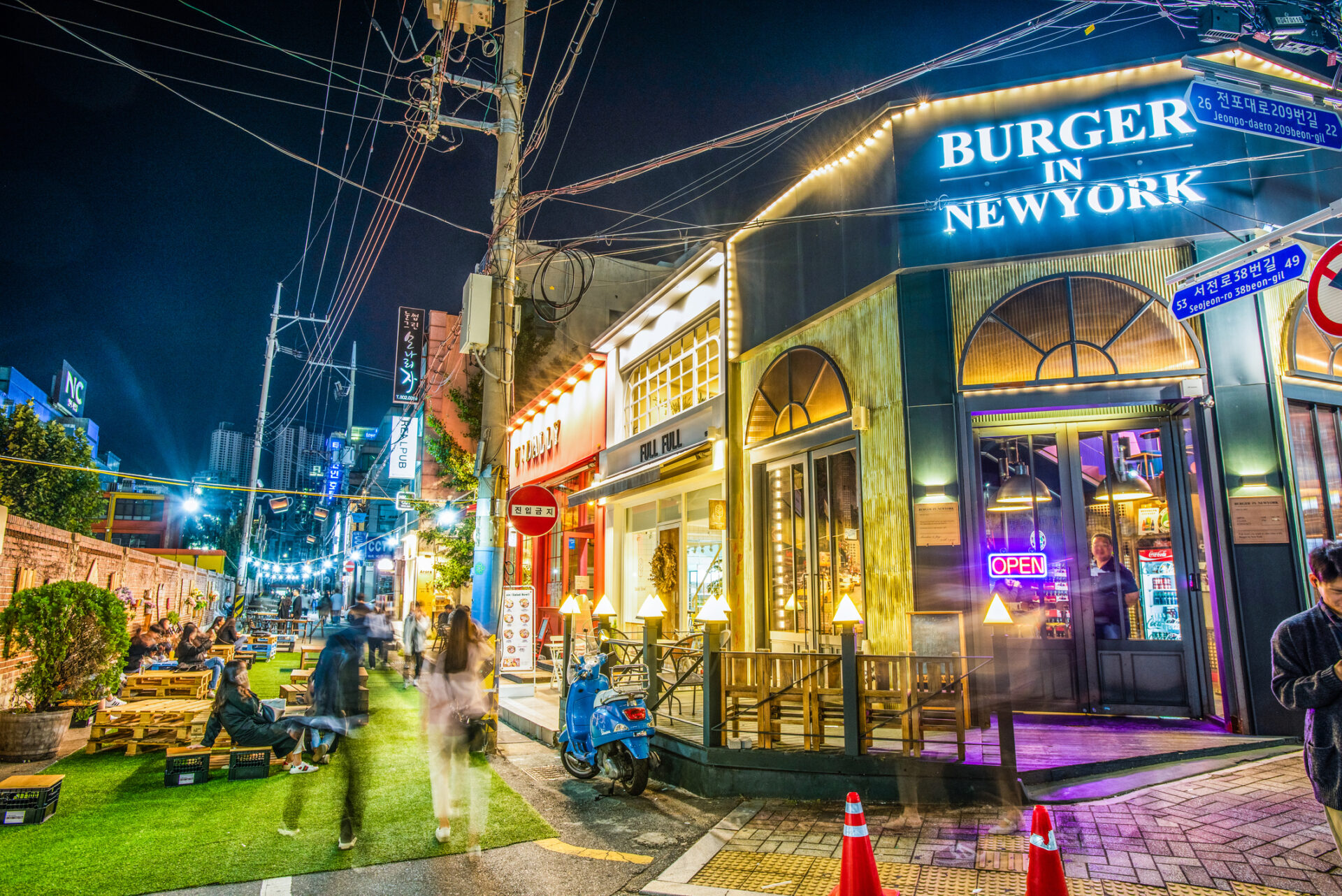
Before embarking on your retail therapy, fuel up for a day of shopping atJeonpo Cafe Street. This colourful lane is lined with countless cafés and restaurants, with favourites including drip-coffee houseGrampaa, roastery/caféDauntand “croissant boutique”Crashop.
Jeonpo Cafe Street’s lined with hip cafés and restaurants. Photo: Korea Tourism Organisation
Next, get some serious shopping done atLotte Premium OutletsatDongbusan, 30 minutes away by car. This sprawling shopping mall has a striking blue and white design, inspired by Greek Island chic, and is home to retail outlets for popular international and local brands.
Once you’ve worked up an appetite, take a short walk to theMisigilsang Food Hall Busanwhere you can eat some of the city’s favourite foods, such as 101 Namsan’s pork cutlet and Mealtop’sbingsu,aKorean shaved ice dessert.
For more information on Singapore Airlines flights to Busan, clickhere.
Down a narrow lane of quaint old cottages I come across a more modern residence, painted in pink and orange. I step inside. The hallway is piled with traditionally patterned cotton fabric, stacked against the wall or hanging from hooks. Rows of shelves hold paint buckets filled with yellows, reds and indigos. There is an array of brushes of all sizes. Incense permeates the air while the distant chiming of temple bells fills my ears. Further in, men and women are sitting on the floor, engrossed in their art.
This scene of creative chaos is the renowned Sri Vijayalakshmi Fine Kalamkari Arts studio in Srikalahasti, a uniquely important space for the fine – and endangered – art of Kalamkari. I’m in town to meet award-winning Kalamkari artist M Viswanatha Reddy and G Chandra, who manages this family-run workshop.
Entryway into Shri Vijayalakshmi Fine Kalamkari Arts studio. Photo: Karthika GuptaUnfinished pieces lie in wait for finishing touches. Photo: Karthika Gupta
Kalamkari is the intricate art of hand-painting cotton textiles with natural dyes, a traditional craft that involves 23 laborious steps. The word kalam refers to the pen which is used for Kalamkari. This style of textile-making is said to have originated here in Srikalahasti, a small town on the Swarnamukhi river in the Chittoor district of Andhra Pradesh, three hours from Chennai. Srikalahasti is also home to a centuries-old Shiva temple from the Chola dynasty, and the influence of the temple’s murals and sculptures can be seen in many Kalamkari patterns. It’s common to see Kalamkari saris, wall hangings and other decorative items, and common motifs include paisleys, peacocks, flowers and even characters and scenes from the Hindu epics.
The painstaking process of Kalamkari
Chandra explains the labour-intensive steps involved in this beautiful and ancient art. First, artisans wash cotton fabric in river water from underground bore wells. They believe that the particular chemical composition of this water helps fix the dyes in later steps. After the fabric dries, an artisan will soak it inpindhi, a special paste made with dried flowers mixed with buffalo’s milk. This colours it yellow and helps stop the dyes from bleeding.
National award winner Visvanatha Reddy creating his original designs with a charcoal pen. Photo: Karthika GuptaPencilling in the details. Photo: Karthika Gupta
Once dry, the base Kalamkari cloth is ready to be painted. “We use burnt tamarind bark to draw outlines onto the fabric,” explains Reddy, who received a National Artist Award from the Government of India for his artistry. These outlines are then brought alive with the vibrant colours for which this textile is famous. Kalamkari’s beautiful hues are derived from an inventive range of materials: jaggery and bits of rusted iron produce black ink; red comes from alum; flowers of the succulent plantkarkaimake yellow dye;katha(from acacia trees) produces brown; and boilingchawal kodi(a kind of tree vine) with alum and water makes pink.
“The art of Kalamkari is vigorous and time-consuming and there are many steps before and after the paintings are complete,” notes Chandra. The fabric is washed after each colour application, so pieces may need up to 20 washes and take several days to finish. It’s a technique that has been developed over countless generations.
Chandra explains how each colour is naturally derived. Photo: Karthika GuptaDifferent dry herbs flowers and seeds that give natural colours. Photo: Karthika Gupta
Beauty born from imperfection
“What makes the hand-painted Kalamkari of Srikalahasti so special is that it is still made today as it was hundreds of years ago, completely by hand, using natural colours and dyes,” says Anita Reddy, the honorary president and founding trustee of Dwaraka, an NGO dedicated to promoting this iconic craft.This natural, traditional, human process means the final colours in each piece are unique. They change according to the treatment of the cloth and the quality of the colour fixer, so there are inconsistencies, smudged lines and minor bleeds in the fabric.
“But this is the beauty of hand-painted Kalamkari – the imperfections. They speak to the human element in its production,” saysAyush Kejriwal, a Glasgow-based Indian designer who works with a group of Kalamkari artists to create unique traditional outfits.His Kalamkari designs are some of the most popular pieces in his collection, because customers want exclusive heirloom pieces for special events like weddings.
Designs by Glasgow-based Indian designer Ayush Kejriwal, which feature hand-painted Kalamkari. Photo: Ayush KejriwalThe designer himself. Photo: Ayush Kejriwal
It’s also important to Kejriwal that customers know how to care for these unique textile treasures such that they may last (at least) a lifetime. “True hand-painted pieces have a distinctive smell due to the proteins in the milk used in the process – that’s how you can tell they are authentic. To deal with this, simply air it out in a room with a few incense sticks for a day or two.” Kalamkari textiles should be washed with a mild baby shampoo and warm water, and left to air after ironing. They are best stored in a muslin cloth with silica gel to absorb excess moisture.
At the end of the day, we all want to keep thekalam, and hence the power, in the hands of the artist – because that’s where it truly belongs.
Protecting an endangered heritage craft
Kalamkari is such a complex textile, both to produce and care for, that it’s in danger of disappearing. Due to the intricacies of the process and difficulty in making a decent living from it, traditional Kalamkari is declining in rural communities like Srikalahasti. Many artists have abandoned their craft in search of better employment opportunities. Large-scale commercial production and machine-generated Kalamkari designs are another threat, flooding the market and devaluing the price of authentic work. This puts a lot of pressure on artists like Chandra and Viswanatha, making it harder to support their families.
However, theCrafts Council of India, the Indian government and organisations like Dwaraka are determined to revive and protect Kalamkari, in the belief that traditional arts are an integral part of India’s rich culture and heritage. “At Dwaraka, our objective is twofold: offer vocational training to craftspeople – especially women in a trade that has historically been male-dominated – and equip them with the resources to run a profitable business,” says Reddy.
High-end international designers such as Kejriwal also have an important role to play in maintaining the market value of this precious craft. “I don’t do any mass production. My work is a true collaboration with the master craftsmen who bring my designs to life. I list how many man hours each product takes to make and publish profiles of the artists who work on them so my customers know who is making their clothes.”
As Reddy notes, “At the end of the day, we all want to keep the kalam, and hence the power, in the hands of the artist – because that’s where it truly belongs.”
Visvanatha Reddy (third from right), Chandra (second from right) and family. Photo: Karthika Gupta
Where to find Kalamkari
In Srikalahasti, a three-hour drive from Chennai, swing by theSri Vijayalakshmi Fine Kalamkari Arts in Andhra Pradesh, Chittor to meet the featured artists and view their work – which are also available for purchase.
In Chennai, theKalakshetra Foundation(supported by the Ministry of Culture Government of India) holds workshops and classes on the art of Kalamkari.
To learn more or book a flight to Chennai on Singapore Airlines, visitthe official website.
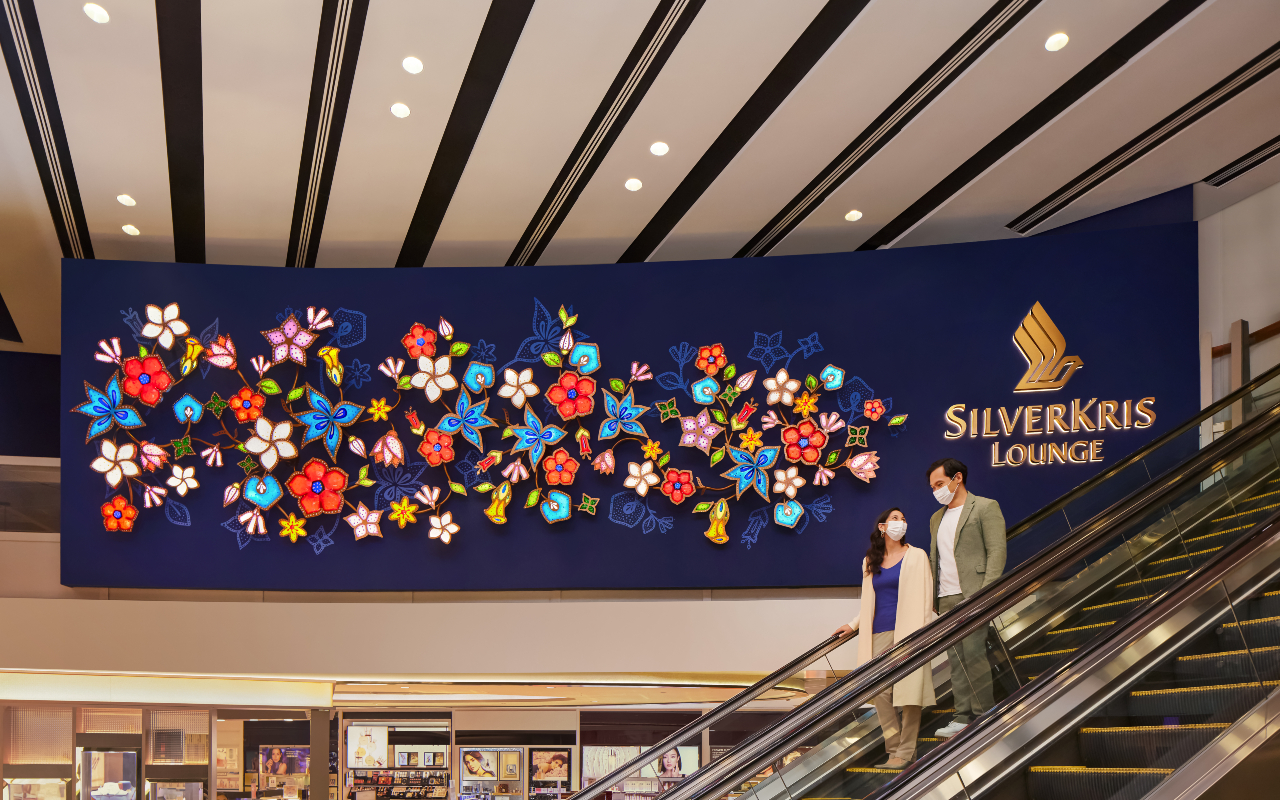
Votre voyage avec Singapore Airlines (SIA) commence avant même que vous ne montiez à bord de nos avions. Dès que vous entrez dans la zone de transit du terminal 3 de l’aéroport Changi, dirigez-vous vers les portes d’embarquement A1-A8 et montez au deuxième étage, où vous serez accueillis par une magnifique façade ornée de fleurs en verre fabriquées à la main et inspirées du motif Batik de Singapore Airlines. Créée par l’artiste singapourienne B. Jane Cowie, cette façade représente un ensemble de motifs floraux et de feuillages, éclairé d’une lumière douce sur fond bleu emblématique de SIA.
Une fois au deuxième étage, vous vous retrouverez dans le hall d’entrée récemment rénové du salon SilverKris, imprégné d’une touche olfactive du Batik Flora, le parfum distinctif de SIA créé en collaboration avec Scent by SIX et élaboré à partir des six fleurs qui composent le motif Batik. Entrez dans le nouveau salon et vous serez transporté dans un havre de confort, de chaleur et d’intimité pour votre plus grand bien-être. Le hall spacieux a été conçu en tenant compte d’un objectif essentiel : favoriser un accès direct à la Private Room, et aux salons Silver Kris de la Première classe et de la Classe Affaires depuis l’entrée principale.
N’oubliez pas de prendre un selfie devant l’impressionnante façade et le partager sur les réseaux sociaux (avec le tag #FlySQ).
Nul doute que les clients utilisant fréquemment les salons des aéroports apprécieront les nouveautés apportées par SIA, d’un montant de 50 millions de dollars, destinées à améliorer le confort et la fluidité des voyages et répondre aux besoins en constante évolution des voyageurs. Les stations de préparation culinaire en direct, par exemple, ont été améliorés, tout comme les zones de productivité et de repos, ainsi que les douches et les toilettes, qui ont été modernisées. Conçus par le célèbre cabinet de design Hirsch Bedner Associates, les nouveaux salons intègrent des finitions contemporaines et des équipements modernes, dans un esprit d’élégance intemporelle.
Découvrez maintenant la nouvelle Private Room, les salons Silver Kris de la Première Classe et de la Classe Affaires rénovés, ainsi que le nouveau salon KrisFlyer Gold.
La Private Room
Votre propre espace privé : Sur présentation de votre carte d’embarquement, vous serez directement accompagné dans la Private Room par notre personnel accueillant. Équipée de 78 sièges, la Private Room a été conçue dans un souci d’intimité et d’exclusivité. Elle propose plusieurs zones assises et de repos pour répondre à vos besoins : des mini cabines séparées par des étagères décoratives pour assurer l’intimité des voyageurs individuels, des cabines en duo pour les clients voyageant en petits groupes, quatre salles de séjour pour les voyageurs en quête d’intimité et de détente, une aire de jeux pour les enfants et une cabine téléphonique pour les passagers qui souhaitent prendre leurs appels en privé.
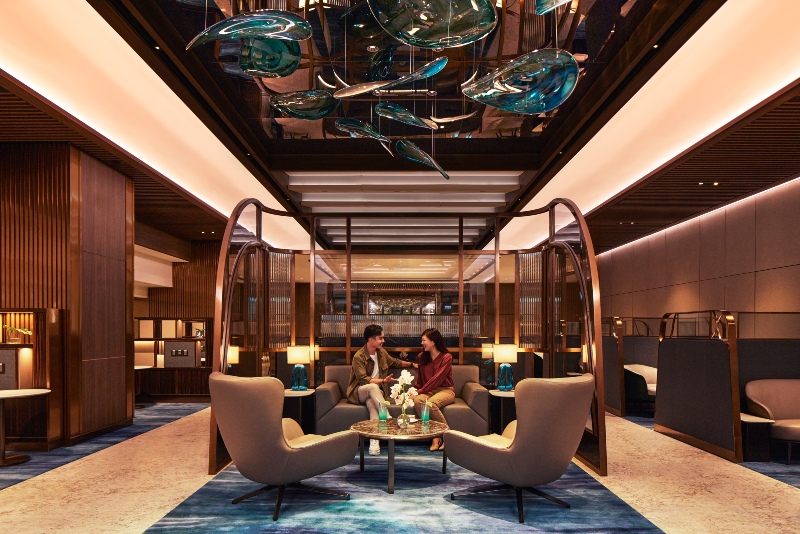
Zoom sur le design : Admirez l’élégance discrète des luminaires de la Private Room. Dans le hall d’entrée, laissez-vous séduire par un dôme lumineux exquis orné de fleurs en cristal Lalique inspirées du gingembre aquatique, l’une des fleurs du motif Batik de SIA. Ce dôme a été conçu par Lalique spécialement pour SIA. Au centre du salon, encadré par de grands écrans de verre architecturaux, se trouve un refuge spacieux idéal pour les familles. Des installations lumineuses personnalisées par Lasvit renforcent l’ambiance luxuriante inspirée de la nature, des océans et de la végétation. Les cadres en cristal qui entourent les cabines destinées au restaurant ont également été créés par Lasvit. Deux œuvres d’art de Hong Zhu An, Peace and Prosperity I et Peace and Prosperity II, ornant les murs de la Private Room depuis sa création, y ajoutent une touche familière au fil des années.
Les fleurs de cristal du dôme de lumière Lalique sont inspirées du gingembre aquatique, une espèce menacée d’extinction à Singapour et l’une des fleurs utilisées dans le motif batik de SIA.La « Private Room », cet espace exclusif au sein du salon Silver Kris, propose des installations lumineuses personnalisables créées par Lasvit.
Pour dîner ou prendre un verre : Avec 28 places réparties dans un environnement spacieux, prendre un repas dans la Private Room est toujours une expérience intime et agréable. Les clients peuvent choisir leurs plats à partir d’un menu proposant une sélection internationale. Ils y trouveront également des plats locaux appréciés, agrémentés d’une touche haut de gamme, tels que le laksa au homard et le wagyu satay. Servez-vous en boissons chaudes dans l’espace dédié ou demandez à tout moment de la journée un café fraîchement préparé auprès de notre barista.
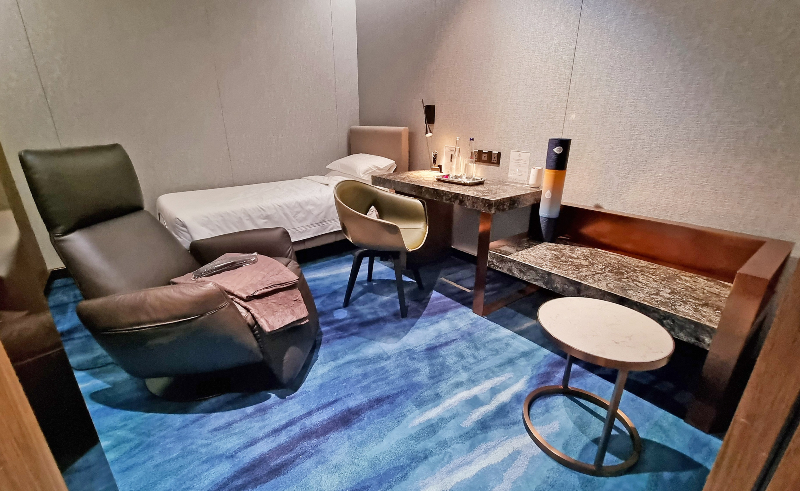
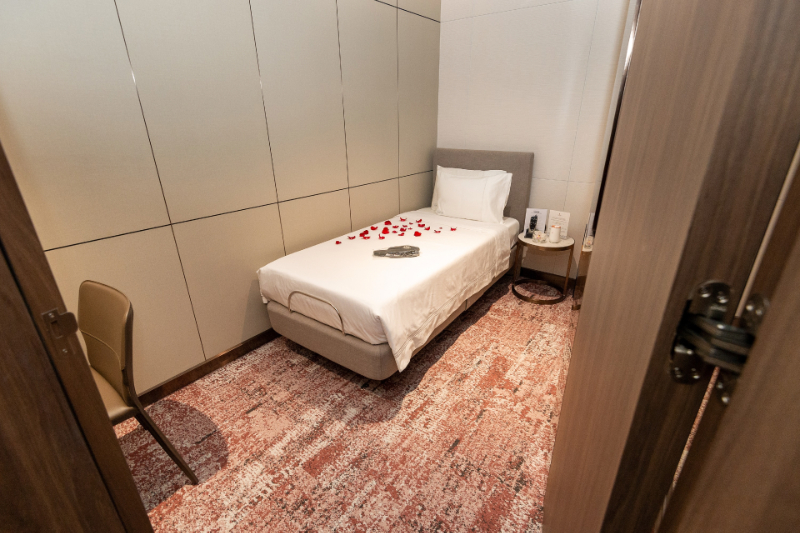
Pour bien vous reposer : Reposez-vous ou détendez-vous confortablement en attendant votre vol. Si vous avez besoin de plus d’intimité ou si votre escale est plus longue, réservez l’une des quatre chambres spacieuses où vous pouvez travailler, vous détendre, vous rafraîchir et même faire un peu d’exercice. Toutes ces salles disposent d’un éclairage réglable et sont équipées de fauteuils inclinables Poltrona Frau. Deux des chambres sont équipées de lits simples Tempur Zero G associés aux matelas Supreme Firm de la marque, dont l’un des réglages en apesanteur procure à votre corps une relaxation totale. Deux types d’oreillers Tempur sont également disponibles — moelleux et moyennement moelleux — par ailleurs, le sommier du lit peut être surélevé pour les clients qui souhaitent lire ou utiliser leurs appareils portables. Pour une relaxation plus profonde, les parfums « Invigorate » et « Sleep », signés COMO Shambhala, sont disponibles sur demande. Des blocs et tapis de yoga COMO Shambhala sont également proposés aux clients qui souhaitent effectuer quelques mouvements d’étirement.
Ressourcez-vous dans l’une des chambres exclusives dotées de lits Tempur Zero G avec des options de massage par vibrations.
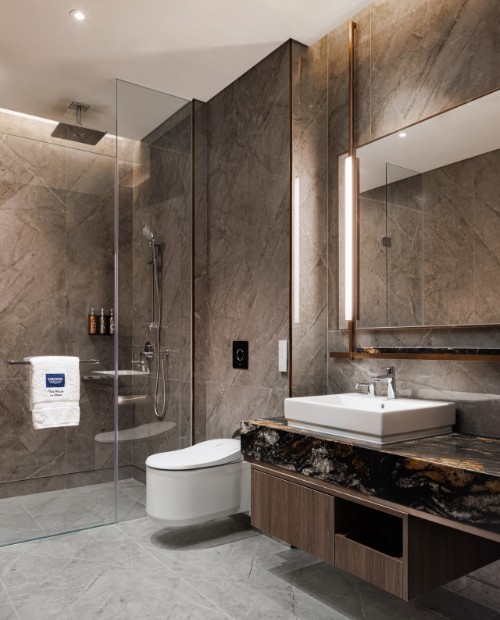
Pour bien vous rafraîchir : La Private Room dispose de trois grandes salles de douche et d’un WC équipé d’une douche et accessible aux fauteuils roulants. Elles sont toutes équipées d’installations sanitaires et de douches GROHE, de toilettes Sensia Arena avec réglages personnalisés et fonctions sans contact permettant l’ouverture, la fermeture et l’activation automatique de la chasse d’eau. Les douches GROHE vous proposent différentes options : jet de pluie, jet d’eau puissant et douchette main. Pour davantage de bien-être, les clients peuvent profiter avant leurs vols d’équipements de douche « Invigorate » de COMO Shambhala. Les familles voyageant avec de jeunes enfants peuvent également bénéficier d’installations pour enfants dans les toilettes, ainsi que d’une salle indépendante de soins pour bébés.
Toutes les salles de bain de la Private Room sont dotées d’équipements sanitaires et de douches signés GROHE et de produits COMO Shambhala. Crédit photo : GROHE Pacific Pte Ltd
Conditions d’accès à la Private Room : La Private Room est uniquement accessible aux passagers voyageant en Suites ou Première Classe de SIA. Vous pouvez y entrer directement depuis le hall principal du salon SilverKris, réduisant ainsi votre parcours par rapport à l’ancien aménagement.
Le salon SilverKris de la Première Classe
Votre espace favori rénové : Ce salon peut accueillir 134 clients et les espaces favoris de ses utilisateurs ont été remis à niveau – un bar principal rénové, une salle à manger et une station de préparation culinaire en direct plus vastes, une salle à manger deux fois plus grande et un bar rénové, des modules de productivité, une salle de réunion dédiée et une nouvelle salle de jeux transparente pour les enfants que leurs parents peuvent surveiller depuis un salon adjacent.
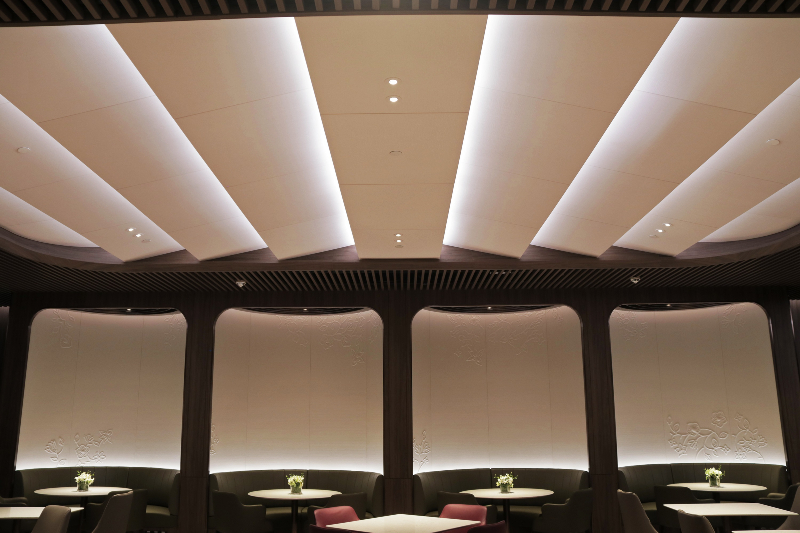
La salle à manger en section Première Classe propose désormais deux fois plus de sièges et peut accueillir confortablement 52 clients, avec quatre banquettes familiales dont les panneaux arrière arborent le motif Batik de SIA.
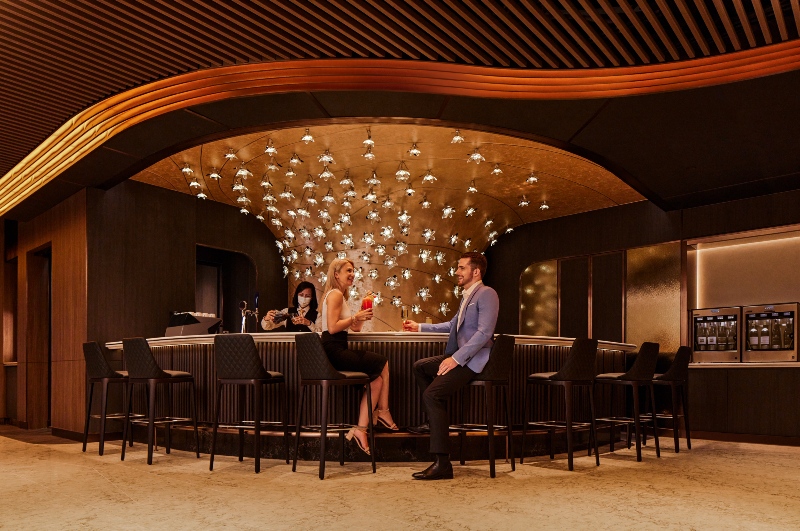
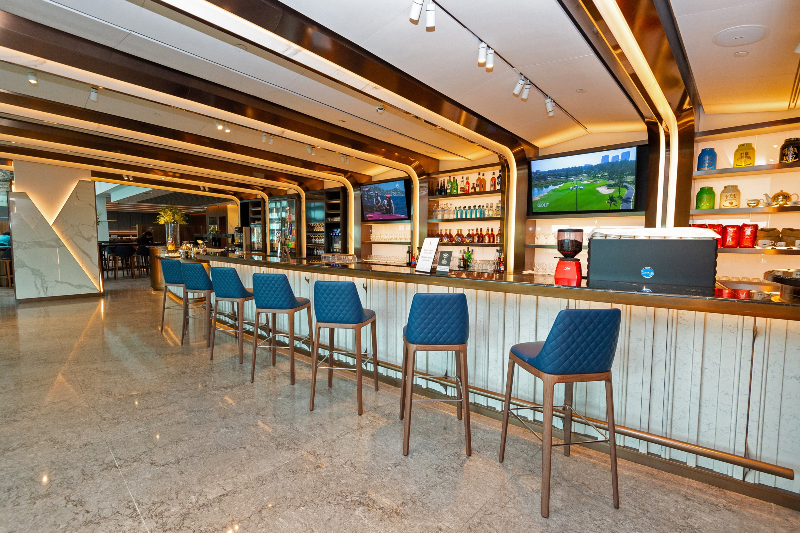
Zoom sur le design : Rendez-vous au Crystal Bar et admirez le nouveau mur recouvert de luminaires en cristal Lalique. Chaque luminaire sur mesure s’inspire de la forme d’un gingembre aquatique — pouvant même être admirée depuis le hall d’entrée. Les panneaux arrière de la salle à manger de la Première classe sont ornés d’un motif Batik et les murs incurvés près du buffet symbolisent le renouveau dans le domaine du voyage.
Le bar de la Première Classe, très fréquenté par les voyageurs, bénéficie d’un nouveau look et a été rebaptisé avec un nouveau nom — le Crystal Bar — Il est également pourvu de nouveaux éléments lumineux spécialement conçus par Lalique pour SIA
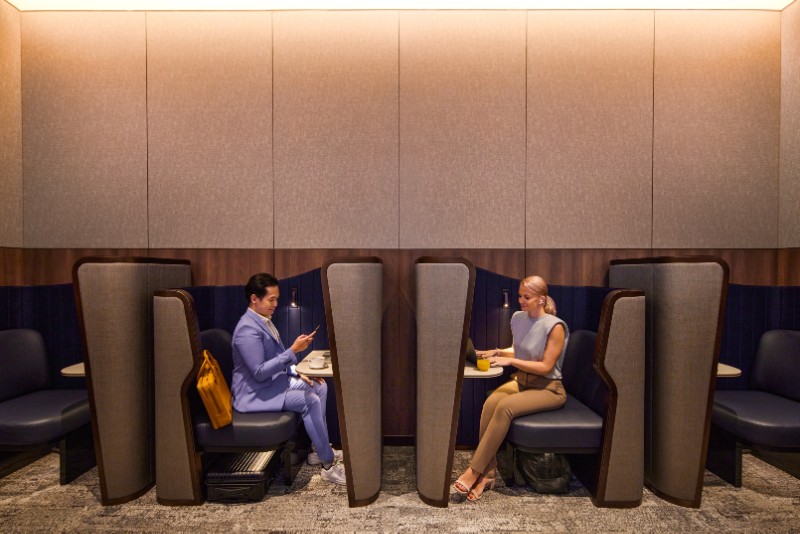
Espaces de productivité : Les modules de productivité — des compartiments idéalement conçus pour les clients ayant besoin de travailler en toute tranquillité — ont d’abord été introduits dans les salons SilverKris à l’étranger et ont été très plébiscités. Une version encore améliorée de ces modules est désormais disponible dans le salon SilverKris à l’aéroport Changi. Une autre nouveauté — le fauteuil modulaire —, conçu par Hirsch Bedner Associates, permet aux clients de travailler et de dîner dans le confort d’un sofa. Une salle de réunion dédiée est également proposée aux voyageurs en Première classe, pouvant accueillir jusqu’à six personnes.
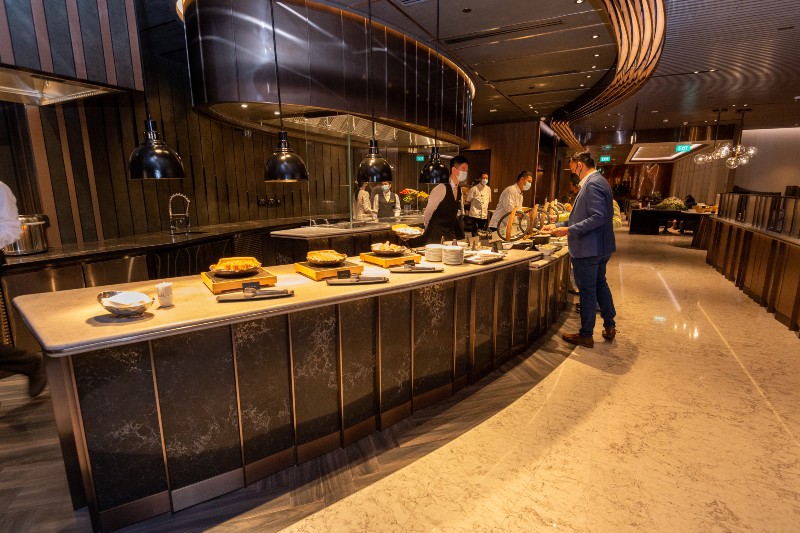
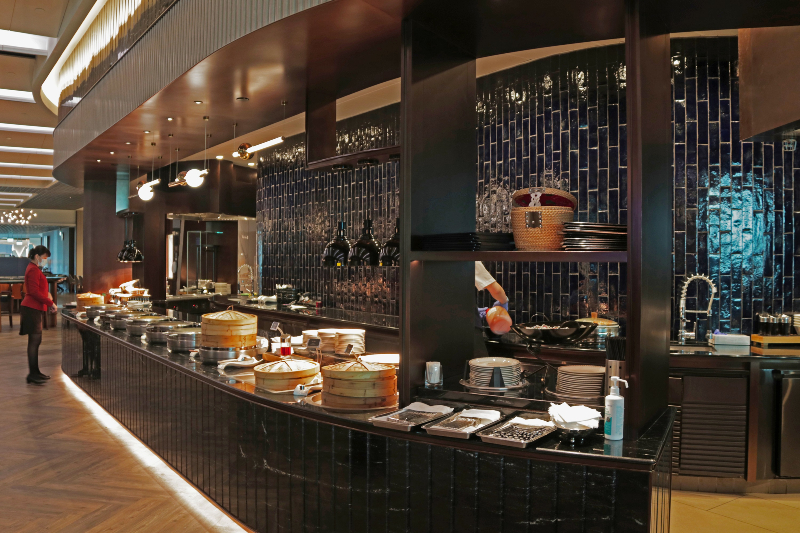
Restauration de Première Classe : Une grande station de préparation culinaire en direct où sont préparés des plats à la carte tels que le bak chor mee et le roti prata constitue l’élément central de la salle à manger de ce salon. Les buffets traditionnels sont remplacés par des comptoirs en libre-service, où les clients peuvent déguster une sélection de mets haut de gamme telles que le laksa aux grandes crevettes, les soba froides et les crèmes glacées. Le matin, une autre station située près du comptoir à café sert des gaufres et des pâtisseries fraîchement préparées. Outre les boissons traditionnelles disponibles dans les salons, deux autres espaces sont à votre disposition pour les boissons : le Crystal Bar, avec un barista pendant la journée et un barman le soir, qui sert des cocktails spécialisés comme le SilverKris Sling et l’emblématique Singapore Sling, et un minibar annexe appelé Trunk Bar, où, en toute liberté, les clients peuvent se servir en vins et liqueurs variés.
Les stations de préparation culinaire en direct et les repas préparés par les chefs déjà bien connus et appréciés de nos clients représentent désormais l’élément central de la salle à manger rénovée.
Pour un repos parfait : En Première classe, le salon Silver Kris dispose de quatre chambres, idéales pour les passagers ayant quelques heures à attendre avant leur vol : deux chambres sont équipées de fauteuils inclinables Poltrona Frau, tandis que les deux autres sont dotées de lits simples Tempur Zero G avec matelas Supreme Firm. Deux types d’oreillers Tempur sont disponibles — moelleux et moyennement moelleux — et l’éclairage de la chambre peut être tamisé ou éclairé. Des nouveautés pour le salon Silver Kris de la Première Classe.
Deux chambres sont équipées de lits Tempur Zero G, qui peuvent être disposés à plat pour dormir, ou inclinés pour ceux qui souhaitent lire ou utiliser leurs appareils portables.
Pour bien vous rafraîchir : Le salon Première classe Silver Kris vous propose cinq salles de douche et une toilette équipée d’une douche et accessible en fauteuil roulant. Chaque salle est dotée d’installations sanitaires et de douches GROHE, de toilettes Sensia Arena avec réglages personnalisés et fonctions sans contact permettant l’ouverture, la fermeture et l’activation automatique de la chasse d’eau. Les douches GROHE vous proposent différentes options : jet de pluie, jet d’eau puissant et douchette main. Les familles voyageant avec de jeunes enfants peuvent également bénéficier d’installations pour enfants dans les toilettes, ainsi que d’une salle indépendante de soins pour bébés.
Conditions d’accès : Le salon SilverKris de la Première Classe est accessible aux passagers voyageant en Suite ou en Première classe, à tous les membres du Solitaire PPS Club quelle que soit leur classe de voyage sur SIA, ou aux passagers de Première Classe sur les vols de Star Alliance. L’entrée se fait directement depuis le hall principal du salon SilverKris.
Le salon SilverKris de la Classe Affaires
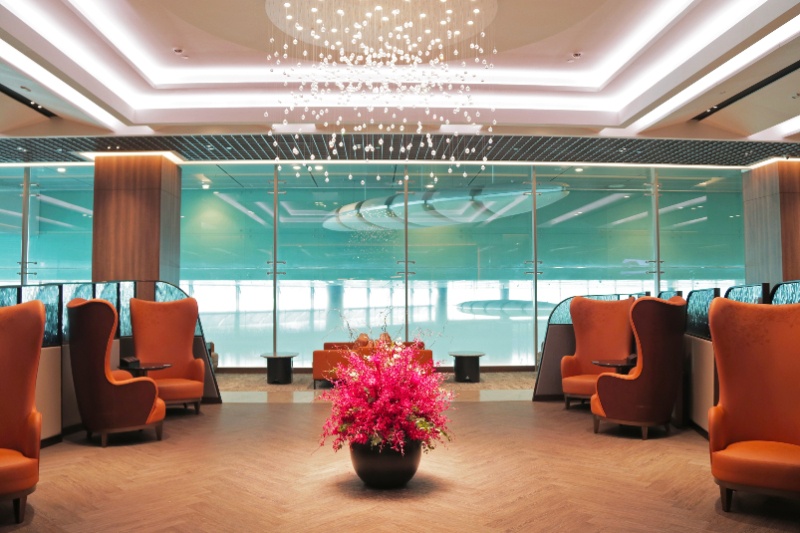
Plus d’espace et de rénovation : Le nouveau salon SilverKris de la Classe Affaires est désormais le plus grand de tous les salons SilverKris, avec environ 575 sièges mis à la disposition des clients (la surface au sol est plus étendue que la Private Room et le salon Première classe réunis). Le salon le plus fréquenté, son nouveau design comprend plusieurs zones pour répondre aux différents profils et besoins des passagers, notamment une grande salle à manger, un salon de détente, une zone de repos plus paisible et un espace ouvert avec des sièges aux dimensions généreuses.
Faites une pause dans le salon spacieux donnant sur les portes de la zone d’embarquement A1-5, judicieusement situé près de la salle à manger.
Zoom sur le design : Le tout nouveau bar du salon classe Affaires est doté d’un éclairage au plafond qui représente les latitudes du globe et ajuste sa luminosité et sa couleur en fonction de l’heure de la journée. Le point central du salon est constitué par les fauteuils bergères, avec le motif SIA Batik brodé sur du cuir cossu et orangé. Des œuvres d’art des artistes singapouriens Hong Zhu An et Lim Tze Peng sont actuellement exposées dans le salon, dans le cadre d’une collaboration avec la galerie d’art contemporain locale Ode to Art, évoquant des scènes colorées et paisibles pour élargir l’espace visuel. Dans la zone ouverte de type « côté cour », des sièges aux couleurs vives sous des puits de lumière et avec vue sur pistes vous combleront pleinement pendant que vous attendez votre prochain vol.
Un cadre propice à la productivité : Le nouveau salon dispose de sa propre salle de réunion pouvant accueillir jusqu’à six personnes et de plusieurs banquettes modulaires permettant aux clients de travailler et de dîner confortablement. Des modules de productivité et une petite cabine téléphonique pour travailler en toute tranquillité sont également disponibles.
Gagnez en productivité lorsque vous travaillez dans les modules à votre disposition dans le nouveau salon.
Pour mieux vous restaurer : Ce salon propose deux espaces de restauration : les clients désireux de prendre un repas copieux peuvent se rendre dans la salle à manger principale, qui compte près de 200 places assises et un long buffet en libre-service, tandis que l’espace ouvert de l’autre côté du salon propose une restauration légère et des rafraîchissements dans un cadre plus informel et décontracté pour les clients voyageant en famille ou à titre de loisir. Le tout nouveau bar — délibérément placé entre les deux espaces pour être facilement accessible des deux côtés — est tenu par un barista le matin et un barman le soir. Ainsi, les clients de la classe Affaires peuvent désormais savourer leur boisson préférée avec vue sur la piste.
La salle à manger principale dispose d’un long îlot de buffet où les clients peuvent choisir leurs propres repas.
Pour votre repos bien mérité : Les clients ayant besoin de passer la nuit en transit ou de récupérer du décalage horaire peuvent se ressourcer dans la zone de repos située à l’extrémité du salon et bénéficier de 14 chaises longues permettant de se lover dans une cabine individuelle entrouverte, une nouveauté suite aux commentaires de nos clients. Le salon principal est conçu comme une salle de séjour pour plus de confort et de détente. Vous avez quelques minutes à perdre ? Rendez-vous à l’écran interactif KrisShop, développé en collaboration avec Sony, où vous pouvez consulter le catalogue de vente en ligne et acheter via des codes QR.
Pour vous rafraîchir pleinement : Profitez de deux fois plus de douches dans le nouveau salon SilverKris de la classe Affaires. Quinze salles de douche sont désormais disponibles, ainsi que des toilettes et douches accessibles en fauteuil roulant. Les familles voyageant avec de jeunes enfants disposent également d’installations pour enfants dans les toilettes, ainsi que d’une salle de soins pour bébés indépendante.
Conditions d’accès : Le salon SilverKris Classe Affaires est accessible à tous les membres du PPS Club quelle que soit leur classe de voyage sur SIA ou aux passagers voyageant en classe Affaires sur les vols de SIA ou d’une compagnie membre de Star Alliance. Vous pouvez y accéder directement depuis le hall principal du salon SilverKris.
Salon KrisFlyer Gold
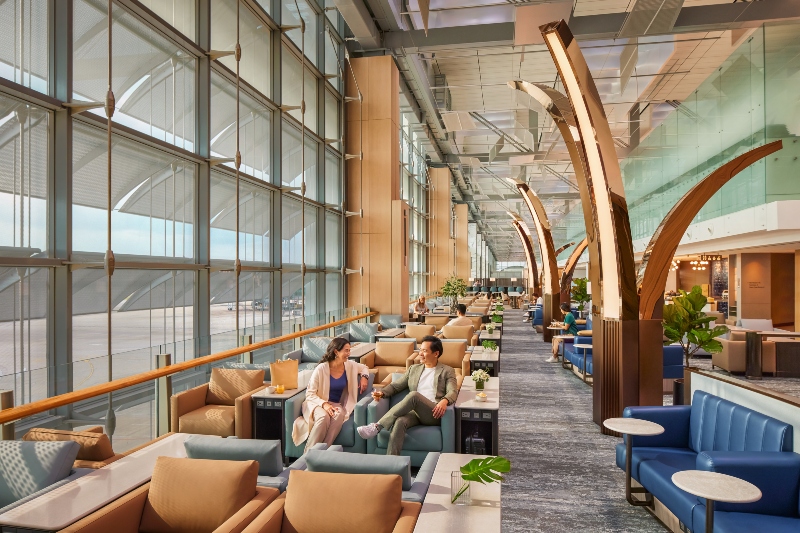
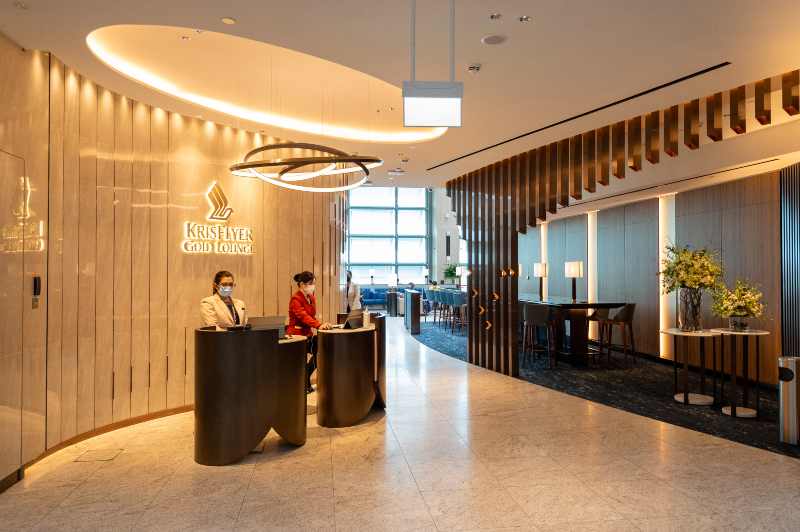
Deux fois plus de confort : Le nouveau salon KrisFlyer Gold a doublé de superficie et peut désormais accueillir environ 350 clients. Il s’agit du deuxième plus grand salon après le salon classe Affaires SilverKris. Il est désormais équipé de ses propres douches et est situé dans un magnifique espace ouvert avec des hauts plafonds, ce qui lui confère une atmosphère lumineuse et fraîche — agrémentée d’une vue imprenable sur la piste.
Admirez le décollage et l’atterrissage des avions en attendant votre vol dans le coin salon avec vue sur les pistes.
Zoom sur le design : L’entrée du salon présente des murs incurvés symbolisant le renouveau dans le domaine du voyage et un éclairage évoquant le feu arrière d’un avion. À l’intérieur, l’espace ouvert à double volume est marqué par de hautes structures lumineuses s’inspirant des trajectoires de vol qui évoluent en se ramifiant.
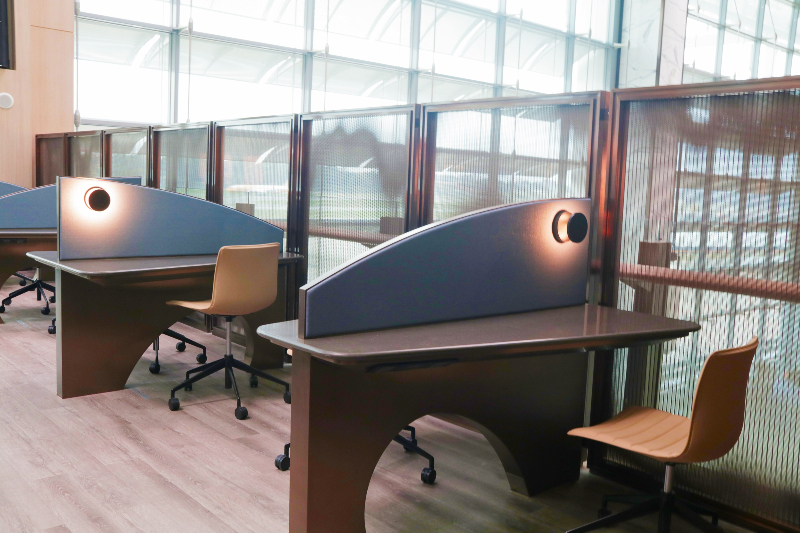
Pour travailler de manière optimale : Le salon KrisFlyer Gold met à votre disposition des tables hautes ainsi que des bureaux ouverts.
Les clients qui préfèrent travailler dans un environnement de bureau trouveront également ces espaces à leur disposition dans le salon.
Espace de restauration : Le buffet a été agrandi et propose un menu renouvelé et élargi. Le salon et la salle à manger se trouvent tous deux dans un espace ouvert, ce qui donne une impression d’espace et de fraîcheur. Même la nuit, le salon KrisFlyer Gold restera fortement empreint de luminosité.
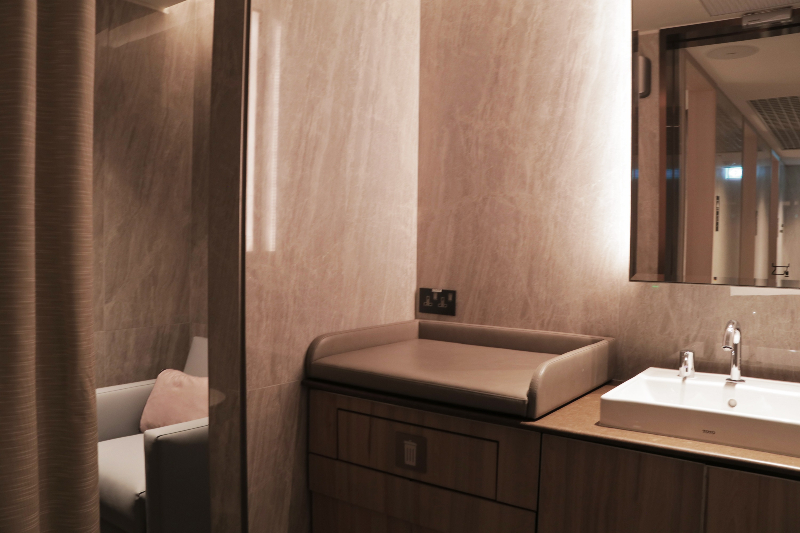
Pour vous rafraîchir : Alors que le salon précédent ne proposait pas ses propres toilettes et douches, les voyageurs fréquents utilisant le nouveau salon KrisFlyer Gold seront très heureux d’apprendre qu’il est désormais doté de trois toilettes dédiées, trois cabines de douche ainsi que des toilettes et une douche accessibles en fauteuil roulant. Des installations pour enfants dans les toilettes, de même qu’une salle de soins pour bébés, sont également mises à disposition des familles voyageant avec de jeunes enfants.
Le salon KrisFlyer Gold rénové propose désormais des douches et toilettes, ainsi qu’une salle de soins pour bébés.
Conditions d’accès : Le salon KrisFlyer Gold est accessible aux membres KrisFlyer Elite Gold ou Star Alliance Gold voyageant sur des vols SIA ou des compagnies Star Alliance, en classe Premium Economy ou classe Économique. Il possède sa propre entrée séparée, à quelques pas du salon SilverKris.
Le salon KrisFlyer Gold dispose d’une entrée séparée, à quelques pas de l’entrée principale du salon SilverKris.
Singapore’s hawker food may often get the spotlight, but its food culture has evolved to cater to different dietary needs, including vegetarian and vegan diets. Whether you’re a seasoned vegetarian or simply looking to explore meat-free options, Singapore boasts an impressive array of vegetarian and vegan restaurants that showcase the country’s vibrant and innovative culinary landscape. Swing by these plant-based restaurants in Singapore to discover delicious meat-free cuisine, plant-based burgers, traditional vegetarian Asian dishes and more.
Afterglow by Anglow in trendy Duxton Hills is hard to beat when it comes to variety – you’ll find meat-free versions of popular Japanese, Italian, Thai and Mediterranean dishes here. Everything on the menu at this vegan restaurant in Singapore is plant-based, and diners can modify their orders if they are allergic to any of the ingredients. Whet your appetite with the kimchi avocado rolls, Afterglow’s signature dish that’s made with almond sushi “rice”, housemade kimchi and avocado. For your main dish, choose the raw and crispy gluten-free lasagne, which is made with zucchini sheets rather than pasta, dehydrated cherry tomatoes, a medley of vegetables and walnut “minced meat”. If you’re a fan of burgers but want to keep things meat-free, the Smoked Stack Burger is also a fantastic option with its “epic veggie patty” made with broccoli, green beans, shiitake mushrooms, spices and brown rice flour.
Afterglow champions farm-to-table dining and dishes are made using regionally sourced whole foods. Image credit: Afterglow
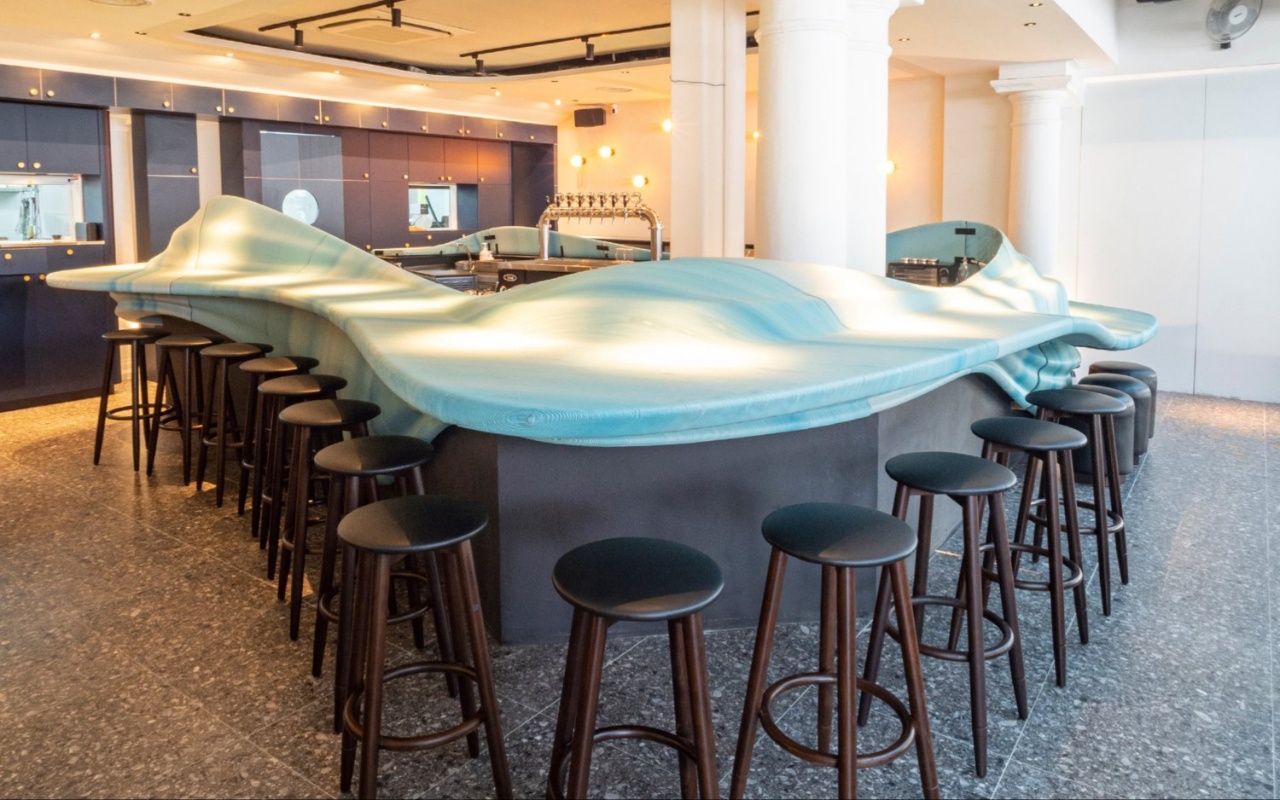
With its decadent vegan fare and sensational sips, Analogue in CHIJMES is the ultimate destination for a sophisticated night out. Satisfy your cravings with a selection of vegan delights, from mouthwatering jackfruit tacos to heavenly mushroom croquettes, and even a sinful poutine featuring chat potatoes, miso and velvety vegan cheese. To tantalise your taste buds, bite into desserts like the Piña Clavo, which boasts grilled pineapple paired with fermented chilli, clove ice cream and a delightful chickpea tuille. Quench your thirst with Analogue’s divine cocktails, where classic IBA drinks are skilfully crafted alongside irresistible signatures. You simply must try the Smokey Jerky, a captivating creation blending whisky, palo cortado and maple syrup with a fiery smoked paprika twist, all complemented by mushroom jerky.
Everything here is sustainable, from the 3D-printed bar top made out of recycled plastic bottles to the mycelium tabletops. Image credit: Analogue
Whether you’re a dedicated vegan, a health-conscious foodie, or simply seeking an unforgettable culinary experience, Casserole at Shangri-la Rasa Sentosa takes you on a journey through diverse cuisines, ranging from exquisite Asian delicacies to hearty Western dishes, and even delicious Indian fare. The chefs’ specials, served in large casserole servings, are perfect portions for sharing with friends or family. The menu is constantly evolving, so you’ll always discover new culinary gems to savour. And when it comes to beverages, Casserole doesn’t disappoint. Immerse yourself in a world of predominantly organic wines, or indulge in a signature cocktail. What’s more, cocktail garnishes are grown entirely in-house, adding a fresh twist to every sip.
Savour mouthwatering flavours at Shangri-la Rasa Sentosa. Image credit: Shangri-la Rasa Sentosa, Singapore
Housed within the Maxwell Reserve, Autograph Collection in Tanjong Pagar, Cultivate Café offers an impressive range of creative dishes, with a focus on healthy and nutritious ingredients. They are all plant-based, GMO-free, gluten-free and completely vegan. The raw beetroot with pecan nuts, sage and sumac pesto epitomises the restaurant’s aim to highlight the simple goodness of organic ingredients. For a more substantial meal, pick the gluten-free leek and roasted pumpkin tart, or the Superfood Earth Bowl with soba noodles and broccoli. End your meal on a sweet note with gluten-free and organic dairy-free desserts, such as the pear and ginger cake or the olive oil, honey and lemon cake. There’s also a grab-and-go option if you haven’t the time to sit down for a meal.
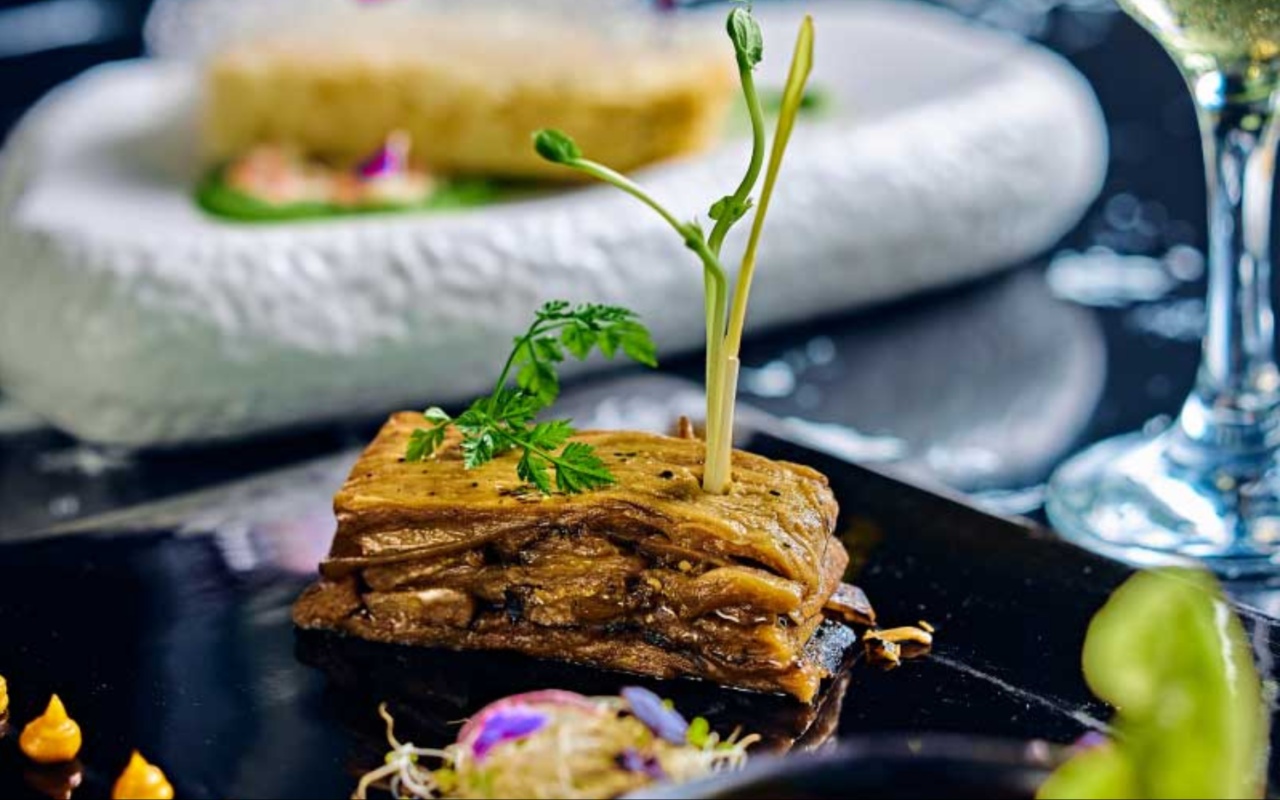
Escape the hustle and bustle of Orchard Road in a culinary oasis of Japanese-French cuisine at this vegetarian fine dining restaurant in Singapore. Here, the chefs work their magic by creating exquisite dishes that are presented in a captivating way. Don’t be fooled by the lack of meat on the menu – this place aims to change any misgivings you may have about vegan or meat-free food. The four- or five-course set lunch or six-course dinner options are crafted using only the freshest vegetables, fruits and herbs. Every dish is a culinary adventure, designed to challenge your perception of vegetarian cuisine. Highlights of the menu include the decadent gratinated champignon with mozzarella, the aromatic risotto with black truffle and edamame and the vegetable sashimi served on a bed of ice. For a main course that’s sure to impress, try the grilled summer mushroom steak on a hot stone, a flavourful and satisfying dish that will have you reaching for seconds. To complement your meal, there’s an impressive selection of mocktails, organic wines and Sapporo beer.
Lavish presentation and refined cooking techniques make Joie a hit with diners. Image: Joie
Embark on a culinary journey through India at this Ayurvedic-inspired vegan restaurant at The Vagabond Club in Lavender. Their plant-based, gluten-free tapas and mains are crafted with utmost care and attention to detail, blending tradition and modernity to create unique and flavourful dishes. Drawing inspiration from all corners of India, everything is made entirely from scratch with quality ingredients. The small sharing plates are a perfect start to your meal, featuring crispy jalapeno pakora poppers, hericium mushrooms with vegan cheese dip and spicy barbecue sauce, and inventive papadum tacos loaded with bold and zesty flavours. For mains, you can expect a delicious selection of dishes such as the tofu kathi roll, Beyond Meat moussaka, and cauliflower cream risotto – each a masterpiece of flavour and texture. And for those with a sweet tooth, the elaichi (cardamom) brownie with a scrumptious pistachio crust is a must-try.
Tuck into delicious Ayurvedic-inspired cuisine at Sexy Indian. Image credit: Sexy Indian
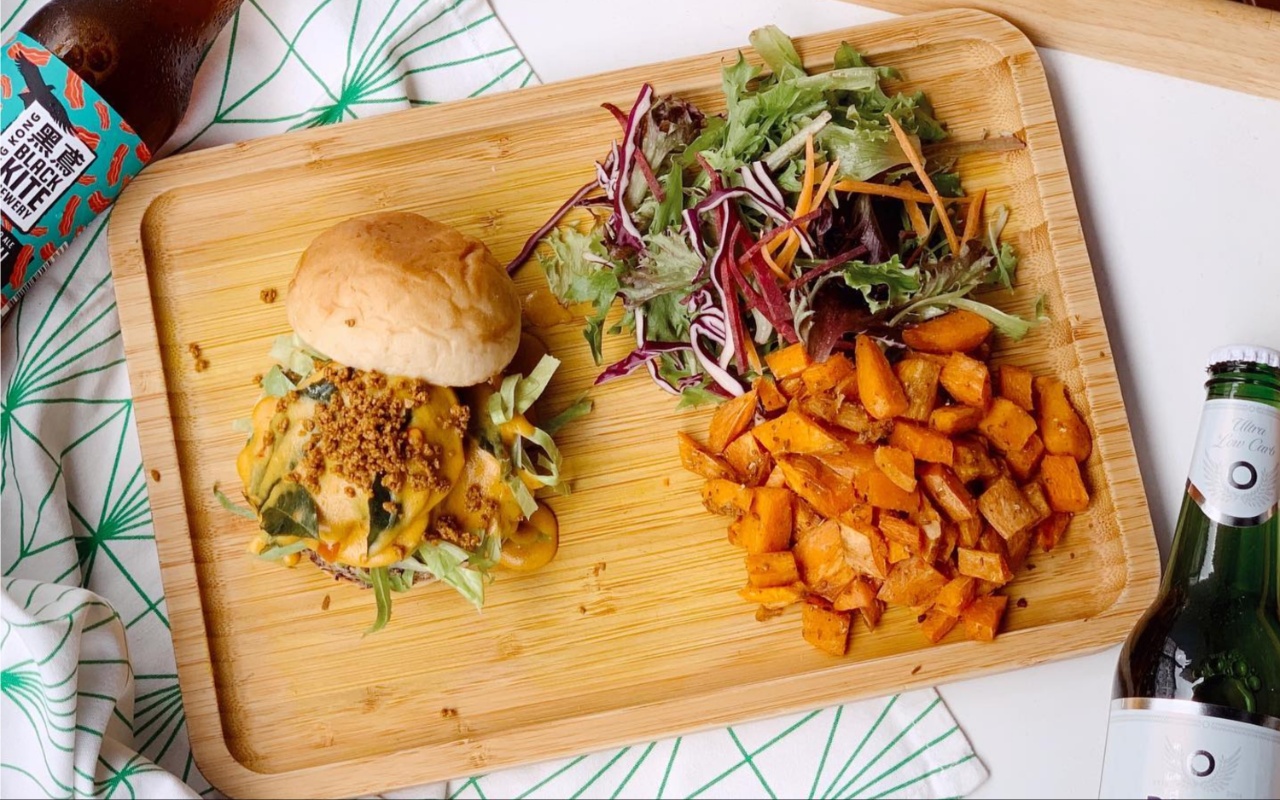
Founded in Singapore in 2010, VeganBurg has been slinging plant-based, cholesterol-, antibiotic-, hormone- and GMO-free patties long before Impossible and Beyond Meat entered Singapore’s vegan food scene. Following their success in Singapore – where they have joints in Eunos and Woodleigh – VeganBurg went global with the opening of a San Francisco outlet. While their plant protein patties may not resemble real meat as closely as competitors, they are well-seasoned, convincingly textured and a sure hit with carnivores trying out vegan food for the first time. If you’re one for the classics, try their bestsellers, the Avocado Beetroot or Smoky BBQ. Otherwise, opt for a little local flavour with the Char-grilled Satay or award-winning Chili Krab burger, which uses a unique plant-based patty that resembles crab meat.
VeganBurg is one of the world’s first meat-free fast food joints. Image credit: VeganBurg
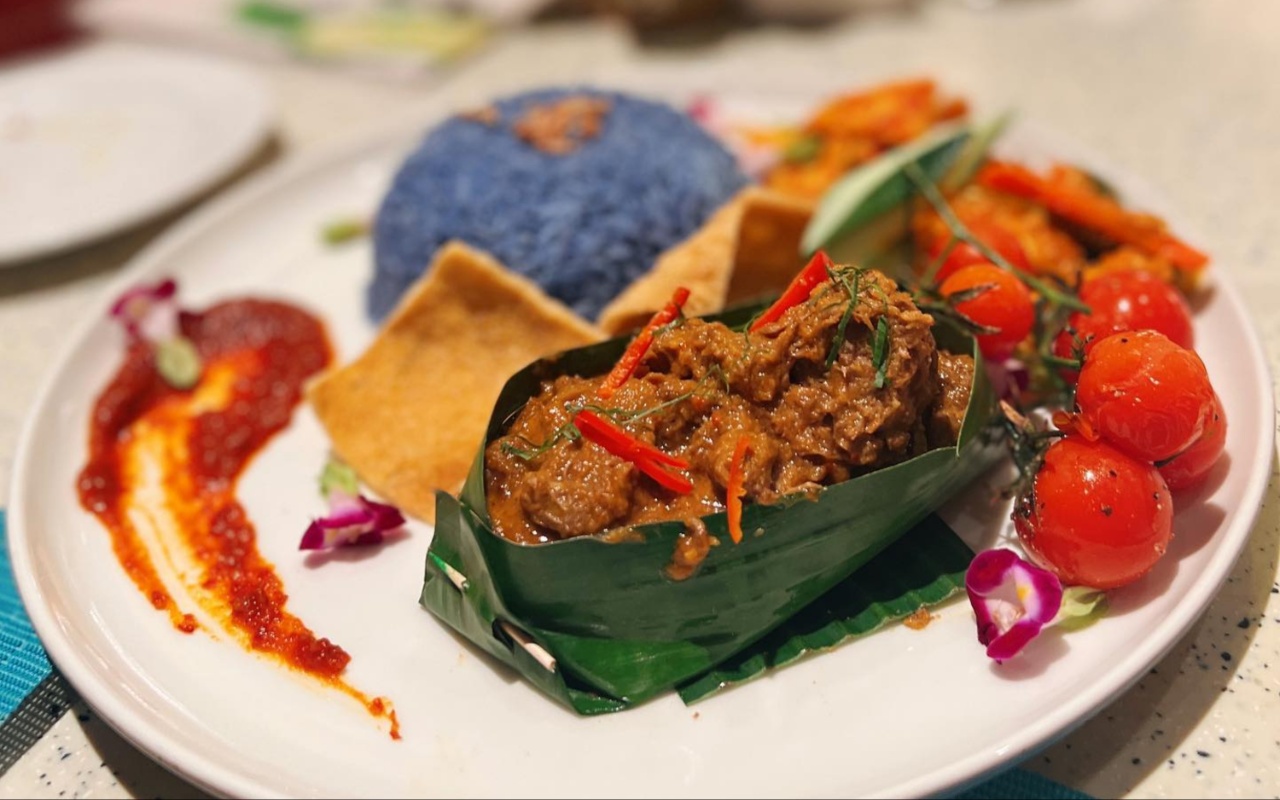
If you’re hankering for homestyle Indonesian cuisine that’s vegetarian and vegan-friendly, stop by Warung Ijo in Kampung Glam. The star of the show here is their meat-free rendang (a rich braise made from coconut milk and spices). While this is typically made with chicken or beef, Warung Ijo makes theirs with chunks of lion mane mushroom, giving the dish a fibrous, meaty texture that’s not unlike the fork-tender beef you’d normally find in rendang. There’s also a selection of Indonesian fish dishes made with a soy and seaweed substitute, an omnimeat martabak (stuffed pancake) and meat-free satay. Traditionally vegetarian Indonesian dishes like tahu telor (fried egg and tofu) and gado gado (Indonesian salad with peanut sauce) can also be found on the menu.
This article is part of Singapore Airlines’“Beyond the Cabin”video series, in which cabin crew explore their favourite cities and share how their hobbies enrich their service delivery.
Paris is renowned for its headline attractions such as the Eiffel Tower and the Louvre, but it’s also a treasure trove of hidden finds. Just ask Leading Steward Moon, who can more often than not be found exploring the city’s second-hand stores and flea markets for vintage collectibles.
“I’m fascinated by vintage objects,” declares Moon, who has been flying with Singapore Airlines for 13 years. “In a society where novelty is sought after, I believe in finding potential in pre-loved pieces. Giving worn-out objects a new lease on life also satisfies my creative needs.” Today, Moon’s vintage collection spans a wide array of eclectic items – from a decades-old necktie his father wore in his wedding photo, to a prized triptych barber mirror from Paris.
The best shopping spots for vintage pieces
According to Moon, there are many excellent places for vintage shopping in the City of Lights. For starters, he recommends Marché aux Puces de Saint-Ouen, the largest second-hand market in the world. Here, more than 1,700 antique dealers hawk what Moon describes as an “incredible variety of vintage pieces”, from pre-loved clothing and bric-à-brac to mid-century furniture.
For second-hand books, Moon likes visiting Paris’ traditional riverside booksellers – known asles bouquinistes– who have been embedded in the city’s cultural fabric for centuries. “Les bouquinistes, with the Seine as a backdrop, provide an atmospheric way to book-browse,” he says.
Other vintage shopping hotspots include the fashionable Le Marais district in the 4th arrondissement. “I’ve had many enjoyable walks in Le Marais. The lively vibe attracts me. Vintage shops are littered throughout the neighbourhood, and many of them are open on Sundays,” he says. These include the shops at Le Village Saint-Paul, a cobblestone building complex tucked away in the heart of Le Marais. “It’s a quaint and calming cultural centre filled with wonderful museums, contemporary art and second-hand shops,” he shares.
As a seasoned collector, Moon has many tips when it comes to vintage shopping. “When in a vintage boutique, do not look for things. Instead, keep an open mind and let the objects be discovered,” he advises. “In addition, don’t ask only for prices but also if there is a story behind the pieces you intend to acquire. Understanding the history of each item helps us appreciate it more.”
Basking in the charms of Paris
Besides vintage shopping, Moon enjoys soaking up the myriad charms of the French capital. “Paris has beautiful gardens. For instance, Jardins des Tuileries is stunning in the summer, and hosts a lovely Christmas market in the winter,” he shares. “The garden connects the Louvre to another one-of-a-kind museum, Musée de l’Orangerie. There, Claude Monet’s last works are on permanent display as a gift from him to the State.”
Moon also likes exploring the buzzing streets of Montmatre, an arty enclave atop a hill in the 18th arrondissement. “Montmartre is a great neighbourhood for a stroll. I’d suggest alighting at the Abbesses metro station for various restaurants and award-winning boulangeries,” he says. In particular, Boulangerie Alexine is beloved for its crusty baguettes, which ranks among the best in Paris.
On the topic of food, Moon loves sampling the capital’s delectable desserts. “A short walk fromles bouquinistesalong the Seine, you’ll find Berthillon on the Île Saint-Louis, which serves delicious ice cream perfect for hot summer days,” he shares. “And during the colder months, you can enjoy warm galettes in the cosy crêperie La Crêpe en l’Isle.”
A stone’s throw from La Crêpe en l’Isle is Hôtel de Sens, one of Moon’s favourite places in Paris. Once home to the archbishops of Sens, the medieval villa – which dates back to the 16th century – is today a specialist art library. “It reminds us how older structures can have new life,” Moon muses.
Lessons from the past
Moon’s love for all things vintage has taught him to never take things at face value. “The appeal of pre-loved items lies in their provenance and history,” he says. “Besides admiring the beauty of objects, vintage shopping has made me curious about the story behind them. What purpose did it serve? When was it made? How did it come about? And why is it important to know their history? It has taught me to look past appearances, and instead understand that everything and everyone has a unique story.”
This enriches his service delivery, inspiring him to serve customers with empathy and compassion. “I don’t categorise people based on a few interactions. Instead, I enjoy engaging with customers on a more personal level if they are open to sharing,” he reflects.
Moon also notes that Singapore Airlines often partners with brands steeped in heritage. “I like exploring the origins behind the products Singapore Airlines uses. From prestigious champagne houses like Krug and Taittinger, to tableware brands such as Lalique and Narumi, we have a tradition of working with brands with a long lineage,” he says. “I enjoy sharing these details with passengers to enhance their experience of flying with us.”
At the end of the day, while there’s plenty to treasure about the past, Moon feels that it is also important to look ahead to the future. As he reflects, “appreciating tradition does not stop us from embracing technology. Instead, it helps us to see how far we’ve come”.