Posts, pics, video and motivation on Travel Lifestyle, countries around the world! Addicted to adventure travel and photography, I'm on a mission to inspire your next journey with entertaining stories, beautiful images, fun travel videos, and useful tips.
This neighbourhood ramen spot on Manhattan’s Upper East Side is so unassuming that it’s easy to miss if you hadn’t been looking out for it. Modelled after Meiji-era port city eateries, NR serves quality Japanese cocktails bursting with modern flash and flair. Check out their Smokey Pineapple (mezcal, pineapple, lime and palo santo wood bitter) and Pineapple + Passion Fruit (rum, pineapple, passion fruit, vanilla, lime and burned cinnamon) – they pair well with appetisers like karaage fried chicken, truffle egg sandwich and of course, NR’s exceptional ramen.
Located in Vinegar Hill, a six-block neighbourhood between DUMBO and the Brooklyn Navy Yard, Vinegar Hill House serves seasonal New American cuisine in a historic setting. Diners can opt to enjoy brunch and dinner dishes like poached halibut, cast iron chicken, and Guinness chocolate cake in a variety of locations within the building. This includes the main dining room, downstairs fireside dining room, sidewalk and, weather permitting, under a lovely cherry tree in the garden.
Located in Chinatown, this chic hotel was developed by Ian Schrager, the American hotelier behind the legendary Studio 54 that typified the Bacchanalian excesses of ‘70s New York. PUBLIC offers Schrager’s take on contemporary luxury, which he defines as not about price point but a unique experience and the feeling it evokes. The boutique hotel features lush landscaping, communal workspaces, three bars and entertainment venues ArtSpace and MICROCLUB. Start each day with complimentary wellness classes and a stroll through the hotel’s lush garden.
Looking to stay somewhere off the beaten path while you explore Angkor Wat? Here are three resorts that offer stays in thoughtfully restored traditional wooden houses as well as heritage-inspired villas.
1. Sala Lodges
Swiss-hotelier-restored Cambodian homes just outside the Siem Reap city centre
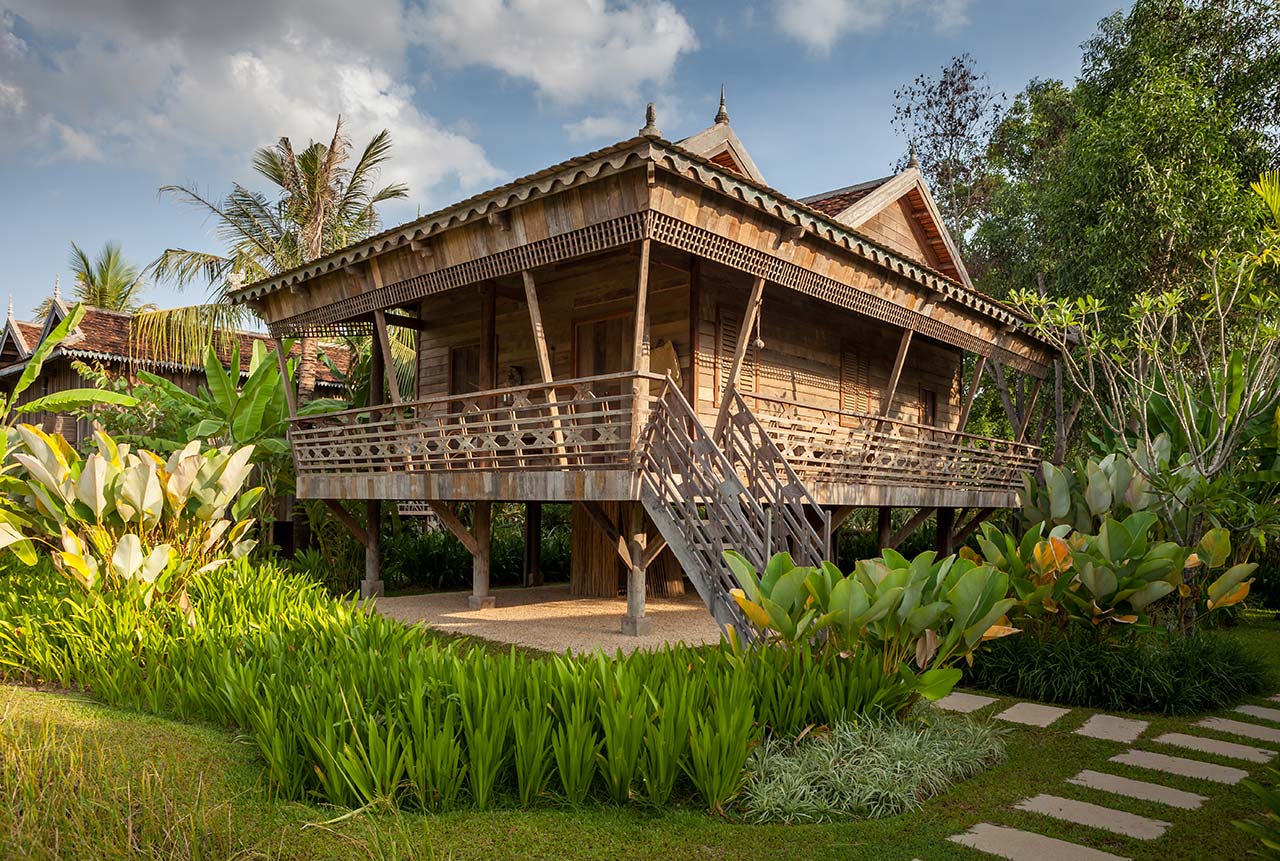
Sala Lodges is a boutique resort comprising 11 magnificent structures originally built from the 1950s to 1980s. Co-owners Swiss hotelier Arne Lugeon and his tourism expert wife Simone lovingly transported and restored each of these buildings to their near-original state.
Arne says that while there are similar types of wooden homes in neighbouring countries, several factors define the Cambodian style, especially the exquisite local materials used.
“These glorious old houses have a soul. You can really feel it”
“Everything is hyper-local.Most of the homes you find near the Mekong have these beautiful tiled roofs that you don’t find anywhere else,” he explains. “The wood used in many of these houses is called koki wood. It’s local to Cambodia, and can take a lot of humidity and withstand the rain. These glorious old houses have a soul. You can really feel it.”
Photo: Sala Lodges
For the comfort of today’s traveller, the Lugeons have added modern bathrooms, air conditioning and new luxurious beds and wardrobes from Rajasthan. The homes now stand in palm-shaded gardens, surrounded by frangipani trees and winding paths. There’s also a beautiful saltwater pool ensconced in lush greenery.
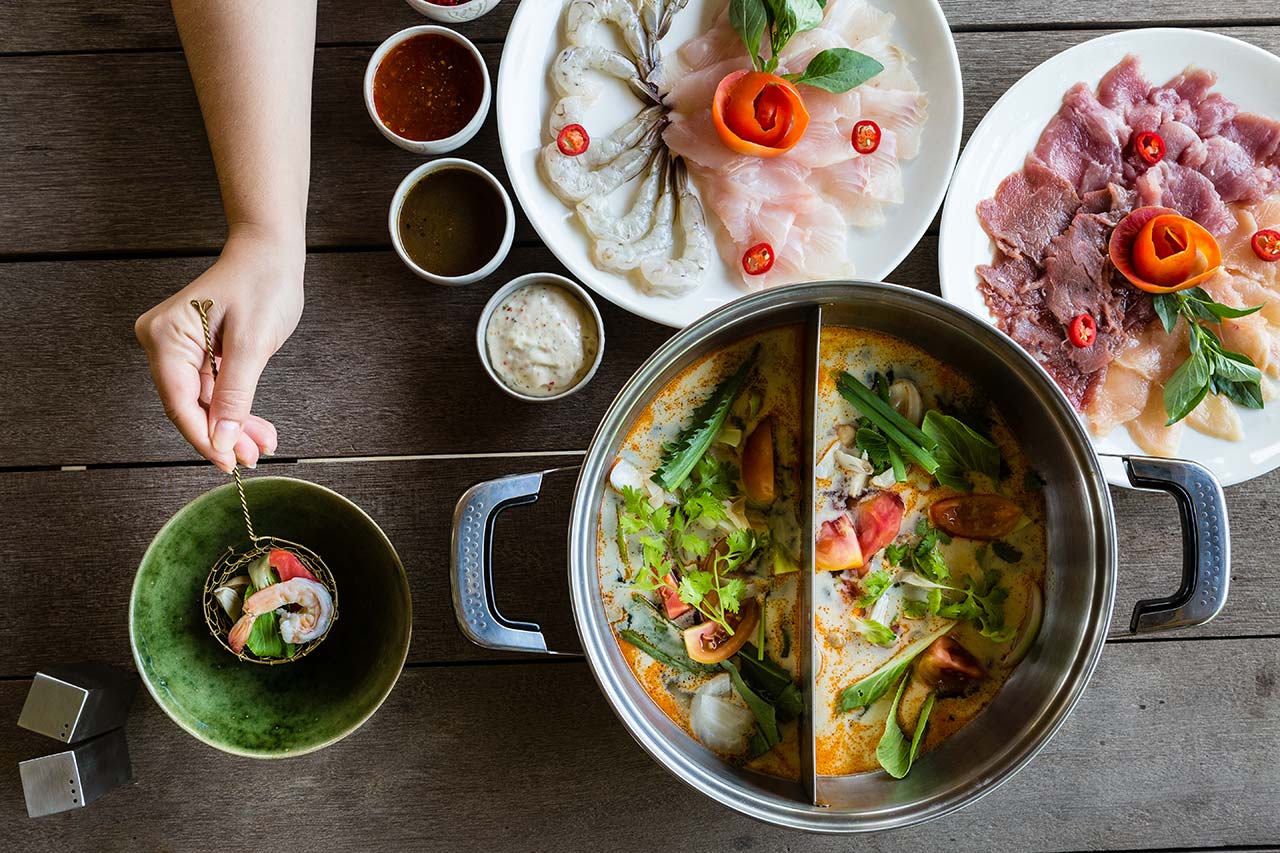
Also of note:The on-site Restaurant Monolith and Bar serves modern twists on Cambodian cuisine, such as a delicate Tonle Sap fishcevichemarinated in lime and lemongrass, and a moreish Khmer curry. Reserve a private dinner on your terrace for that extra special experience.
Tuck into delicious modern Cambodian cuisine. Photo: Sala Lodges
2. Maison Polanka
Traditional houses filled with Khmer art and artifacts
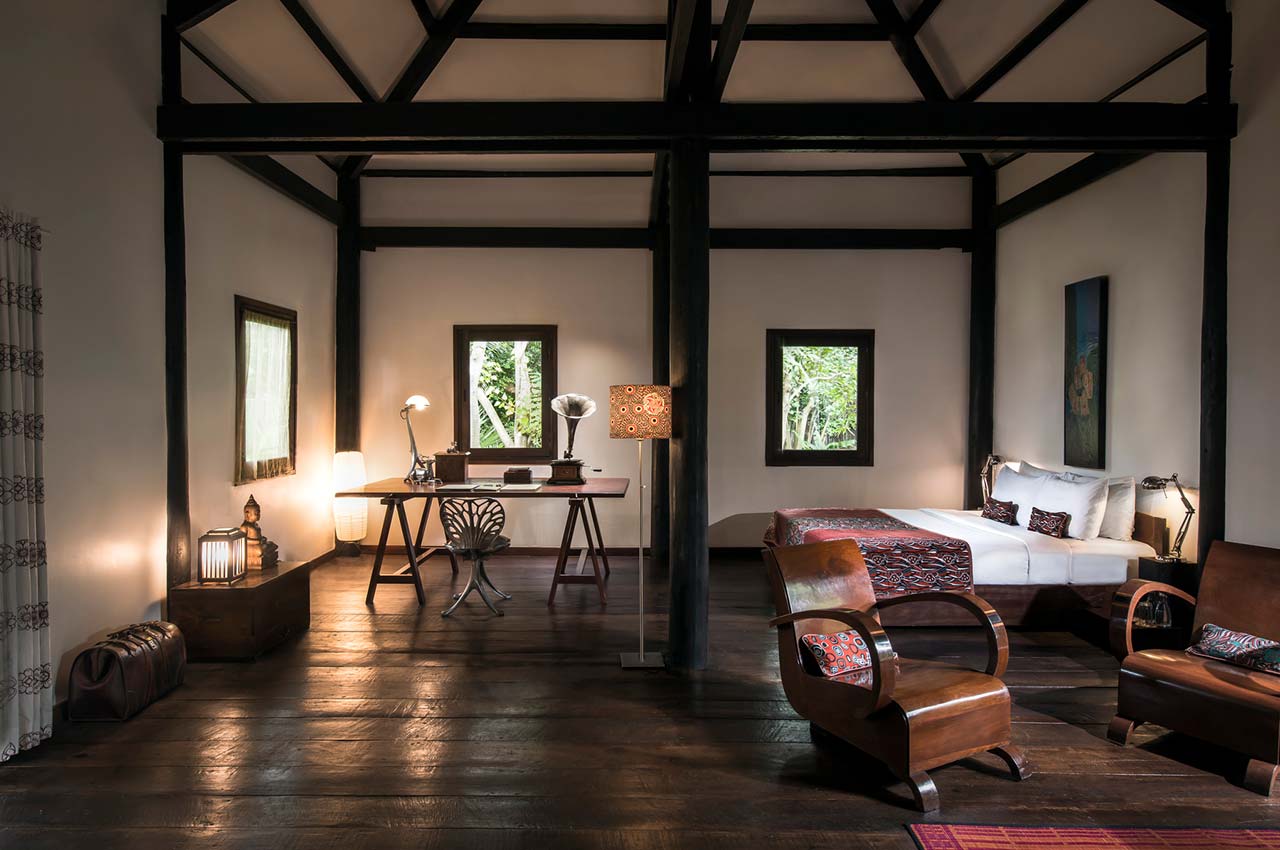
Maison Polanka is an intimate, idyllic boutique resort near Siem Reap River that features three exquisitely restored wooden houses in lush tropical gardens. Striking antique Art Deco furniture and beautiful artwork by contemporary Khmer artists such as Lim Muy Theam litter the place, such that every room possesses a touch of artistry.
The Khmer House interior. Photo: Maison Polanka
Like the Lugeons, French-Cambodian owner Nathalie Saphon-Ridel and her husband Jean Pierre disassembled, moved and rebuilt two wooden homes to accompany the original house on the property.
The jewel is The Khmer House, a stunning 1940s wooden home originally from 30km away. This has now been exquisitely restored (with advice provided by aKru, a Khmer spiritual master), and kitted out with mod-cons such as air conditioning and new bathrooms.
Also of note: Service is full of personal touches, with guests treated like friends or family. Staff go the extra mile to provide tips that only locals would know and arrange detailed bespoke itineraries such as a picnic at one of the quieter Angkor temples.
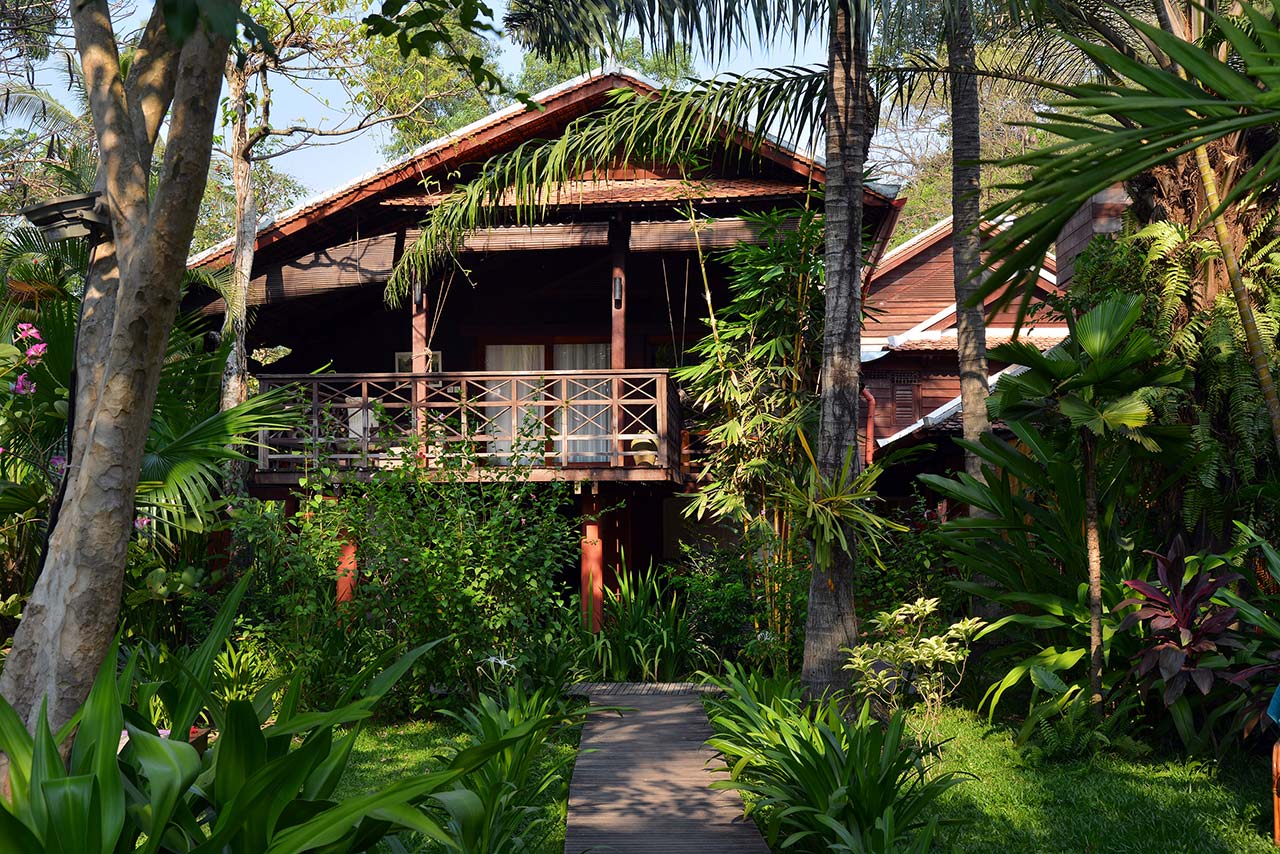
Each of these three villas are ensconced in nature. Photo: Maison Polanka
3. Zannier Hotels Phum Baitang
A family-friendly Khmer-inspired resort graced by the stars
Part of the Zannier Hotels group, Phum Baitang comprises 45 private villas on the outskirts of the city among paddy fields and meadows. While the modern and luxurious villas are all newly built,the traditional stylings give them the ambience of a rural Cambodian village. The resort’s Sunset Lounge, however, is the real deal: this 100-year-old farmhouse hails from a small town along the Mekong River.
Phum Baitang is ideal for families. Its paddies boast a pair of resident buffalos and the lagoon-sized pool is perhaps one of the largest in Siem Reap. There is a kids club where young ones can enjoy activities such as coconut-shell painting and traditional shadow puppet games. For the older kids, there is a PlayStation, as well as lessons in traditionalapsaradance andbokator(a Cambodian martial art).
Also of note: Phum Baitang is a favourite with celebrities like Angelina Jolie, so you might just spot a star during your stay.
To learn more about Singapore Airlines’ flights to Siem Reap, visit the official website.
At the heart of Singapore’s Changi Airport lies the nerve centre of Singapore Airlines’ (SIA) cargo operations. This sprawling hub serves as a lynchpin in the global supply chain, facilitating the seamless movement of goods across continents. From electronics and pharmaceuticals to fresh produce and even wildlife like horses and alpacas, SIA’s cargo fleet ensures that vital commodities reach their destinations swiftly and securely. SIA’s cargo hub is home to world-class logistical facilities, including advanced warehousing, temperature-controlled storage and high-tech tracking systems, enabling the airline to handle a diverse range of cargo with utmost precision.
In this exclusive feature, the SilverKris team speaks to two duty managers at Cargo Hub operations, Tan Ee Shuen and Chen Jun Wen, for a peek into what goes on behind the scenes during the night shift at SIA.
A vital link in global trade
SIA’s cargo operations are not merely about transporting goods; they are about keeping the world moving, especially in times of crisis. During the height of the Covid-19 pandemic, the airline’s cargo division played a pivotal role in transporting essential medical supplies, vaccines and personal protective equipment to regions grappling with the virus. The adaptability and resilience showcased by SIA’s cargo operations highlighted the importance of airfreight in global crises.
Beyond emergencies, SIA’s cargo hub supports various industries – such as automotive, fashion and e-commerce – by ensuring the timely delivery of components and products. The hub’s reliability and efficiency have made it a trusted partner for businesses worldwide, reinforcing Singapore’s status as a global economic powerhouse.
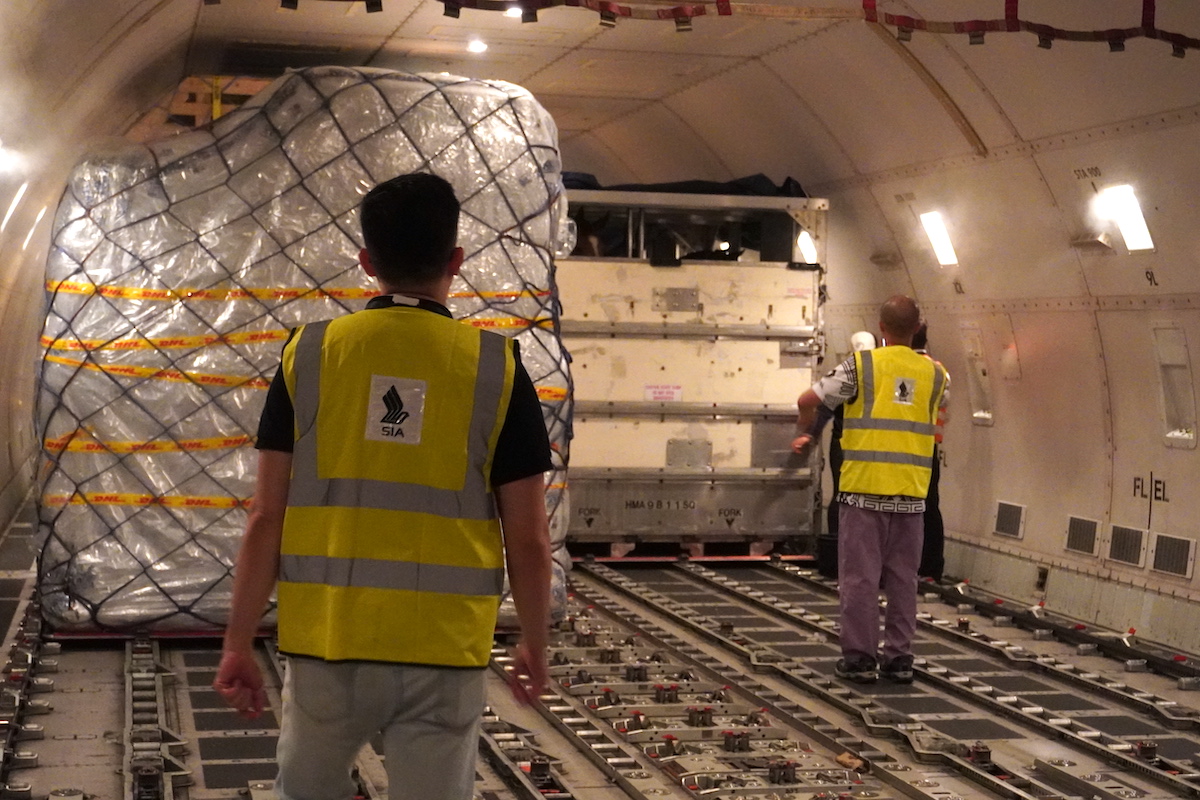
But with so many different types of cargo going up on the planes on a daily basis, one question the team often gets is – how does it all fit? As Chen explains, the easiest way to picture it is to think of Lego, where you have blocks that come in different shapes and sizes. “When the agents make their bookings, they will indicate the dimensions of the shipments and the planner will have to visualise how much can fit into a single pallet [in order to] maximise the space as much as possible,” he shares.
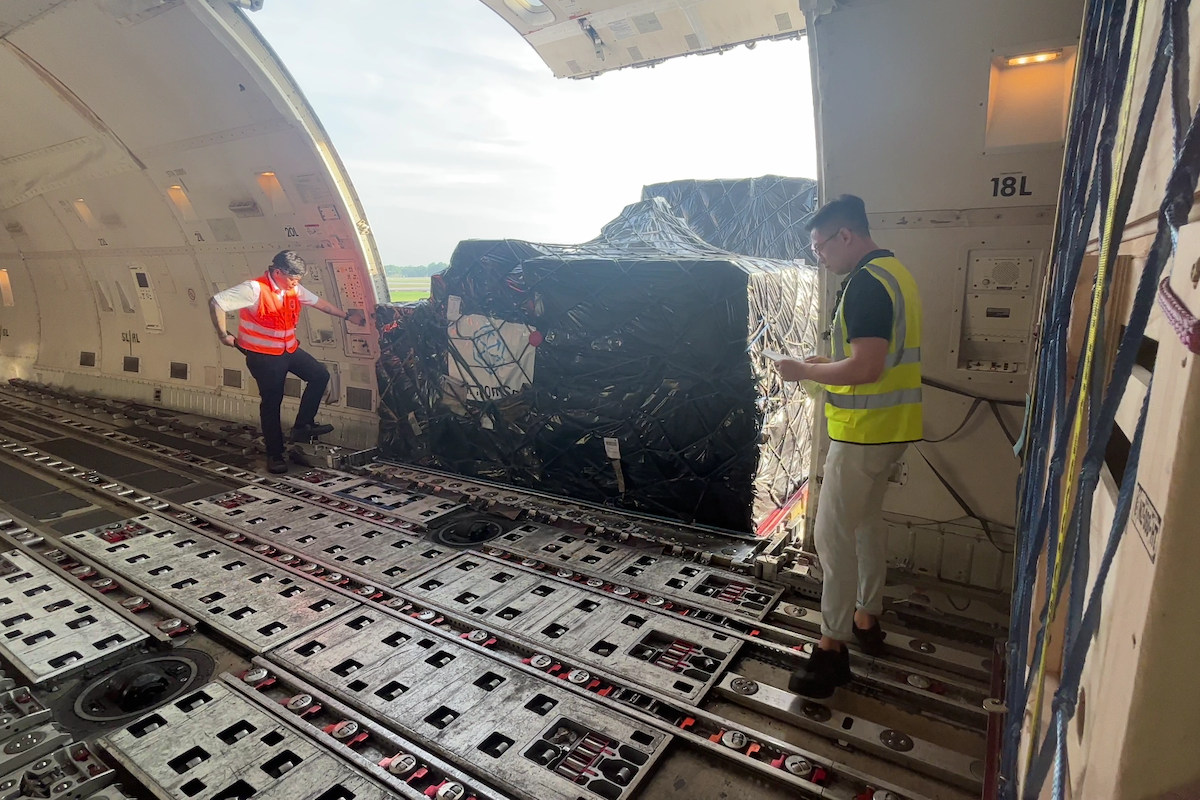
Cargo hub duty managers and ground handlers oversee the placement of the cargo to ensure that the space is maximised
Navigating challenges
Managing the different types of cargo is just one of the many challenges that the cargo operations team has to grapple with. As with all flight operations, the weather is a major factor that they have to take into consideration when doing logistical planning. “We have to bear in mind that any delays would have a domino effect on the flight schedules due to airport curfew or transit cargo connection, causing further irregularities,” says Chen. “Therefore, it’s essential that we work closely with our ground handlers and internal stakeholders to mitigate any potential adverse impact.”
Other challenges include dealing with unexpected situations and being able to think on their feet and make decisions swiftly and purposefully. “There are times where inbound flights were late and transiting cargo would not be able to make it on the connecting flight,” Tan shares.“We will then have to consider multiple factors and decide whether to delay the [subsequent] flights on a case-by-case basis, and coordinate with all relevant parties to ensure that the shipment goes on board smoothly. This is especially important when lives are involved, be it human, animals or plants.”
Some of the frequent cargo transported include pharmaceutical cargo, food and aircraft parts
Both duty managers agree that keeping the big picture in mind helps them stay motivated when the going gets tough. “What keeps me going during a challenging shift is knowing that people across the globe are working together to achieve a common goal, to ensure safe and smooth freighter and cargo operations,” Tan shares.
Chen agrees, “The knowledge that my work has a significant impact keeps me engaged and attentive during the most difficult shifts.”
When unexpected delays or diversions happen, Singapore Airlines’ round-the-clock Operations Control Centre and Customer Care Team spring into actions. Learn more about their work here.
Curious about what goes into planning a flight and the logistics that go into planning crew schedules? Click here to find out!
To discover the role of station managers and how they ensure the punctual departure and turnaround of all Singapore Airlines flights at Changi Airport, click here.