Posts, pics, video and motivation on Travel Lifestyle, countries around the world! Addicted to adventure travel and photography, I'm on a mission to inspire your next journey with entertaining stories, beautiful images, fun travel videos, and useful tips.
The Great Barrier Reef is a mandatory destination for the global explorer that ranks along with the Grand Canyon, Machu Pichu, Petra, and the Great Wall of China. As amazing as the Great Barrier Reef may be, the far northeastern reaches of Au
Sri Guru Nanak Dev Ji, the founder of the Sikh faith, was one of the greatest spiritual leaders of all time. Raised in a Hindu home and conversant with Islamic traditions, the Guru had a deep understanding of spirituality and his teachings were original and continue to be relevant and universal to this date. His teachings, expressed through remarkable poetry, speak of equality, brotherhood and peace. He laid down a set of guiding principles that he believed led to a spiritually fulfilling life, and these are followed by millions of Sikhs globally.
Sri Guru Nanak Dev Ji moved to Sultanpur Lodhi at the behest of his elder sister Bebe Nanki. The siblings enjoyed a deep affectionate bond that would last till the end of her life. She was the first to recognise the extraordinary and unconventional genius of her younger brother. Sri Guru Nanak Dev Ji needed no persuasion to relocate, and soon took up employment as a manager of stores for the local ruler, Daulat Khan. Sultanpur Lodhi is a sacred site that saw the young Sri Guru Nanak Dev Ji find his enlightenment and emerge as a Guru.
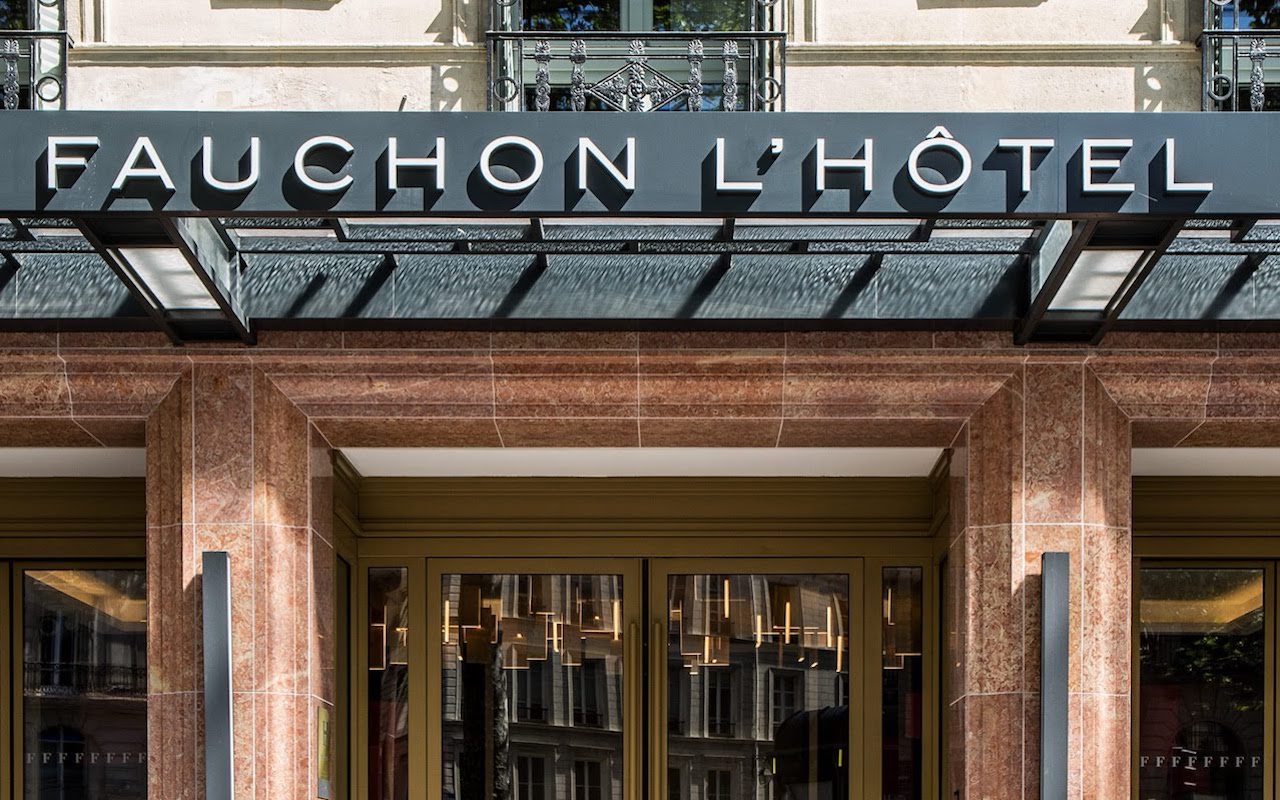
When Auguste Fauchon opened his very first delicatessen on Place de la Madeleine in 1886, little could he have known that, more than 130 years later, his family name would become a global luxury brand – or, even more amazingly, that customers would be staying overnight. Last summer, Fauchon’s first-ever hotel opened its doors, just a stone’s throw from the site of the original delicatessen, promising an experience that combines Fauchon’s gastronomic credentials with the Parisian joie de vivre the company is known for.
2. Five-star service for all
The attentive staff will happily arrange a cruise or private gallery visit for you, and that five-star service also extends to your dog – not always the case even in pet-friendly hotels. While you check in and enjoy a welcome mocktail, a jewel-encrusted bowl will be brought out for your pup to drink from. Meanwhile, waiting in the room is a splendidly comfortable dog bed, piled with toys, that matches the one you’ll be sleeping on. Indeed, in each of the 54 rooms, no expense has been spared – from the brilliant entertainment set-up, which includes content tablets, to the spacious marble bathrooms.
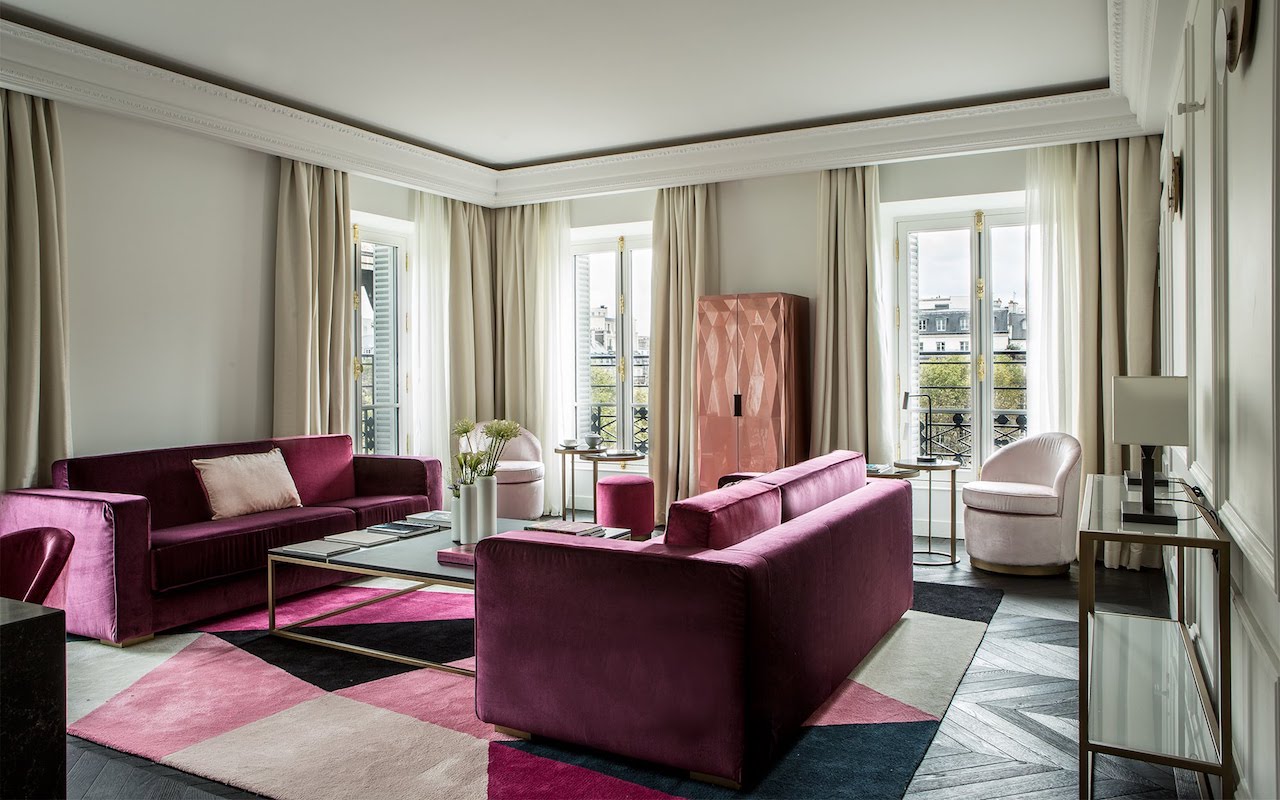
The hotel’s 54 spacious rooms feature vibrant furnishings
3. Visual flair
One of the highlights of a visit to a Fauchon store is experiencing its playful design and aesthetic; the bold colours and elaborate food displays are akin to a high-end fashion boutique. This trademark style and over-the-top look has been successfully transplanted to the hotel, courtesy of architect Richard Martin. Forget bland minimalist décor – here, accents of hot pink, black and gold offset eclectic Art Deco and Art Nouveau furnishings. Naturally, there are tasteful piles of pastel-hued macarons everywhere, temptingly placed under glass dome jars for guests to enjoy by the handful.
4. Paw-fectly placed
The hotel’s location could not be better – whether from a two- or four-legged perspective. Boulevard des Capucines boasts some of Paris’ best shopping, and most stores are dog-friendly, while the Louvre museum and the Seine river are no more than a 10-minute walk away. Of similar distance is the Tuileries Garden, and a bit further you’ll find the Palais Royal gardens – these two parks offer some of the best green spaces in the city to walk your furry pal.
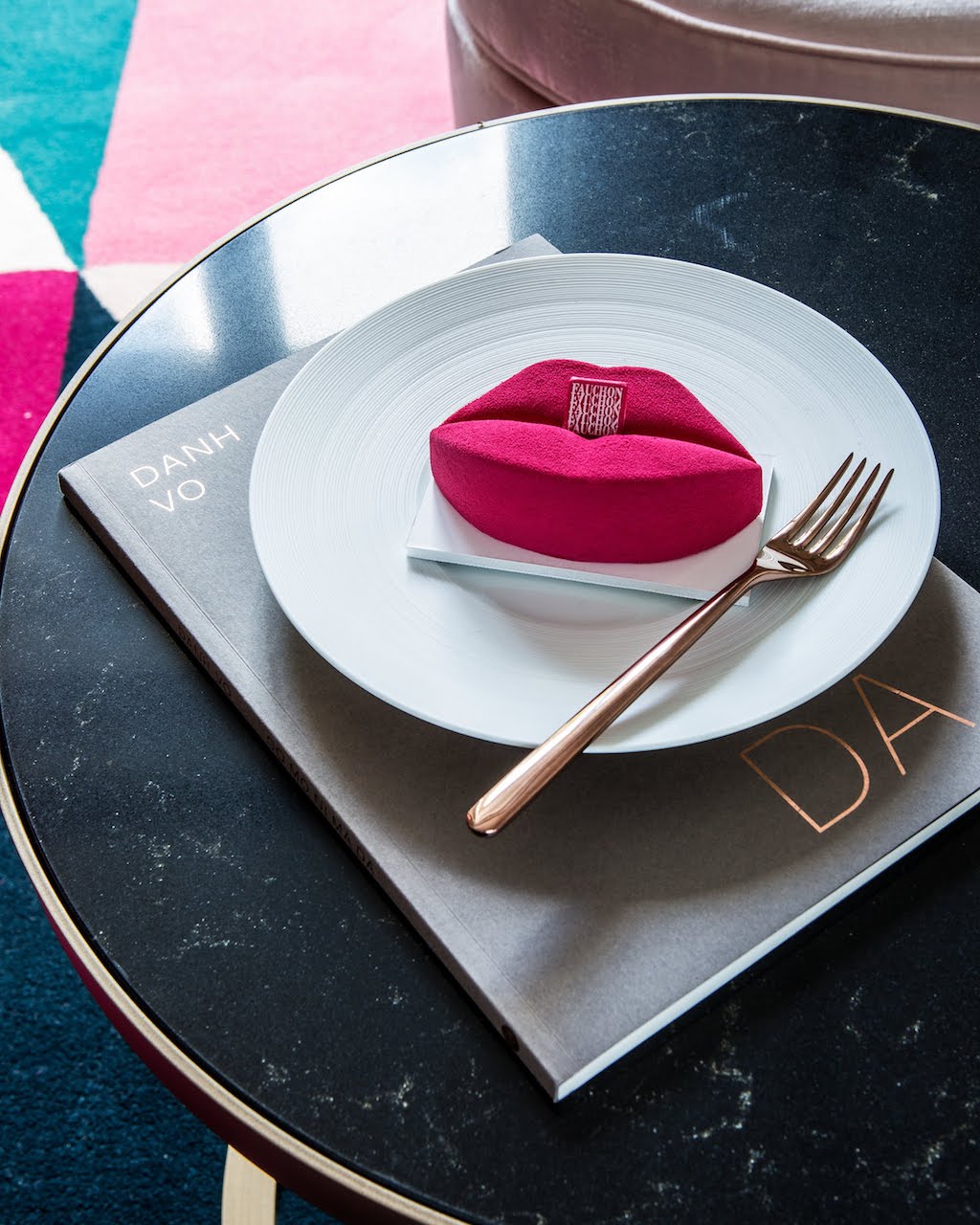
An eye-catching dessert at the Grand Cafe
5. Glutton’s paradise
The dinner menu at the Grand Café, where all meals are served, is a real highlight – and not just because your dog is allowed to join you there. Classic French gastronomy is given a 21st-century makeover, with a small-plates approach and a style of deft yet indulgent cooking you don’t always find in a Parisian kitchen. But what really cements the hotel’s claim to be a true gourmand’s mecca is found in the bedroom. The pink gold Gourmet Bar is a man-sized armoire that opens up to reveal a mouth-watering larder of complimentary Fauchon goodies – such as chocolate truffles, buttery brioche biscuits and jars of foie gras, all to be washed down with the hotel’s signature champagne. It’s a unique – and truly decadent – selling point that likely beats any other minibar on the planet.
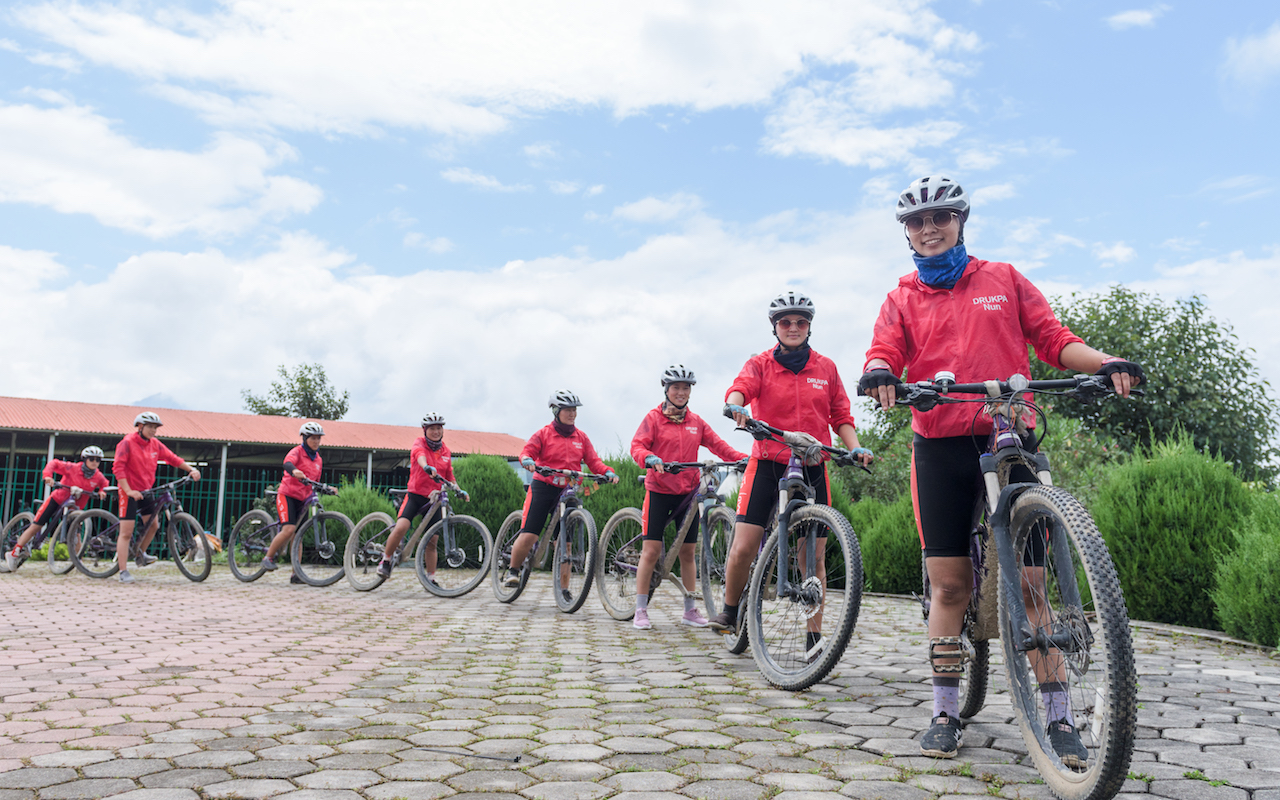
The car engine is struggling on our climb westward out of Kathmandu Valley. The driver leans on the horn to alert oncoming traffic; if we lose momentum on this steep, winding slope, he won’t be able to pick it up again. There is the distinctive burnt smell of an overworked clutch as the vehicle rounds a brutal final curve. Suddenly, a line of identically clad figures on bicycles appears ahead, each pedalling at a measured but steady pace up the same hill that has all but defeated our tired taxi.
Drukpa nuns getting ready for their daily cycling training
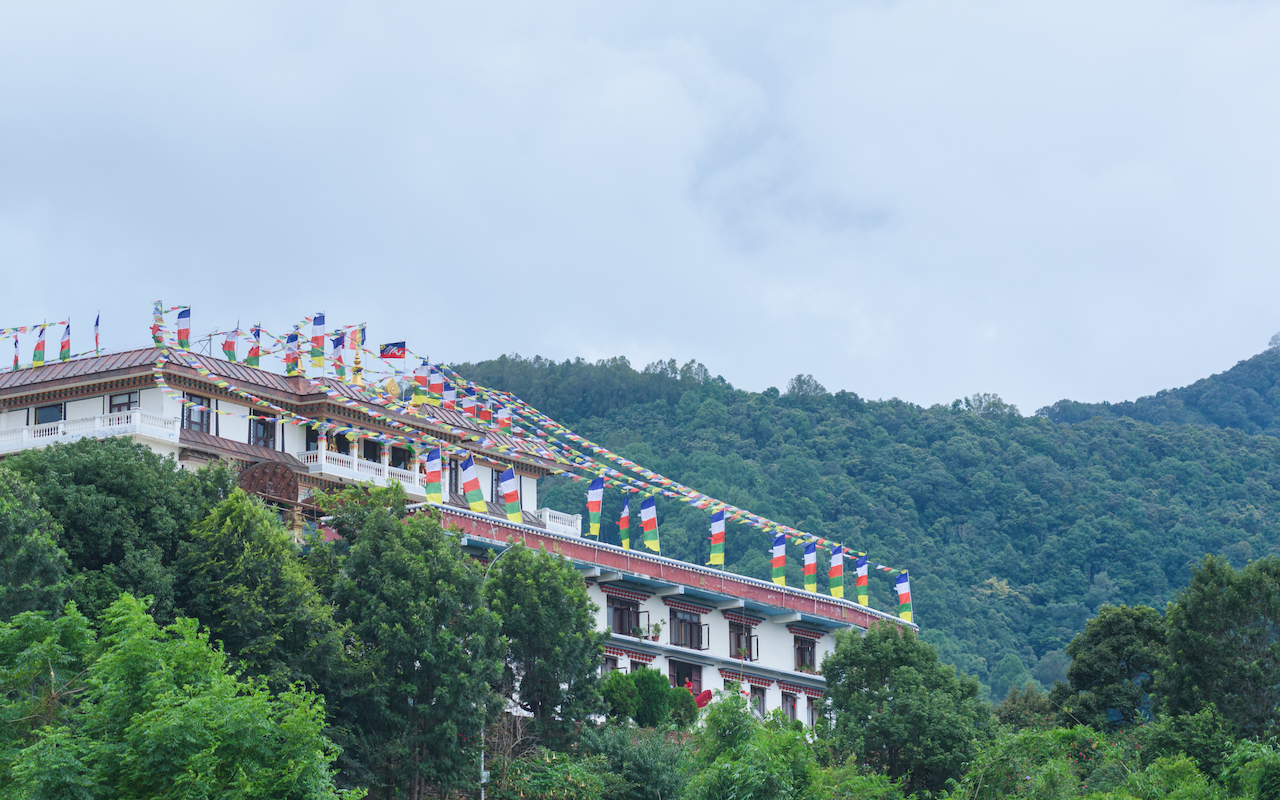
At a glance, one might mistake the cyclists for a fitness group out for a morning ride. Looking more closely, however, each rider wears a brightly coloured windbreaker emblazoned with two words: Drukpa Nun. These women are heading back to Druk Gawa Khilwa nunnery, a cluster of white buildings perched at the very summit of this slope. High on a ridge, the nunnery, which was first established here in 1989, is partially flanked by the looming, verdant forests of the Shivapuri Nagarjun National Park. It overlooks the city, and on clear days offers views of the Himalayan mountain range.
The bicycles are just the first indication of the unconventional approach this monastic order has embraced, rewriting the rules on how its nuns engage spiritually, physically and socially with the world. Traditionally, Buddhist nuns have had limited ceremonial and spiritual roles in comparison to monks, and spend most of their time in quiet contemplation, largely removed from the general public. Yet, under the guidance of the incarnate leader of their 1,000-year-old Drukpa lineage, the Gyalwang Drukpa, this order of nuns is doing things somewhat differently.
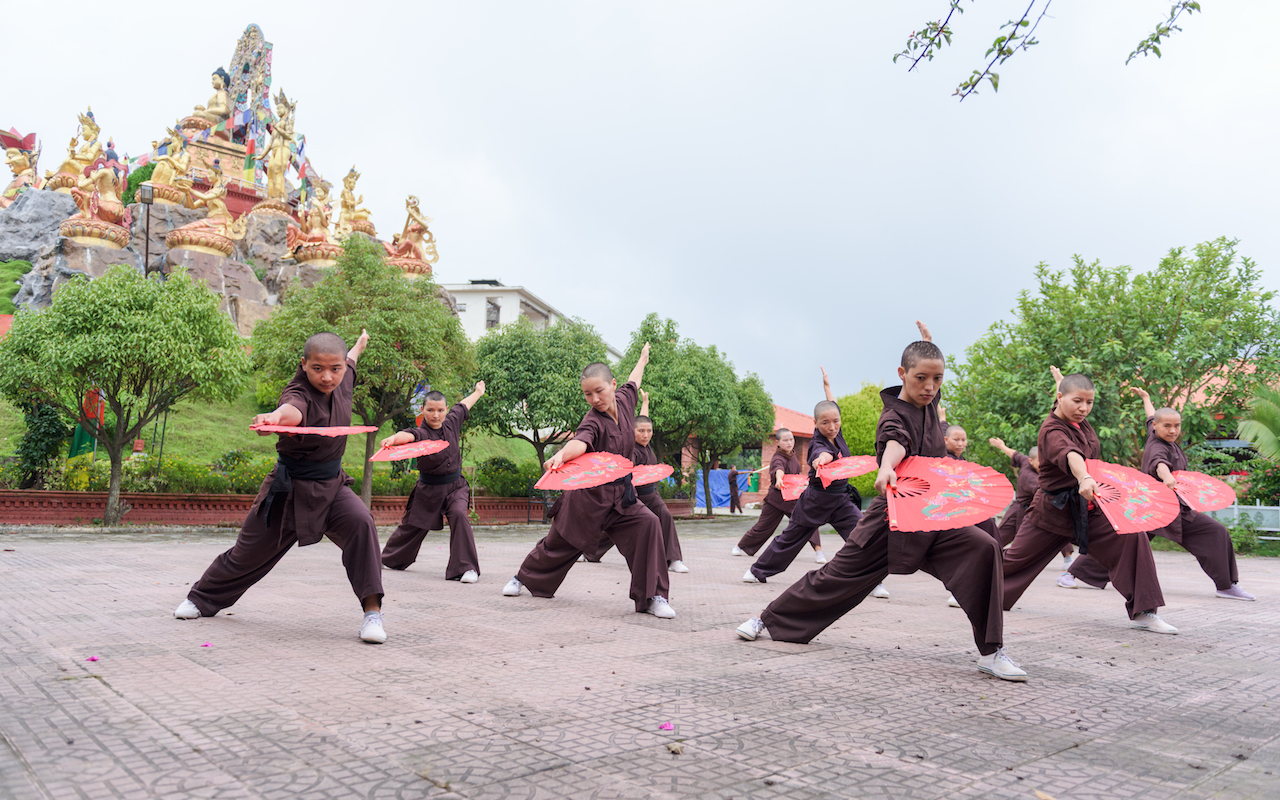
The Drukpa nuns have been practising kung fu since 2008
One activity here is particularly surprising: kung fu. Each day, dozens of nuns gather in a courtyard. They stretch, and then Jigme Rupa Lhamo, a slight, angular woman with watchful eyes and shoulders drawn back in impeccable posture, begins calling out sequences as her fellow nuns step, punch, kick and whirl through the air in unison. Rupa, as she is familiarly known to her peers, is from the state of Himachal Pradesh in India and has been a nun for 12 years, but has only been practising kung fu for eight. “I never got to do anything like this at school, and I’m proud and happy to have the chance,” the 26-year-old says.
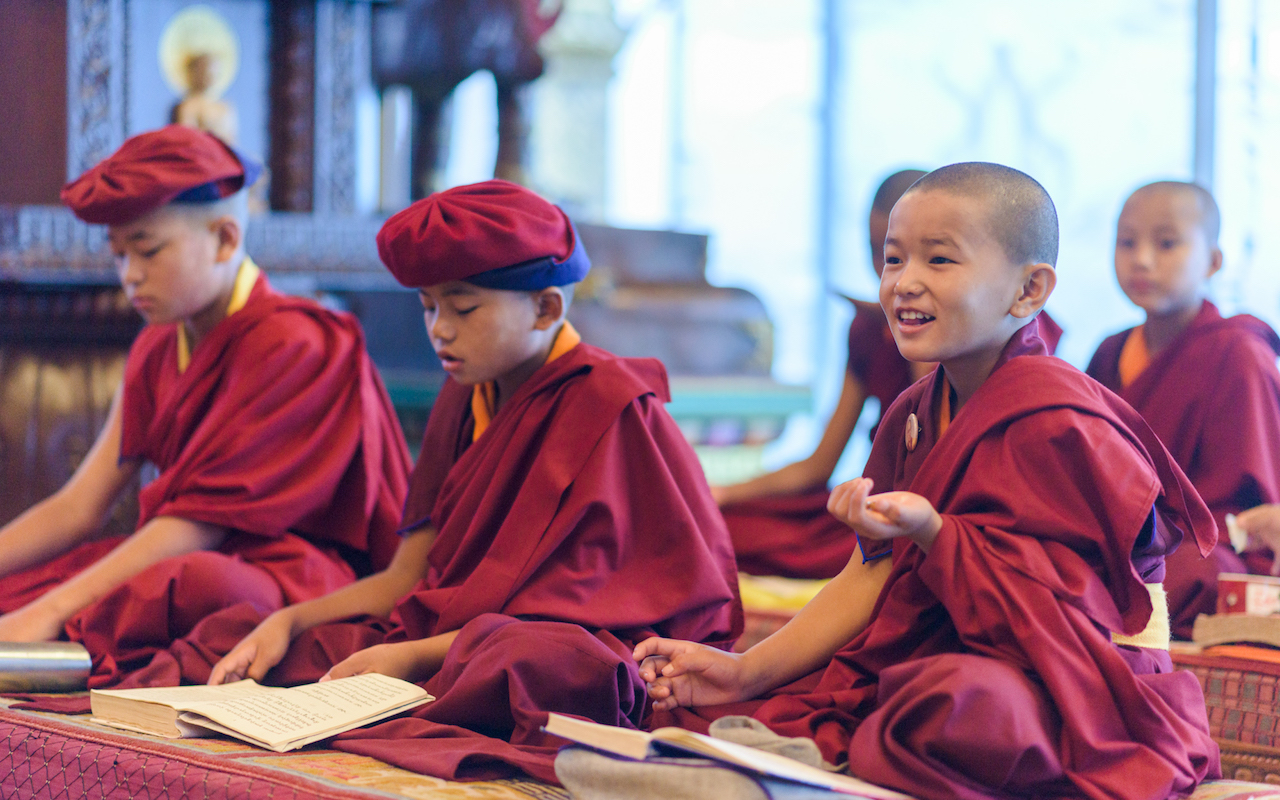
The nuns at Druk Gawa Khilwa nunnery first began practising kung fu in 2008, and found that the intense discipline of martial arts aligns well with the structure of life here. Mornings start before dawn, with two hours of meditation beginning at 3am, and the day does not end until 10 at night. With about 400 resident nuns, schedules can vary depending on the individual’s age, responsibilities and if a ceremony is being held, but all days pass in constant, rigorous activity.
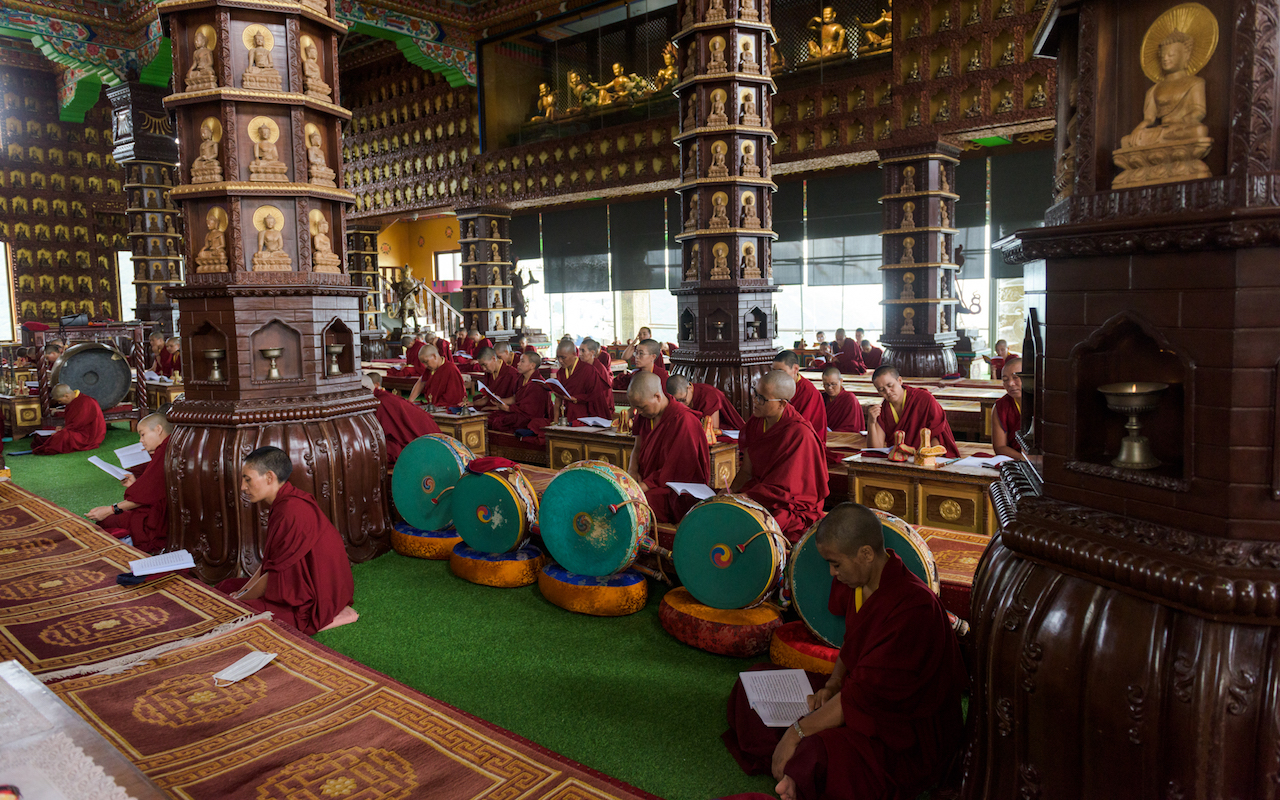
There are several hours of puja (devotional rituals) held every morning and evening, and nuns spend up to seven hours each day in religious study. Apart from kung fu, the Gyalwang Drukpa has instituted some notable changes to what women in the Drukpa order can do religiously. Nuns here now practise to take part in special ceremonial masked dances called cham, and also learn an advanced set of tantric teachings, practices and meditations known as the Six Yogas of Naropa. There are also groups who go out for morning cycling training and others who practise kung fu daily.
The nuns spend up to seven hours each day in religious study
The kung fu began here on the suggestion of the Gyalwang Drukpa as a way to expand the nuns’ roles beyond prayer and tasks such as cooking and cleaning. The nuns receive training from a kung fu master who visits regularly from Vietnam. For them, kung fu is primarily practised as a way of sharpening their powers of concentration, which aids their focus during meditation and builds discipline to work hard in the service of others.
Unlike other students of martial arts, the nuns do not engage in combat competitions nor adhere to a system of levels and belt colours. Instead, they demonstrate their skills during religious festivals and gatherings in Nepal and India. Increasingly, they are also being invited to demonstrate and share their work in secular settings, including overseas at international events like the Thomson Reuters Foundation’s 2017 Trust Conference in London, where they did a demonstration and spoke on a panel entitled “Breaking Taboos”.
“Kung fu is just one way we can show that nuns can do everything”
This has brought the nunnery a level of fame, and even played a part in attracting new initiates. “I first thought about becoming a nun when I was 12, when I saw them performing kung fu at a festival,” 19-year-old Jigme Tsering Chodol shares. Despite her parents’ misgivings (they wanted her to study medicine, like her sister), she left her home in Ladakh, India three years ago to join the order. Now, Tsering spends hours each day practising, jumping and landing soft-footed as she plunges a curved sword through the air.
Nearby, a group of younger nuns, aged about nine through 14, practise more basic movements. Among them is Jigme Yeshey Lahadol, a gregarious 12-year-old who joined the nunnery a year ago. When a devastating 7.8-magnitude earthquake hit Nepal in April 2015, Yeshey’s life changed in an instant. Her family is from the Haku area in Rasuwa, one of the worst-hit regions in the country. It was her father who first floated the idea of her joining the nunnery. He had received a monastic education himself when he was younger, and Yeshey says she was enthusiastic about the idea. “In my old school, I used to take part in dance classes,” she shares. “But I like kung fu better!”
The Druk Amitabha Monastery
The nunnery was not spared the effects of the 2015 earthquake either, and signs of the damage it wrought are still evident around the compound. The nuns’ living quarters were no longer safe, and for more than four years they have made do, first in tents and then in other spaces around the nunnery. A large building capable of housing up to 700 nuns is currently under construction. Meanwhile, the badly damaged giant hall that used to hold over 3,000 people for religious ceremonies and teachings is being cleared into a pile of rubble. It is not yet clear if and when it will be rebuilt. During a recent ceremony, over 11,000 people visited the nunnery in a single day and the nuns set up tents outside to accommodate the devotees.
However, if there is anything the nuns of Druk Gawa Khilwa nunnery excel at, it is confident and creative organisation. In addition to kung fu, the nuns put together epic cycling trips, setting out from Kathmandu for holy sites as far away as India’s Bodh Gaya and their sister nunnery in Ladakh. Groups of over 300 nuns travel for months on their bicycles, covering anywhere from 30 to 90km a day depending on the terrain. They carry much of their own gear, accompanied by a single truck with additional supplies and one emergency vehicle. They set up camp and cook their own meals, and two nuns with training in bicycle repair are on-hand to troubleshoot any mechanical problems.
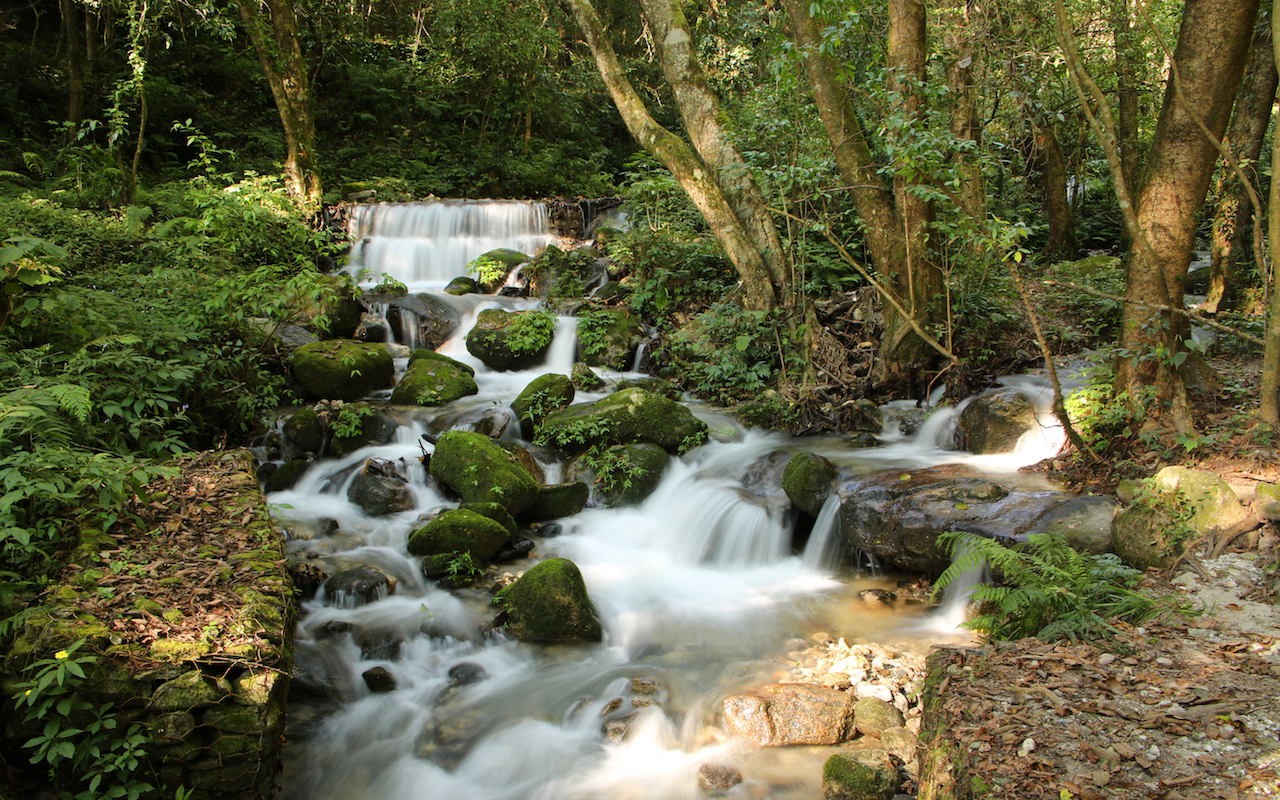
Beautiful waterfall at Shivapuri Nagarjun National Park, which flanks the nunnery. Photo credit: Lisa Strachan/shutterstock.com
These gruelling journeys are both spiritual practice and social service. They do not talk as they cycle, but instead focus on repeating sacred mantras. Being an all-female team always piques the curiosity of the people living in the places they visit, and they use this interest to spread environmental and anti-trafficking messaging. “When we did disaster relief work around Nepal, we heard how people who didn’t have money were selling off their girls,” recalls Jigme Konchok Lhamu, a 25-year-old nun and kung fu practitioner. “We wanted to raise awareness about this, about why girls are important and what they can do if given the right chances.”
For the past 15 years, the nuns have also undertaken annual treks, some as long as 600km. They use these trips as an opportunity to spread eco-consciousness and pick up litter along the way. This is a practice they continue while at the nunnery, too. Every Saturday, groups of nuns go down to Swayambhunath, one of Kathmandu’s most important Buddhist sites, and pick up 40 to 50 sacks of litter. “After seeing us clean up trash over and over in the same spot, other people started taking responsibility too. Now people don’t dump things there,” Konchok says.
Within the nunnery compound, too, the nuns strive for self-sufficiency and sustainability. Each nun is part of a specialised work group, trained to do everything from administration to gardening, plumbing and electrical work. They also compost waste and grow their own fruit, vegetables and herbs. Other eco-friendly measures include using solar water heaters and harvesting rainwater.
The nuns stretch before an evening kung fu training session
Despite the many positive changes effected by the nuns, there are inevitable critics. There are people who comment on everything from the nuns’ bicycling uniform to the perceived violence of practising kung fu. However, over time, their work has also gained them many admirers. Some of their biggest supporters are close to home, the residents of the Rampur village area where the nunnery is located.
“[After the earthquake], they were the first to help us, before anyone else,” says Jamuna Tamang, a farmer who has lived in Rampur her whole life. Along with providing food, tarpaulins and medical attention, the nuns also helped villagers salvage belongings from houses that were destroyed and provided materials for villagers to use in setting up transitional shelter or building permanent homes. Tamang says she’s seen all the things the nuns do, from cycling and kung fu to cleaning up the streets. “It’s good when a woman can do everything,” she says.
Apart from religious study, the nuns also study Tibetan and English
The nuns’ strong ethos of self-reliance, hard work and service, along with their ability to spread ideas on social change has also attracted a number of collaborators. In addition to partnering with Live to Love, a secular nonprofit founded by the Gyalwang Drukpa, the nuns work with local waste management organisations, and with the Tilganga Institute of Ophthalmology to hold eye treatment camps. They have also begun collaborating with the International Organization for Migration (IOM) and the UN to raise awareness on female empowerment and human trafficking issues. In October, they collectively received an Asia Game Changers Award from the Asia Society in New York.
“Buddha never said girls cannot do this or that.” Konchok says. “Kung fu is [just one way] we can show nuns can do everything, and that if girls are given the right chance, they can shine.”
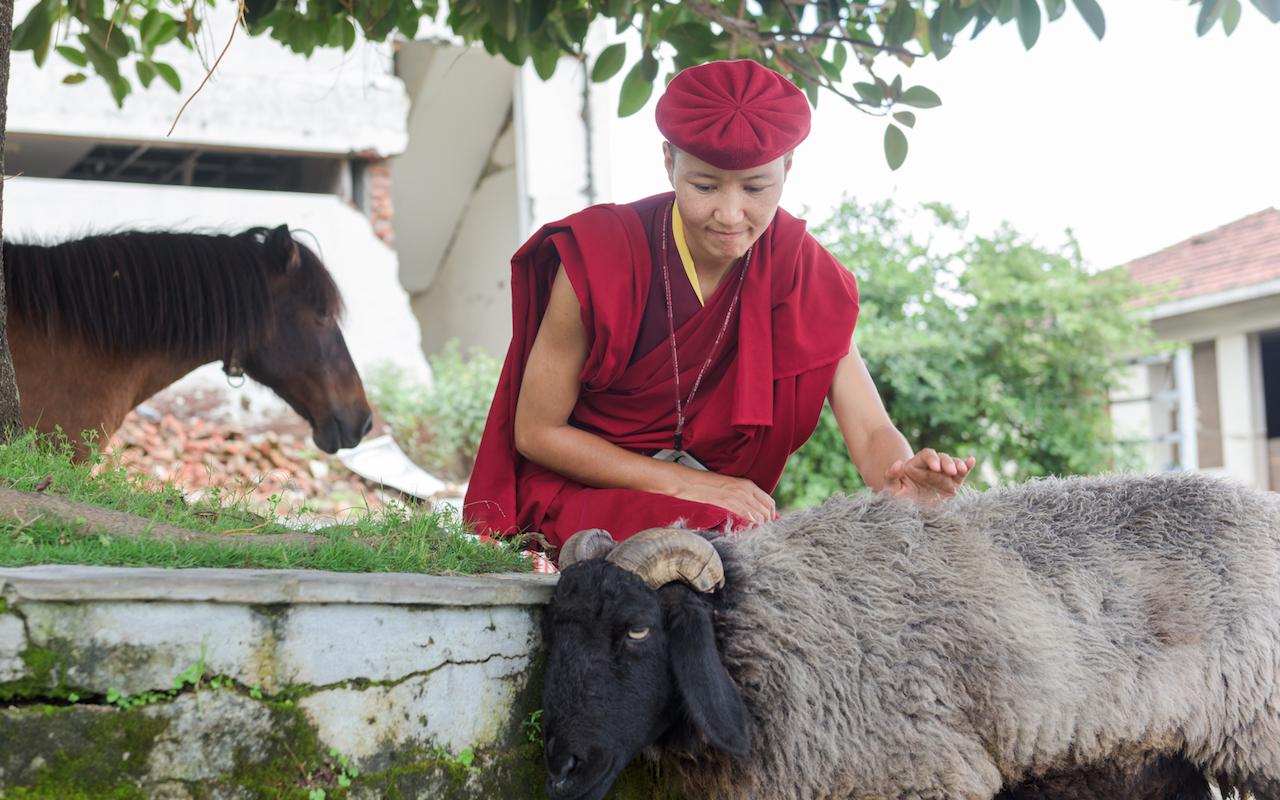
Druk Gawa Khilwa nunnery is also home to many rescue animals
The other residents of Druk Gawa Khilwa nunnery
The nunnery grounds also house some charming non-human residents. There is a sheep named Kalu (a diminutive word that translates to “black”) and Tsetar (Tibetan for “rescue”), an old brown horse, who are inseparable best friends, just two of the dozens of animals that the nuns have rescued. Each animal has a backstory, including dogs brought home from locations as far flung as Odisha and Gorakhpur in India; sleek tortoiseshell cats that lurk around the main gate; a collection of ducks, turkeys and chickens whose lives have been purchased to save them from slaughterhouses; and a cow with severe burns named Lucky, the survivor of a deadly fire, that the nuns tend to daily.
3 Buddhist sites to visit in Kathmandu
1. Boudhanath
Located in the city and with a rich history spanning back to the fifth century, this is regarded by Tibetan Buddhists as the holiest religious site outside of Tibet.
2. Swayambhunath
The most significant Buddhist site for Kathmandu’s indigenous Newar community sits atop a steep hill overlooking the city.
3. Namo Buddha
Located about 40km from the city centre, this stupa and monastery sit on a hilltop surrounded by lush farmland and offer scenic views.
Getting there
Visits are by appointment only. Email info@drukpa-nuns.org to inquire. To get there, take a taxi from Kathmandu and ask to go to the White Nunnery (Seto Gumba), which is behind Adeshwar Mandir and close to the Main Swayambhu.
SilkAir flies daily between Singapore and Kathmandu. To book a flight, visit singaporeair.com