Posts, pics, video and motivation on Travel Lifestyle, countries around the world! Addicted to adventure travel and photography, I'm on a mission to inspire your next journey with entertaining stories, beautiful images, fun travel videos, and useful tips.
With weeks to go before Christmas, finding the right gifts can feel overwhelming – especially if you’re searching for something out of the ordinary. From designing a signature scent to tailoring a voyage to remember, explore this curated list of gifts you might just end up getting for yourself.
1. A signature scent for that special someone
Indulge in an immersive fragrance experience at Aurel’s new perfume library. This complimentary, bookable session gives you 45 minutes to explore more than 350 incredible scents in a calm, self-guided setting. The space is purposefully unmanned, allowing you to take your time trying, buying and learning about each fragrance.
Enjoy tailored recommendations based on your preferences and lifestyle, and discover a new favourite from Aurel’s wide range of affordable offerings. You can also order online with free in-store collection for added convenience.
Explore over 350 scents to craft a signature scent
2. Timeless heirlooms to be treasured for generations
Every creation at GIOIA Fine Jewellery begins with a gemstone that tells a story that is uniquely yours. Whether it’s a family birthstone pendant, a meaningful anniversary piece featuring a rare unheated ruby or a bespoke engagement ring set with a lively cluster of gems, each design is personal and timeless.
For collectors seeking the extraordinary, GIOIA offers investment-grade treasures such as Muzo emeralds and the coveted Brazil Paraiba tourmaline. With expert craftsmanship and bespoke service, each jewel becomes an heirloom in the making – the perfect gift that keeps on giving.
Explore exquisite pieces from modern to vintage designs adorned with precious gemstones
3. Travel-friendly gifts for your jet-setting friend
UNIQ creates tech accessories that make your everyday smoother. The Belmont Passport Holder keeps your travel essentials neat and close – with room for documents, built-in tracking and even wireless charging for when you’re on the move. The Lexa 5000 Power Bank snaps on easily to power you through your day, while the Lyden Magnetic Wallet keeps cards close without adding bulk. Smart design that simply fits your flow.
Explore more travel-friendly tech accessories here.
Upgrade your travels with UNIQ’s range of tech accessories
4. A memorable yacht trip with your loved ones
For over a decade, Ximula Sail has been crafting unforgettable yacht experiences across Singapore and beyond. Guests return for its personalised service and warm hospitality, from seamless pre-charter planning to sunset toasts on deck.
Whether it’s a family celebration, proposal or team retreat, every voyage is thoughtfully tailored with curated menus, décor and photography to match. Beyond private charters, Ximula also runs experiential sailing programmes that inspire teamwork and connection on the open sea.
Private charters include cruising around the Southern Islands, anchoring at Lazarus Island for water activities and a scenic sail past Marina Bay’s skyline. Prefer something lighter? Join their pet-friendly open cruises every Tuesday evening or Sunday morning, perfect for a romantic date or relaxed day out.
Private charters start from $1,200 (for up to 10 guests), open cruises every Tuesday evening or Sunday morning (pet-friendly) from $188 (per couple). Plan your charter here.
Create unforgettable yacht experiences with Ximula Sail’s private charters and experiential sailing programmes
Wherever life and opportunity may lead, the spirit of home remains. For Malaysians abroad, MyHeart (Malaysia at Heart) is the bridge that keeps that connection alive by creating a space to exchange ideas, share expertise and rediscover the power of belonging to a place.
A platform for connection and collaboration
Developed by TalentCorp, MyHeart is more than a networking portal. It is a one-stop space where professionals, entrepreneurs and students abroad can connect, collaborate and co-create with Malaysians worldwide. From Singapore to San Francisco, London to Kuala Lumpur, MyHeart unites Malaysians under one digital roof.
Malaysians in Zurich connecting through the “Salam Dari Malaysia” programme
Staying engaged, wherever you are
MyHeart members can expand their professional networks, share knowledge and contribute to Malaysia’s growth from anywhere in the world. The platform also offers access to events, inspiring stories of Malaysians abroad and a monthly newsletter to keep you connected and informed.
MyHeart engagement session in Taiwan
Providing support for returning Malaysians
For those considering a return home, MyHeart offers support through TalentCorp’s Returning
Expert Programme (REP), with incentives such as a flat 15% income tax rate, vehicle duty exemptions and facilitating a smooth and rewarding journey for foreign spouses and children.
Malaysians taking part in the annual “Larian Merdeka” run in Tokyo
To be part of MyHeart is to belong to something larger – a network of Malaysians with strong roots at home, with a shared purpose to shape Malaysia’s future.
Be a part of the global Malaysian community by registering here.
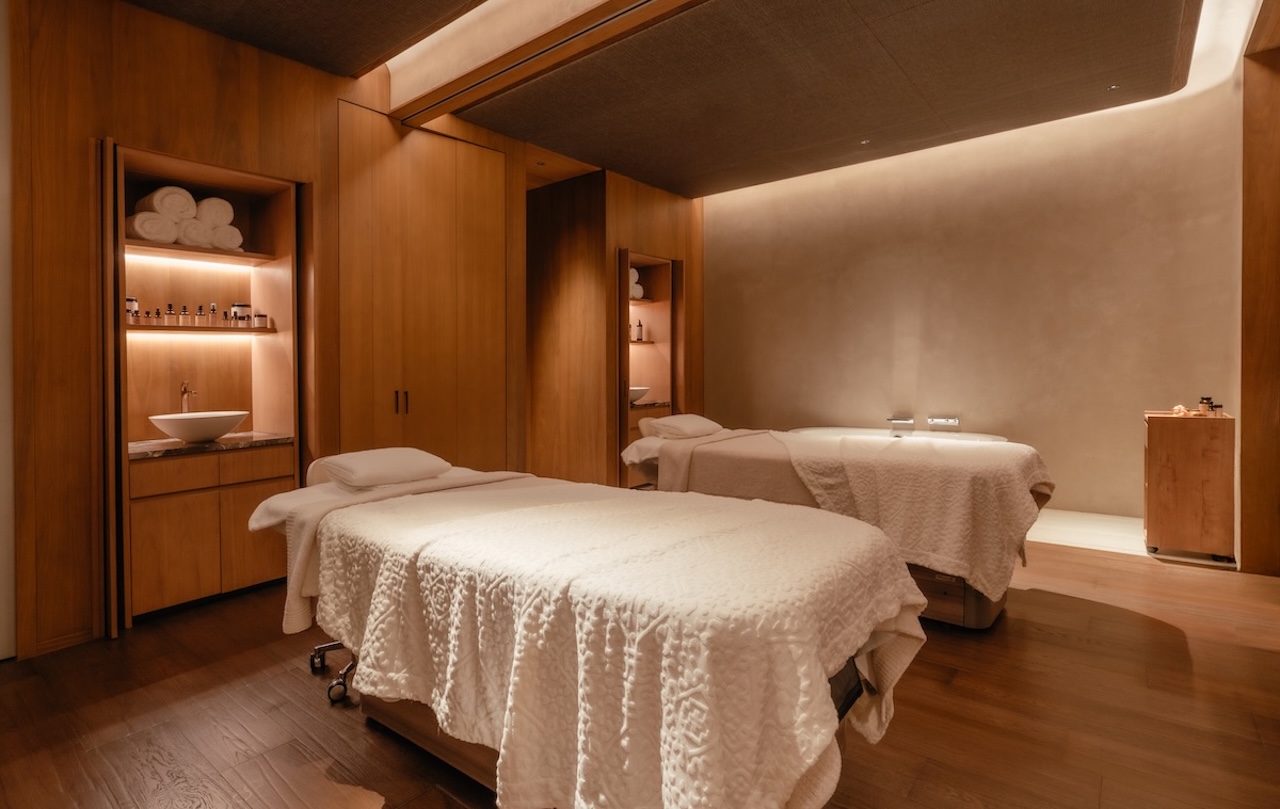
When Grand Hyatt Singapore reopened earlier this year, it did so with its freshly revamped spa Damai, primarily focused on the wellness of its guests. Designed as an integrated wellness hub, its spa treatments are forward-thinking and backed by extensive research and technology to relieve the stresses of modern life: from poor sleep to digital overload.
Globally, many spas have incorporated this trend, expanding their offerings beyond massages, scrubs and facials to incorporate health analysis, long-term wellbeing, as well as sports and physical wellness. The biggest change is the emphasis on technology, using equipment like infra-red saunas and ion-oxygen therapy.
Damai Spa’s refreshed interiors and innovative treatment menu were unveiled earlier this year, Photo: Grand Hyatt Singapore
Jessica Kershaw, Spa & Wellness Director – Asia Pacific of Hyatt, says “In the years ahead, wellness will continue to be further embedded across the hotel journey, from gym and spa to dining, sleep, meetings and events. And as technology and AI become more dominant in daily life, the value of human-led experiences and opportunities to disconnect, recharge and reset will only increase.”
Here are spas and wellness centres already ahead of the curve with their offerings.
Newly opened on the resort last year, Layan Life is a standalone wellness hub that balances the benefits of spa – namely Thai massage and traditional Thai experiences – with retreat programmes that allow guests to explore their health on a deeper level. Layan Life’s general manager Jennifer Sanvictores says, “It’s not two separate experiences but a seamless journey. The spa grounds and comforts you, while Layan Life helps you understand and transform your health in a more personalised way.”
Layan Life focuses on combining traditional experiences with cutting-edge treatments. Photo: Anantara Layan
It offers advanced diagnostics to uncover root causes of health concerns, supported by therapies such as nutrient IV infusions, cryotherapy and oxygen therapy. And traditional Thai medicine rituals such as Sweet Herbal Acupressure and the Indigo Herbal Compress are rooted in centuries of wisdom and create a profound connection to Thai culture.
Sanvictores adds, “By addressing root causes such as poor sleep, stress, inadequate nutrition, hormonal imbalance and inactivity, and supporting guests through integrative approaches that include diagnostics, therapies, nutrition, movement and mindfulness, we create experiences that not only restore but truly transform.”
Timothy Parr, hotel manager at Grand Hyatt Singapore, has noted a shift in what guests are looking for. “While treatments for general relaxation remain popular, there has been growing interest in targeted solutions with more lasting results that solve modern ailments, such as fatigue, sleep disruption and mental fog.” Damai’s innovative treatments such as The Recovery, The Waves and The Awakening target everything from poor sleep to digital overload, doing so through innovative treatments from light therapy to vibroaccoustic therapy and heat treatments.
The Recovery ritual includes the use of a Plasma Dome for better breathing and sleep. Photo: Grand Hyatt Singapore
The hotel also has movement classes at Damai House, accessible to guests and to the public through a membership programme. Their most popular one is Vertical Stretch, branded as Singapore’s exclusive Mind Body Therapy wall that allows guests to practise mindfulness with physical conditioning.
At Park Hyatt Kuala Lumpur’s spa, sleep optimisation, longevity and recovery are priority. Their Sleep Ritual and Deep Rest Journey were created in direct response to rising demand from long-haul travellers and guests managing fast-paced schedules. They also offer tech-enabled recovery from LED therapy, infrared mats to multi-sensory recovery lounges. “What resonates most is when these innovations are embedded in a strong cultural or science-backed concept, rather than as stand-alone gimmicks,” says Kershaw.
The location of the hotel allows their spa to focus treatments around guests’ circadian rhythms. Photo: Park Hyatt Kuala Lumpur
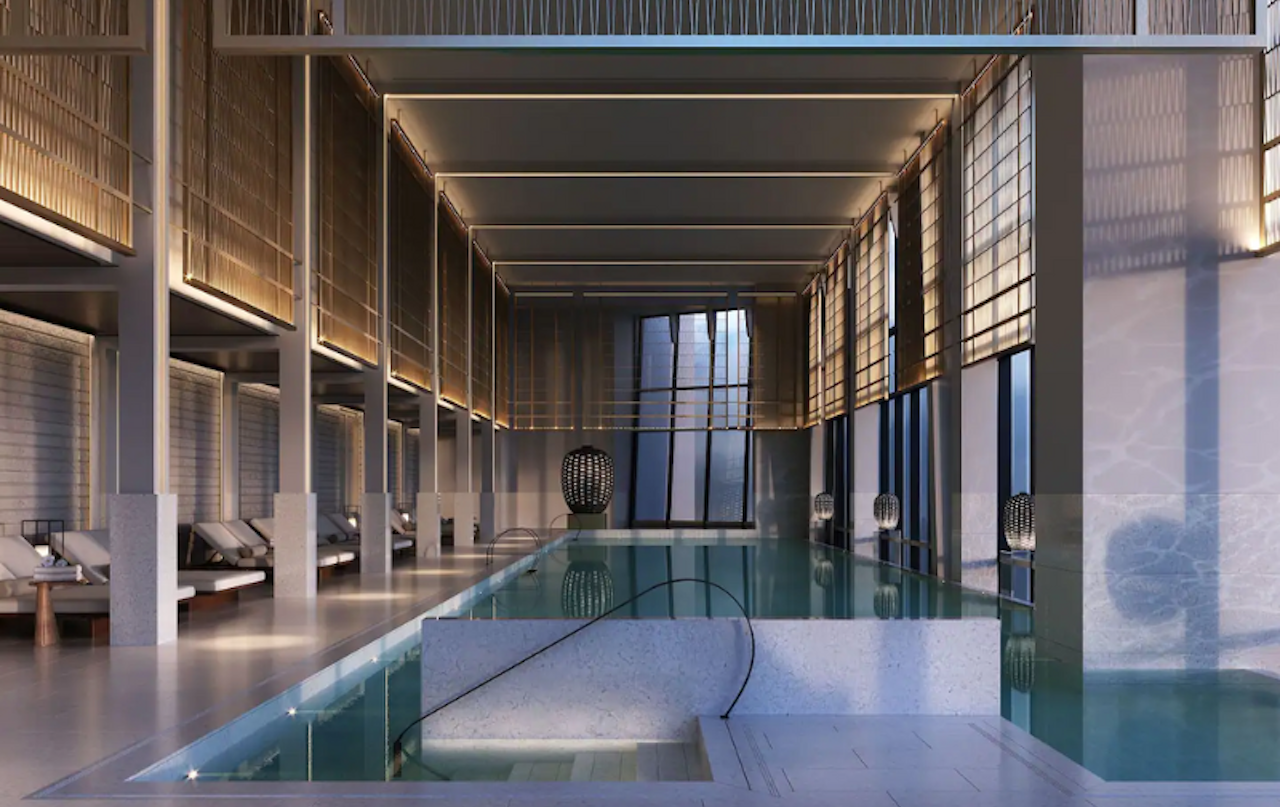
Located on the 99th floor, with spectacular views of the sunrise and sunset, the spa has designed its entire experience to align treatments with the body’s natural circadian rhythms in a way few spas can. As the sun rises, guests can experience energising morning rituals, and as the sun sets, evening therapies for rest with tailored breathwork and acupressure depending on the time of day.
At Talise Spa at Madinat Jumeirah, the hotel has focused on biohacking experiences, specifically to ease anxiety, stimulate the vagus nerve to release tension and support women through hormonal changes. Treatments to do this include iDome, the Satori Lounger, and IV Therapy
Talise Spa offers technology-enhanced therapies to target physical and mental issues. Photo: Talise Spa
“Guests today are seeking wellness programmess that offer both innovation and measurable results,” says Sarah Dalton, Jumeirah’s director of wellbeing. “Experiences that combine sensory immersion, advanced recovery techniques and personalised guidance are particularly popular. For example, Madinat Jumeirah offers programmes that use technology to enhance energy, resilience or mental clarity alongside curated rituals for balance and intentional rest. Essentially, our guests are seeking experiences that feel bespoke, transformative and aligned with their individual lifestyle goals.”
Bamford Wellness Spa by 1 Hotels, located in London’s Mayfair, combines treatments and high-quality products to cater to the specific needs of guests. One notable trend is the increasing interest in touchless therapies. Alena Stavnjak, corporate director of spa and retail at Starwood Hotels, says, “Guests today are increasingly interested in high-tech, results-driven wellness experiences. Our most popular innovations include touchless therapies such as the hyperbaric chamber, ocean salt float and infrared treatments, alongside vibroacoustic beds and LED light therapy. Guests are drawn to these science-backed treatments for their ability to deliver tangible wellness benefits in a modern, seamless spa environment.”
Bamford Wellness Spa bridges holistic wellness and targeted health treatments. Photo: Bamford Wellness Spa
The spa aims to combine holistic wellbeing with offerings that focus on issues like chronic pain, inflammation, recovery and skin health. It’s Bamford Wellness Journeys is are designed to target these specific needs. B-Silent treatment promotes deep relaxation and supports better sleep, while B-Balanced is tailored to alleviate symptoms associated with hormonal changes and long-term health conditions. Each journey is also complemented by a curated take-home product range, allowing guests to continue nurturing their wellbeing after they leave the spa.
For more information on Singapore Airlines’ flights to the above destinations, visit singaporeair.com.
Even in a world dominated by e-readers and online deliveries, there’s something unmistakably special about a good old-fashioned bookstore. The quiet hum, the scent of paper, the thrill of stumbling upon an unexpected title – these are experiences the internet simply can’t replicate.
Here in Singapore, these independent and speciality bookstores are keeping that experience alive. Some come with cafés, others with creative spaces that invite visitors to linger. Whether you’re an avid reader or a casual browser, these five bookstores offer a refreshing mix of nostalgia and discovery.
Basheer Graphic Books: Designer’s paradise
A long-time favourite among designers and architects, Basheer Graphic Books is a treasure trove of titles on design, architecture, product design and photography. Its collection is carefully curated, making it a go-to for creatives seeking niche or hard-to-find publications.
Seek out Basheer Graphic Books in Singapore’s “city of books”, Bras Basah Complex. Photo: Basheer Graphic Books
Located within Bras Basah Complex – fittingly known as the “city of books” – Basheer has been run since 1991 by second-generation owner Abdul Nasser, who joined the business in his 20s. The store’s unpretentious charm and deep focus on the visual arts make it a cornerstone of Singapore’s design community.
Bras Basah Complex #04-19, 231, Bain Street
Book Bar: Coffee meets conversation
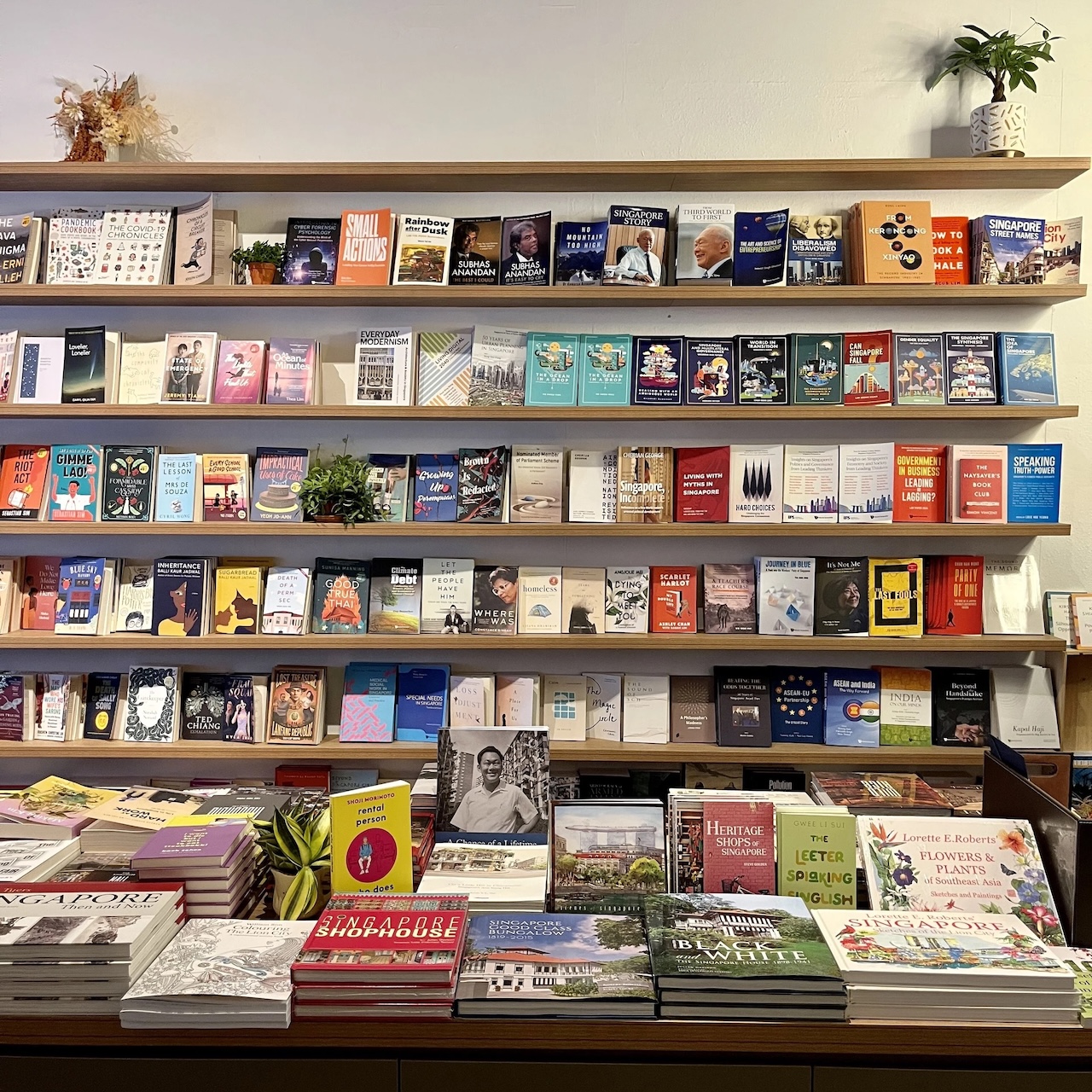
Opened in 2023, Book Bar is equal parts bookstore and café. Its shelves spotlight Singapore literature and Asian heritage titles, while its counter serves thoughtful brews and light bites – from croissants to cinnamon toast.
Enjoy a browse alongside a fragrant brew at this bookstore cafe. Photo: Book Bar
Founded by Alex Chua and Sara Ng, Book Bar was conceived as a cosy space where reading and coffee culture could intertwine. Their mission is to bring back the habit of slow reading while championing Singaporean writers.
57 Duxton Road
Books Beyond Borders: Reading for a cause
Books Beyond Borders gives pre-loved books a second life – and supports girls’ education in Nepal while doing so. Since 2019, it has rehomed more than 20,000 books and raised over S$40,000 to fund classrooms, teacher salaries and scholarships.
Explore the constantly changing selection while doing some good with your purchase. Photo: Books Beyond Borders
Its ever-changing selection spans fiction, non-fiction and children’s titles. The industrial-chic space on Erskine Road, just across from Maxwell Food Centre, adds to its appeal – all warm lighting, concrete textures and endless shelves to explore.
#01-08, 33 Erskine Road, Singapore 069333
Epigram Books: Home of Singapore stories
Founded in 2011 by author and publisher Edmund Wee, Epigram Books has long been at the heart of Singapore’s literary scene. It’s known for championing local stories – from award-winning novels and children’s books to graphic novels and memoirs. Now part of the innovative Casual Poet Library, Epigram’s titles can be browsed, borrowed or bought within this creative community space where individuals rent shelves to share their favourite reads. It’s a fitting home for a brand that continues to nurture Singapore’s storytelling culture.
#01-110, 123 Bukit Merah Lane 1
A Million Books: Second-hand haven with heart
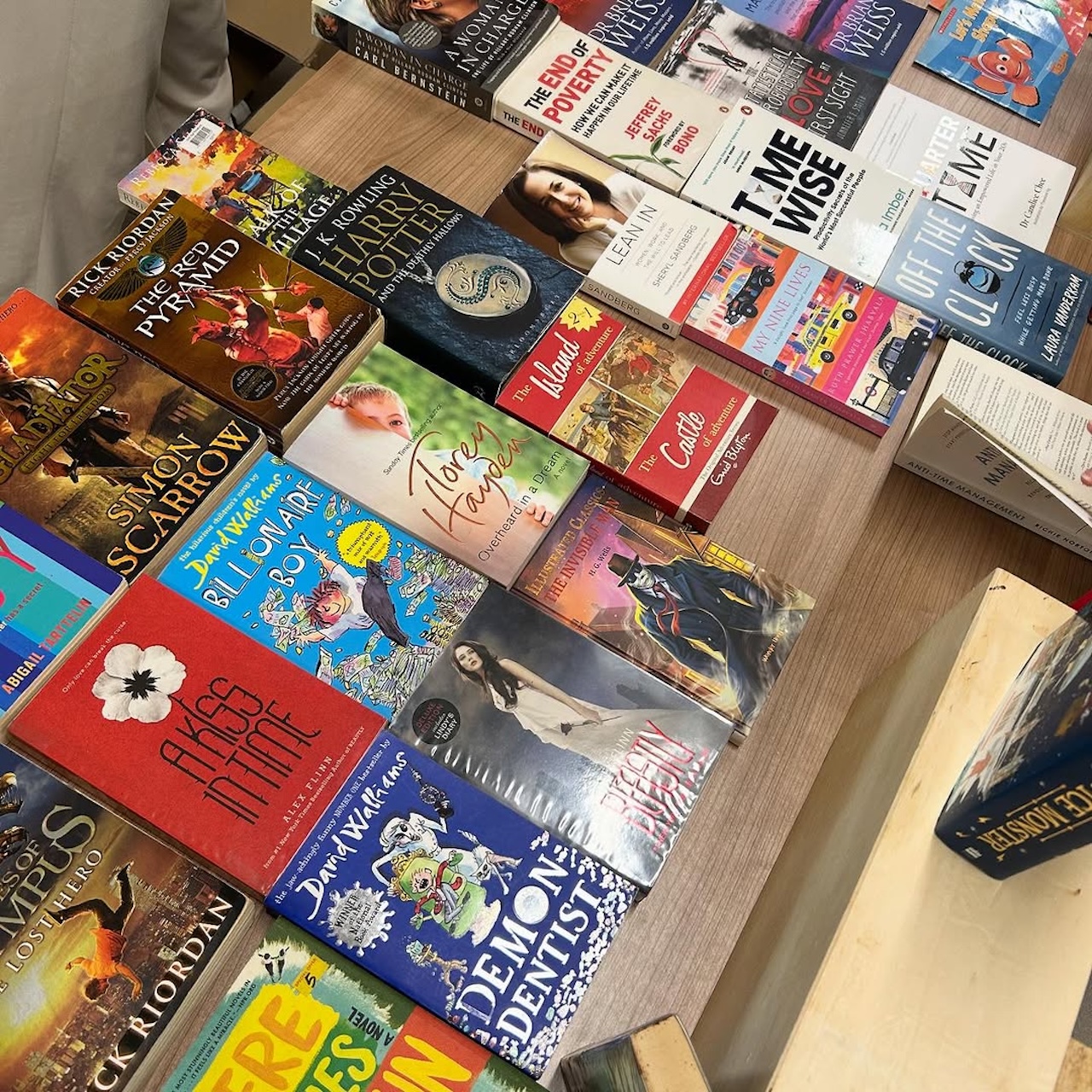
Hidden in a quiet corner of Paya Lebar, A Million Books is a second-hand bookstore with a conscience. Run by volunteers, this warehouse-style space houses an eclectic mix of donated titles – from mysteries and biographies to science fiction and beyond – all at wallet-friendly prices.
Give a book a second life while contributing to reforestation. Photo: A Million Books
Proceeds go towards reforestation efforts; eight trees have already been planted through the store’s profits. With its pay-it-forward philosophy and constantly changing stock, A Million Books is a haven for readers who love the thrill of discovery and believe in books as a force for good.
#06-78 WCEGA Tower, 21 Bukit Batok Crescent
For more information on Singapore Airlines’ flights to Singapore, visit singaporeair.com.
Most people going to the Netherlands head for Amsterdam’s canals and museums, Rotterdam’s modernist architecture or perhaps Delft’s blue-and-white pottery. But just a 15-minute train ride from Amsterdam Centraal station (or a 40-minute direct bus from Amsterdam Airport Schiphol) is Haarlem, an under-the-radar neighbourhood that offers cultural depth and vibrant history in a smaller, arguably more authentically Dutch setting.
10am: Dive into history
Start your day by delving into Haarlem’s storied past. While Haarlem has existed since the 10th century, it wasn’t until 1245 that Count Willem II granted it city status. By the 14th century, it was Holland’s second-largest city, thriving on trade, textiles and its beer brewing expertise. During the Dutch Golden Age in 1575, the city became a prosperous arts centre and a sanctuary for Huguenots (persecuted French Protestants).
Explore interactive exhibits at Anno Haarlem. Photo: Visit Haarlem
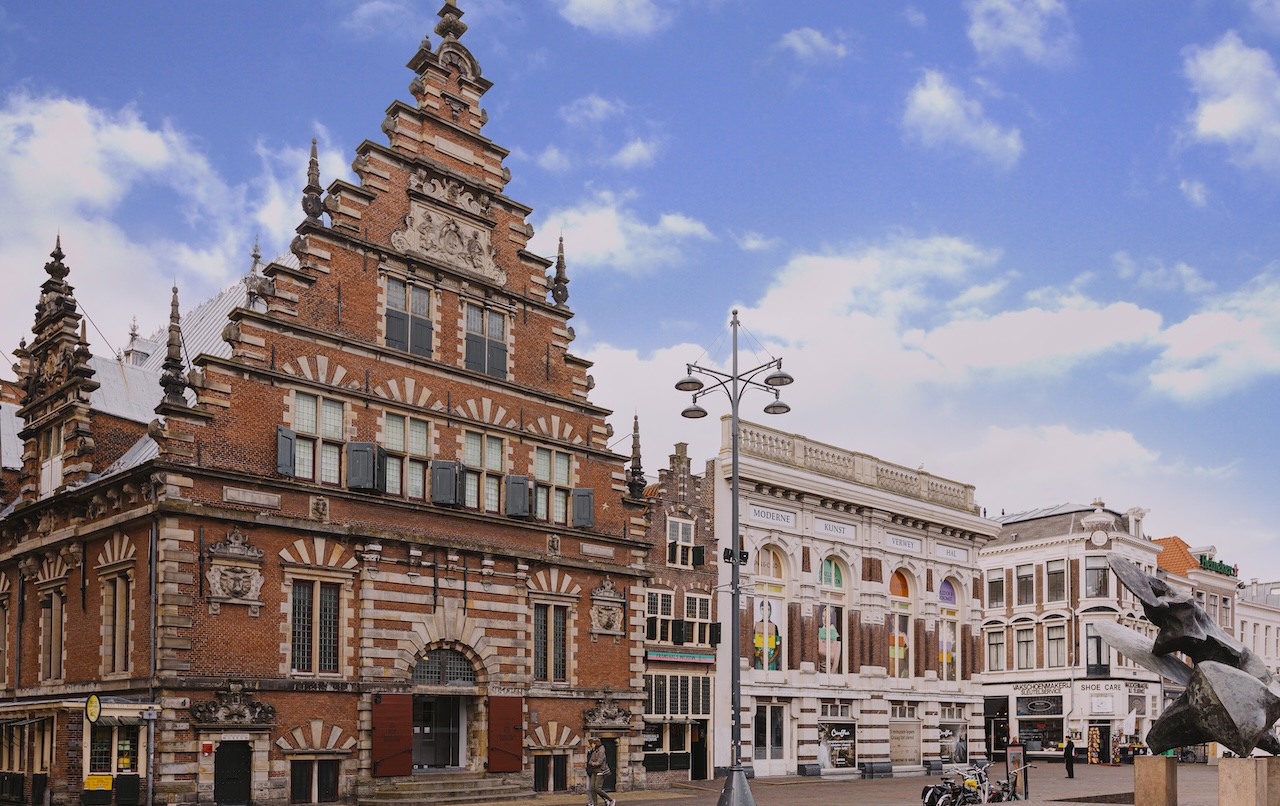
Discover the intricacies of this time at the Verwey Museum, which presents an all-encompassing look at Haarlem’s history, starting from its earliest years. At Anno Haarlem, this comes to life through an interactive experience while at the Archeologisch Museum Haarlem, objects from the city’s earliest habitation to its recent past are on display.
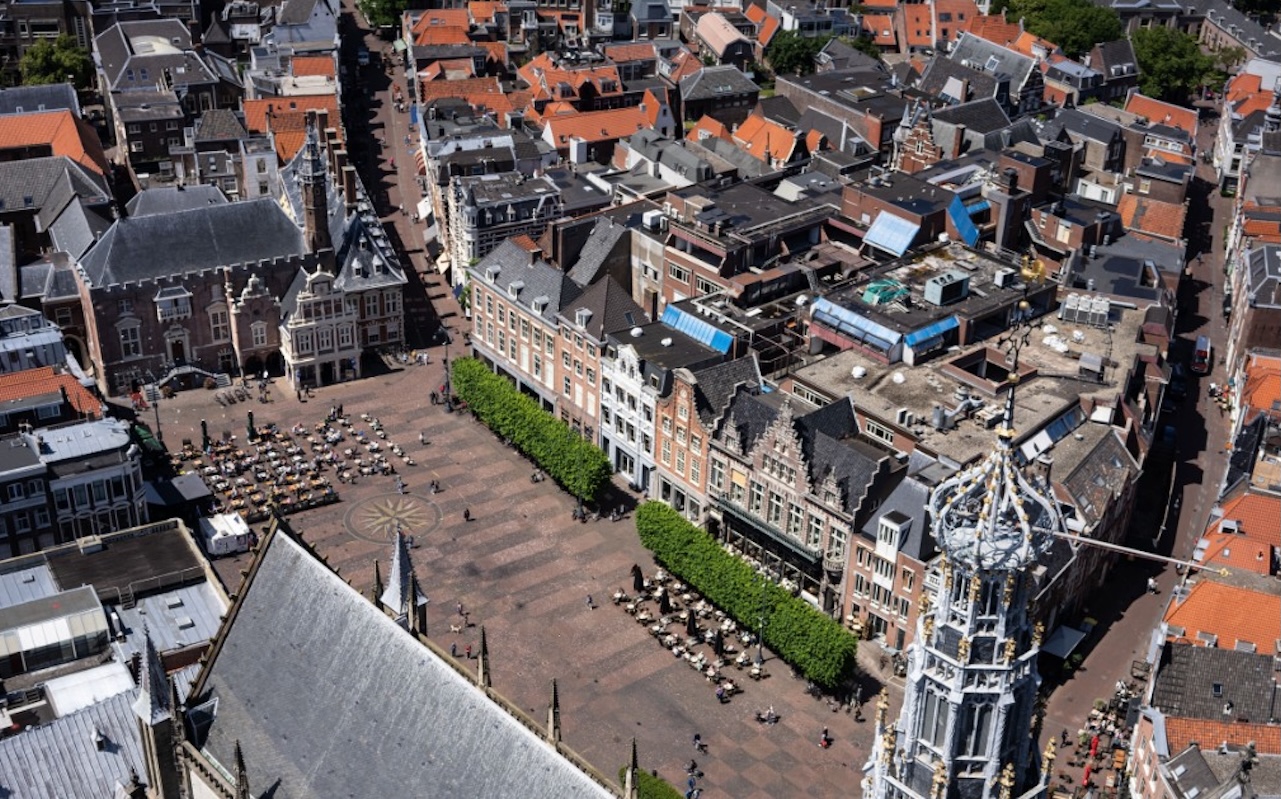
Nearby, the UNESCO-listed Grote Kerk (St Bavo’s Church) has dominated Haarlem’s Grote Markt (market square) since 1520. It’s a masterpiece of Gothic architecture, filled with Renaissance art and a massive Müller organ once played by Mozart.
Haarlem’s Grote Markt is an excellent site for Gothic architecture. Photo: Visit Haarlem
For something different, Corrie ten Boomhuis explores the city’s World War II experience in a home that once hid a Jewish family. And, just outside the city centre, the Museum van de Geest Dolhuys, located within a former mental health institute, probes the minds of societal outcasts through the works of creatives and scientists who dealt with disabilities and mental illnesses, including artists Edvard Munch and Vincent van Gogh.
1pm: Tuck into some Dutch dishes
Soak up the city’s atmosphere while enjoying the local cuisine. A long-time favourite is Grand Café Brinkmann, which has occupied its spot overlooking the Grote Kerk since 1879. Whether you’re seated on the outdoor terrace or amid the old-world interiors, you’ll enjoy understated yet well-executed favourites, from croquettes and steaks to cheese fondue and fish stew.
Experience Michelin-recommended Balinese cuisine at Café Samabe. Photo: Café Samabe
You might not expect to get authentic Indonesian food in the Netherlands but after 300 years of colonial history, it’s now an integral part of Dutch cuisine. At the Michelin-recommended Café Samabe, try cuisine that focuses on Balinese specialities in a building dating back to 1899.
3pm: Explore its historical art scene
Between the 16th and 17th centuries, Haarlem flourished as the artistic capital of the Dutch Golden Age, which gave rise to Dutch Masters like Frans Hals, Cornelis van Haarlem and Jan Steen. The Frans Hals Museum celebrates Haarlem’s most famous resident, showcasing the world’s most extensive collection of the artist’s work – including his celebrated group portraits of the civic guards.
Discover the works of Frans Hals at the museum dedicated to his work. Photo: Frans Hals Museum by Mo Schalkx
A short walk away, the country’s oldest museum boasts an eclectic collection that’ll thrill the curious. The Teylers Museum has everything: paintings by Michelangelo and Raphael in one room and a lineup of compasses in another. The Oval Room is a must-see — it’s the world’s only remaining 18th-century museum interior.
5.30pm: Cruise the canals along the Spaarne
Much like Amsterdam, Haarlem is laced with a network of canals. In the 17th century, these waterways were the city’s lifeblood, facilitating Haarlem’s trade – of cloth, flowers, beer and more – with other towns in the country and beyond its borders. They also formed a defensive barrier around the city, shielding it from the intensity of political and economic upheaval.
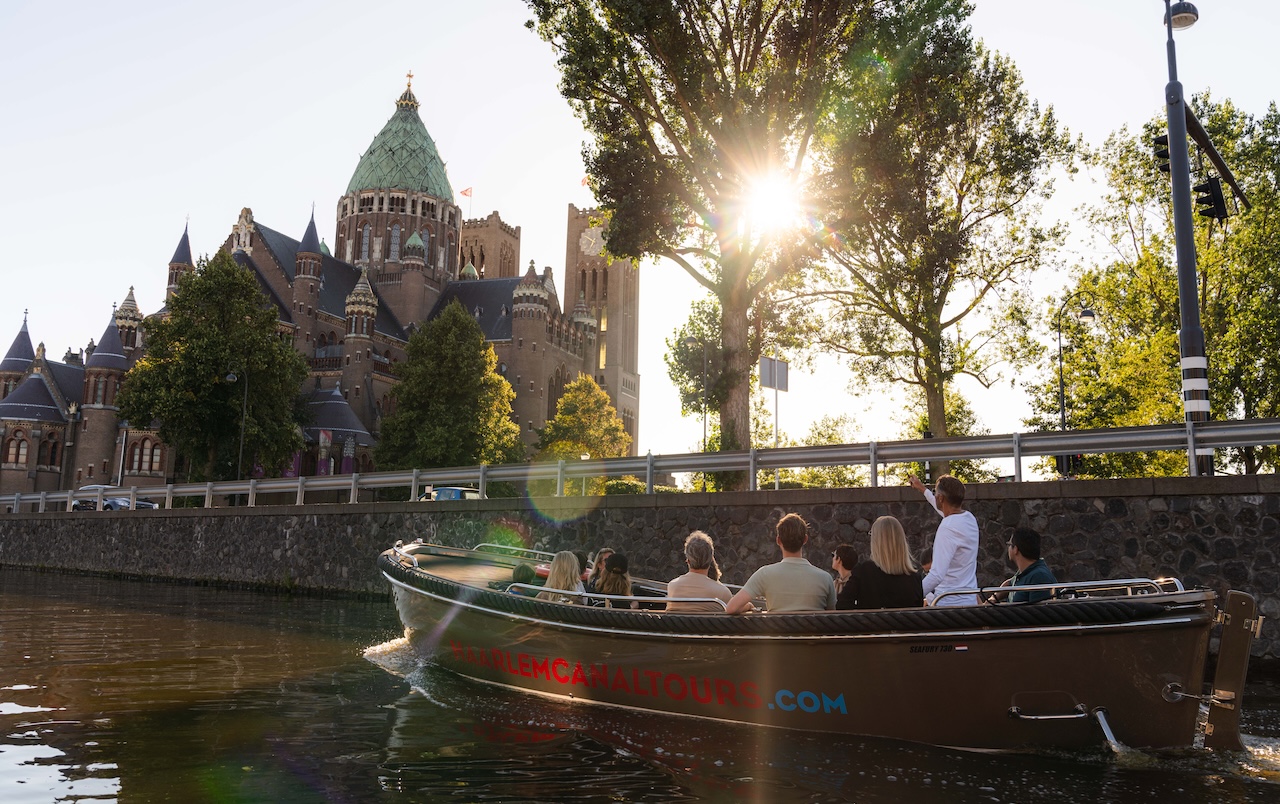
Explore the canals of Haarlem on different boats with Haarlem Canal Tours. Photo: Haarlem Canal Tours
These days, Haarlem’s canals are perfect for taking in the picturesque views of old waterfront houses, lush parks and iconic windmills with a leisurely cruise down the Spaarne.
Haarlem Canal Tours offers skippered boat trips in different styles, many with insightful explanations of the city’s art, history and important landmarks – including Molen de Adriaan, Haarlem’s most famous windmill (now transformed into yet another museum).
7pm: Drink in historic surrounds
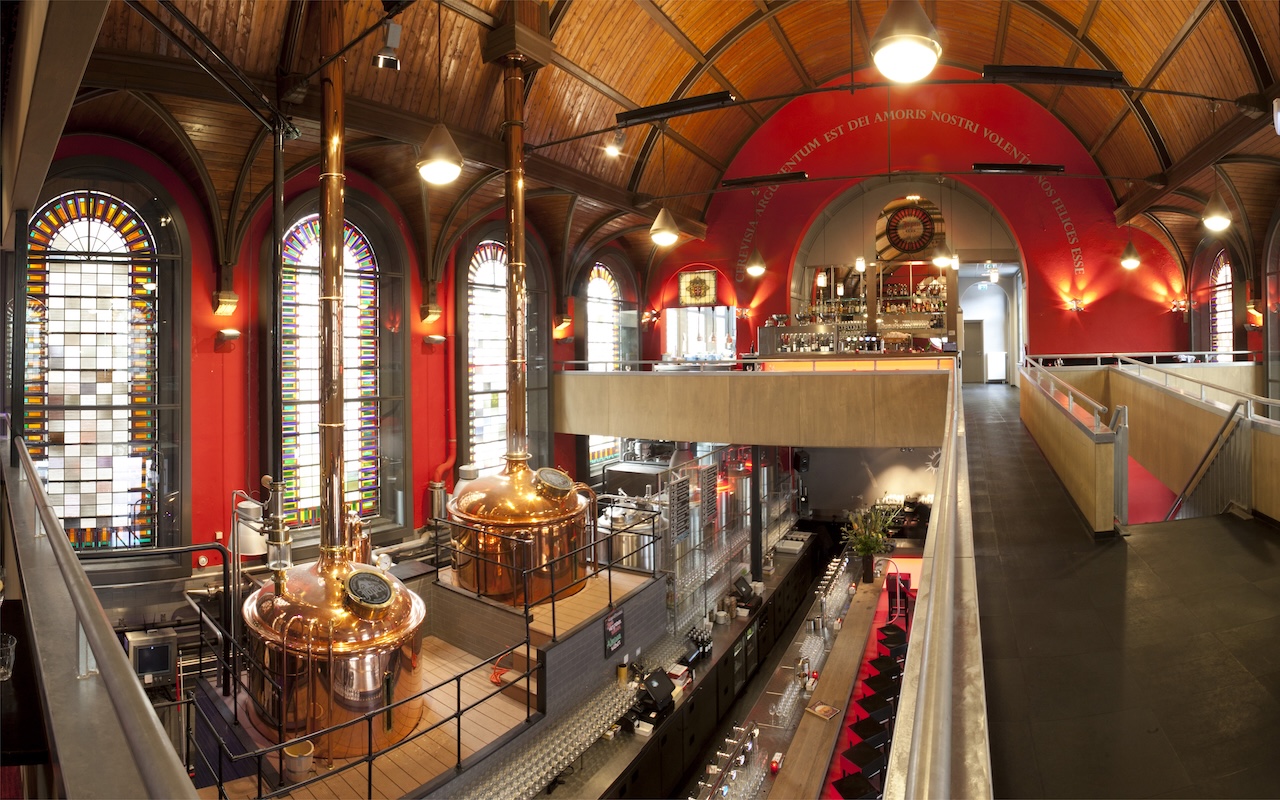
Haarlem has turned preserving its ancient architecture into an art form, and this is perhaps most obvious in its bars. A temple of tipple, Jopenkerk is a tribute to Haarlem’s beer culture housed in the grand surrounds of a 15th-century church. Try classics like the Mountain IPA or creative brews like the Zwarte Ziel 2025 (a salted caramel imperial smoked porter) and savour their flavours amid vaulted ceilings, stained glass windows, wooden beams and brickwork.
Explore Haarlem’s beer culture at Jopenkerk. Photo: Jopenkerk
If you have time for a second stop, make your way to Proeflokaal De Blauwe Druif. Established in 1863, this is Haarlem’s oldest continually operating pub. Slip into the intimate space to enjoy a drink in the cosy, nostalgic surrounds of wood-panelled walls, Dutch Master-inspired paintings and flickering candlelight.
8pm: Fine dining
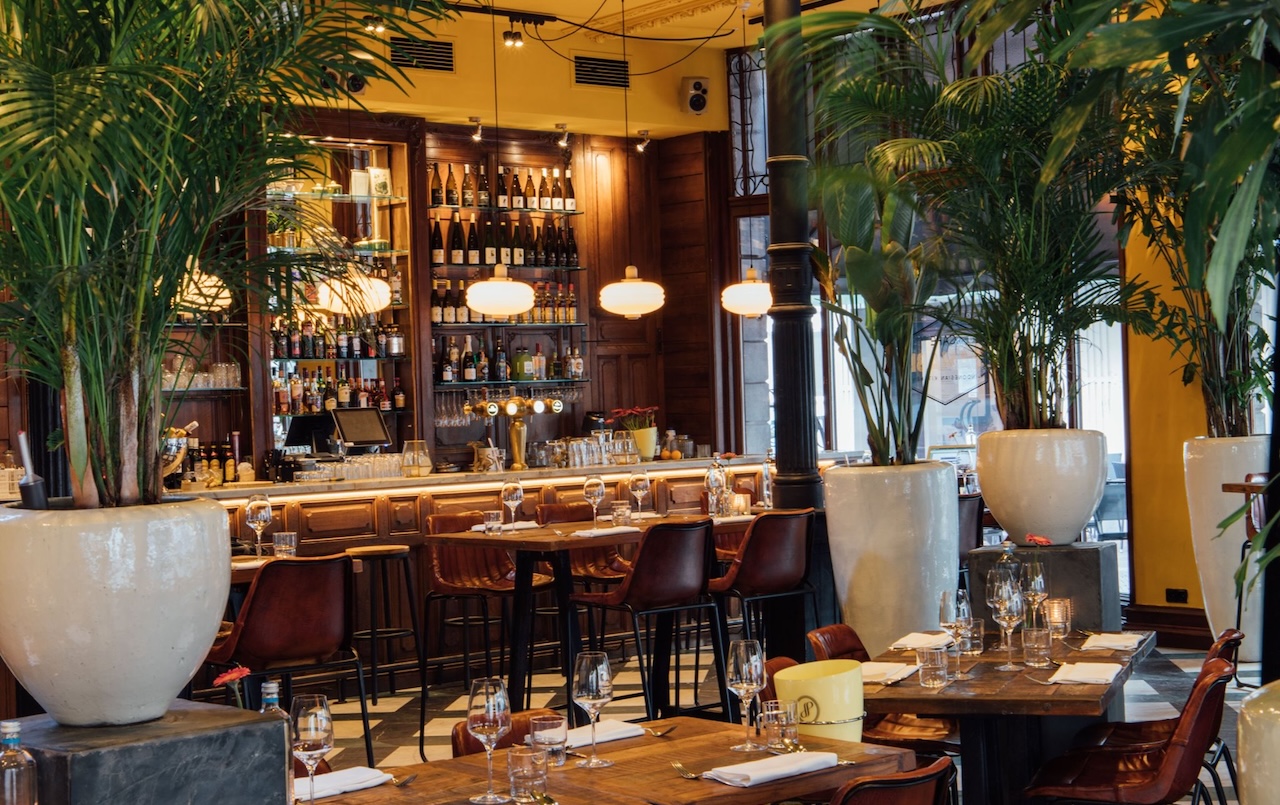
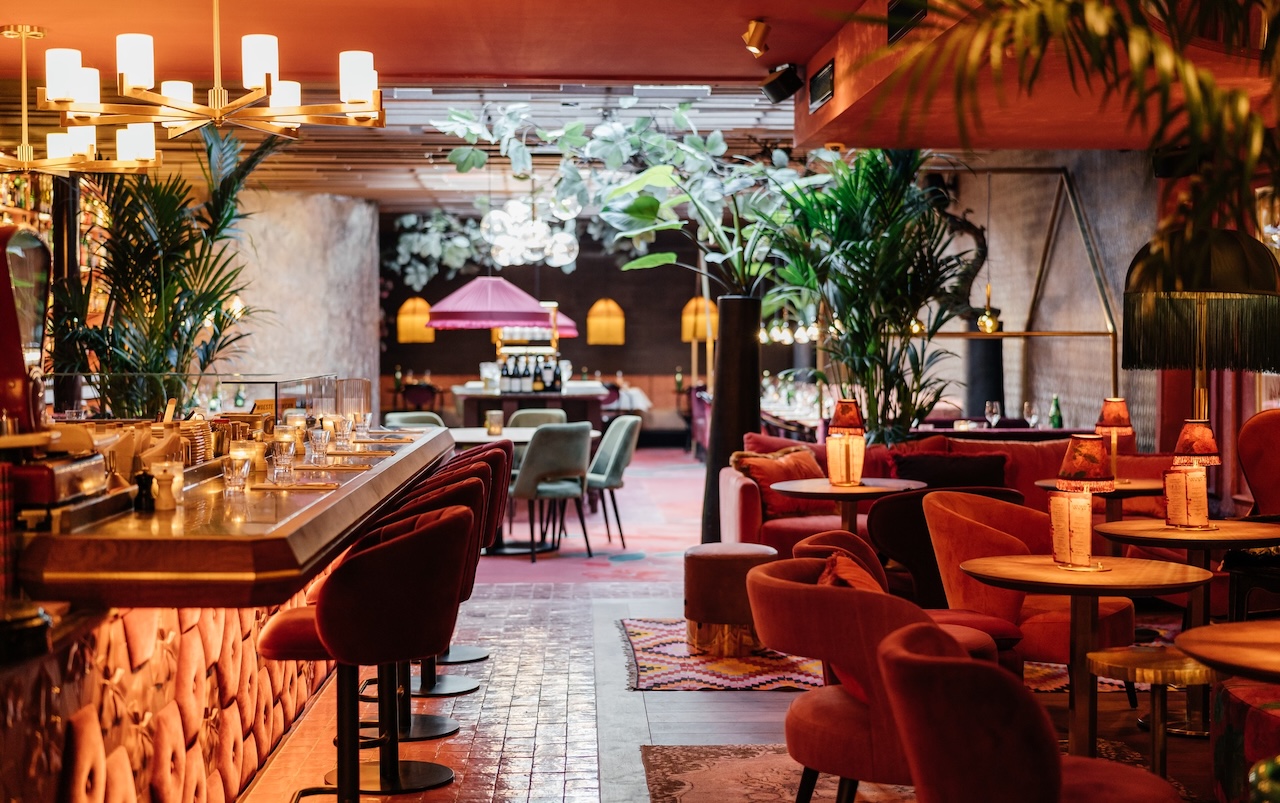
The Dutch are known for their practical, laidback approach and that includes their attitude to upscale restaurants. Haarlem’s Toujours is a prime example. In the city’s historic heart, this is a visual cacophony of colours, patterns and plants where groups gather to enjoy the surprisingly global menu – ranging from tacos to sushi – served by friendly staff.
Fine dining destination Toujours serves a variety of food in an eclectic setting. Photo: Toujours
Nearby, the Michelin-starred Restaurant ML is situated in heritage-listed surrounds of painter Johan Enschedé’s former home, which has been transformed with a chic design blending modern aesthetics with vintage elements. Here, chef Mark Gratama whips up highly creative plates infused with global touches. Grab a seat at The Chef’s Bar by the kitchen to watch him meticulously pair elevated ingredients with surprising flavours – think langoustine with rendang sauce or lobster with fig.
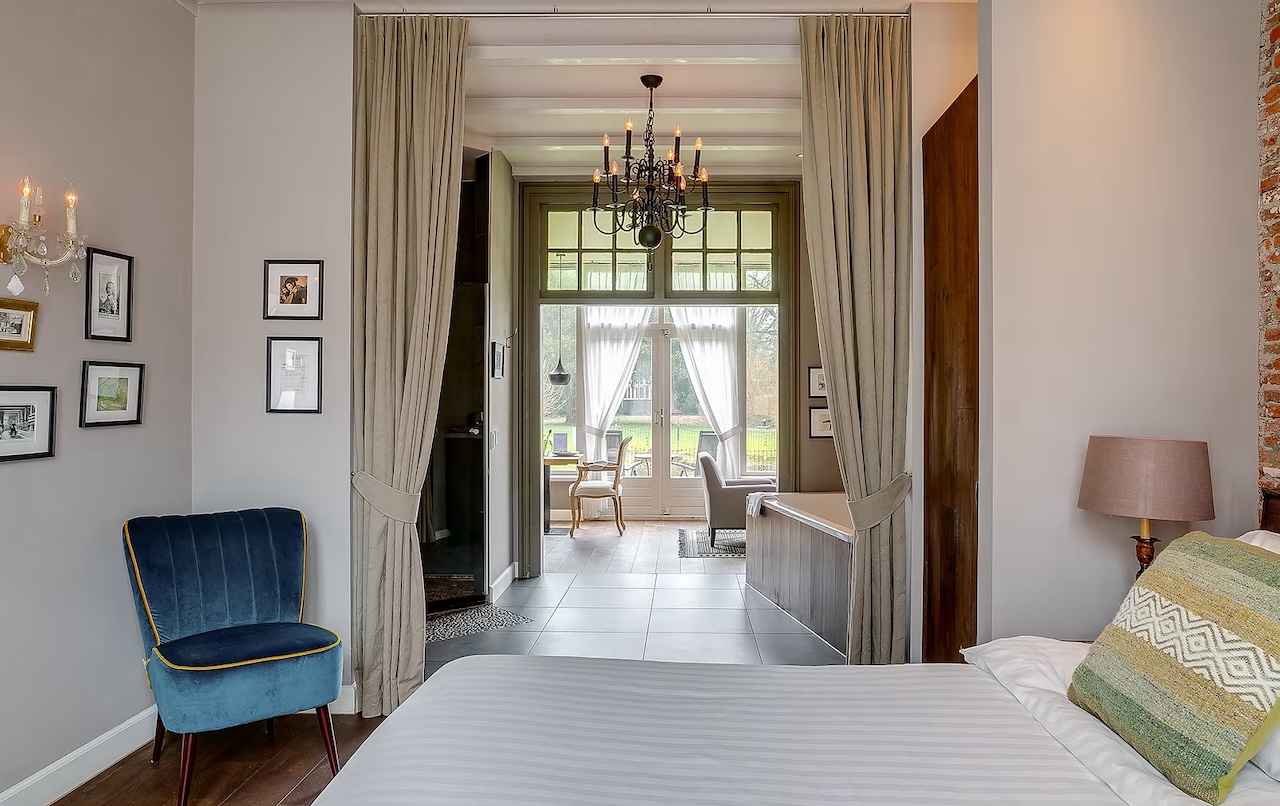
Hotel t’Vosje offers a chic luxurious stay. Photo: Hotel t’Vosje
If one day isn’t enough in Haarlem, check into one of the city’s eclectic boutique hotels, all of which combine historic architecture with modern comforts. The refined Hotel t’Vosje, colourful BoutiqueHotel Staats Haarlem or quietly elegant ML Hotel are all good options.
For more information on Singapore Airlines’ flights to Amsterdam, visit singaporeair.com.
Join the city’s hip crowd at Roof a stunning urban oasis high above the vibrant Bund. This chic, open-air terrace on the 29th floor of The Shanghai EDITION offers breathtaking panoramic views of the iconic skyline. Settle into a plush lounger with plenty of greenery and a crafted cocktail as the sun sets.
Amid Duxton Road’s laidback bars like Cat Bite Club and Puffy Bois, Casper blends art, music and flavour-focused drinks in a moody, industrial setting. The culinary-driven cocktails offered here are creative, yet gimmick-free, allowing the ingredients and flavours to shine. Take the minimal Tomato – Volcán Blanco, tomato, tomato acid and a touch of heat from chilli liqueur Ancho Reyes Poblano – savoury and delicious. Or Cake, an indulgently desserty blend of Belvedere Pure, gin, and sponge cake. Food is currently limited to a selection of hearty stacked sandwiches, but the hospitable crew are happy to complement them with orders from neighbouring spots Routine and Koki.
Located on the luxury hotel’s mezzanine level, the seafood-forward restaurant is Chef Sergio Herman’s celebration of Zeeland’s culinary heritage. At the heart of his ‘New Italian’ menus is the signature Sergio’s Father’s Fish Soup – a recipe that dates back to early years at the three-Michelin-starred Oud Sluis, where he worked alongside his father. Amid melted disco balls by Dutch art collective Rotganzen and sculptural lighting by artist Dirk van der Kooij, guests can enjoy dishes such as seafood orecchiette and chicken vol-au-vent.
On Sundays, the elegant space plays host to an indulgent brunch featuring fresh Irish Mor oysters, gambero rosso with fingerlime, free-flowing Champagne and more. For intimate celebrations, there are five private dining rooms including the lavish Sergio’s Suite, which features a Marrone kitchen, a vintage Mario Bellini sofa and a bespoke art piece by Rinus Van de Velde.
Hidden in the heart of Delta House lies an immersive scent-making experience, where you are your own perfumier. Founded in 2017 by industry veteran Terry Jacobson, it features the proprietary Chemistry of Oo – an ingredient table of 27 core notes – and a fragrance library of custom accords made for blending. Jacobson, the designer of the signature scents for ION Orchard and Changi Airport, leads a team of mixologists who guide new scent makers through every step.
The studio also offers candle making workshops, and you can even design your own Chinese incense with locally-sourced ingredients. Look out for brand collaborations such as the recent partnership with Japan’s Nikka Whisky, where guests enjoyed a guided whisky tasting and perfume making before taking home a bottle of Nikka From The Barrel. For those looking for gifts, they also carry their own line of fine fragrances.
You’ll spot the queues before you see the shop. Despite Singapore’s sweltering heat (or perhaps because of it), the front of Messina is often crowded with people eager for a taste of its freshly churned gelato. There are a whopping 40 flavours, including five Singapore-exclusives like Kaya Toast and Tau Huay, to choose from. Made with pasture-fed Jersey milk and other ingredients from Messina’s own farms, including free-range eggs, honey and hazelnuts, the gelato is irresistibly smooth and naturally sweet. Clad in American red oak, Bianco Carrara marble and plush green upholstery, the cosy 22-seater offers a relaxing space to enjoy your scoop. The team is constantly innovating, so keep an eye on their socials for new special flavours and brand collaborations such as the recent Bartistart choux pastry cream puffs filled with Messina gelato.
Located 130km from Ahmedabad, the largest city in the Indian state of Gujarat by population, Patan is famous for its age-old weaving traditions. The jewel-toned Patola was once the preserve of royalty and nobility – a sacred heirloom credited with healing and protective powers. Its mystique was such that it even fuelled conflict between kings.
Legend tells of 12th century ruler King Kumarpal of Patan, who draped himself in a fresh Patola each dawn before his temple visit. One morning, his priest whispered that the imported fabrics from Jalna were impure – the king there had used them as bedspreads before selling them. Enraged, Kumarpal invaded Jalna and brought back some 700 weaving families.
Patan Patola saris and dupattas. Photo: Heritage Patan Patola by Kanubhhai Salvi
Beyond India, Patolas carried spiritual weight across Southeast Asia. In Thailand, Malaysia and Indonesia, they were considered sacred power cloths believed to protect wearers in battle. Dr Preeti Mehta, a textile collector who has helped revive interest in Patolas through exhibitions, notes that in Bali, they were draped on temple walls and used as burial shrouds. “In Indonesia, long ceremonial Patolas featuring a horizontal design of four huge elephants were revered as heirlooms and believed to have magical properties,” she says.
Dyed and undyed threads on a Patola fabric. Photo: Gustasp and Jeroo Irani
Today, only three Salvi families in Patan continue this thousand-year-old art – heirs to what locals call the queen of weaves. The Patola’s sanctity endures and it now carries a Geographical Indication (GI) tag protecting its legacy.
An art form of mathematical precision
The Patola’s power lies as much in its spiritual resonance as in its technical mastery. Each sari is a feat of geometry and patience. Both warp and weft threads are resist-dyed in intricate alignment – a double-ikat method requiring mathematical precision to ensure that patterns and colours mirror perfectly on both sides. This complexity sets it apart from single ikat, where only one set of threads is dyed.
An old world loom. Photo: Rahul Salvi
“We call it a sacred weave because even one misplaced knot means starting over,” explains Viral Salvi of Patolawala Weavers, which trains young artisans in techniques once guarded within families.
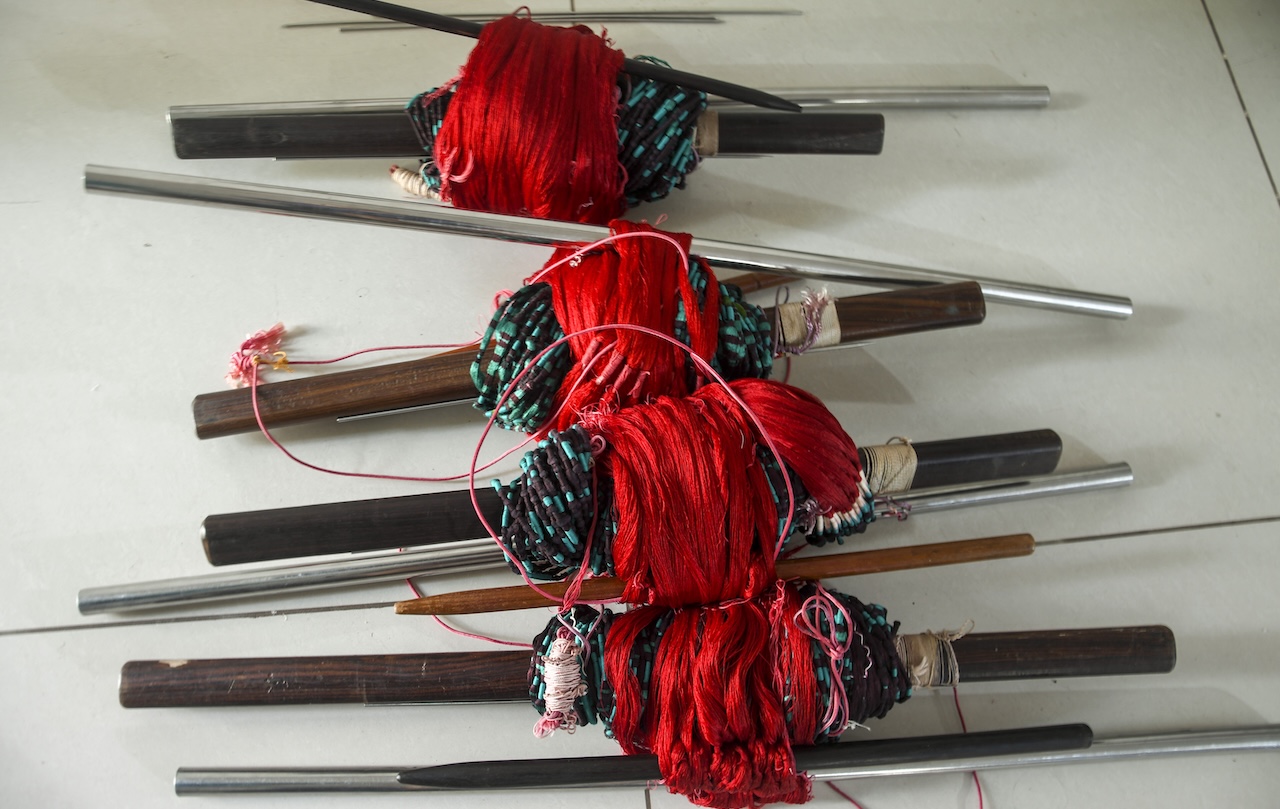
Inside his workshop, spindles, tubs of natural dye and reams of silk glint in jewel tones – filling the space with a palpable sense of lineage. Young apprentices tend to dyed threads while a master weaver silently works the loom.
“Around 25 painstaking steps go into one sari,” adds Kanubhai Salvi, another award-winning artisan with workshops in Patan and Vadodara for the brand Heritage Patan Patola. “We use dyes made from marigold flowers, pomegranate skin and turmeric – colours that never fade.”
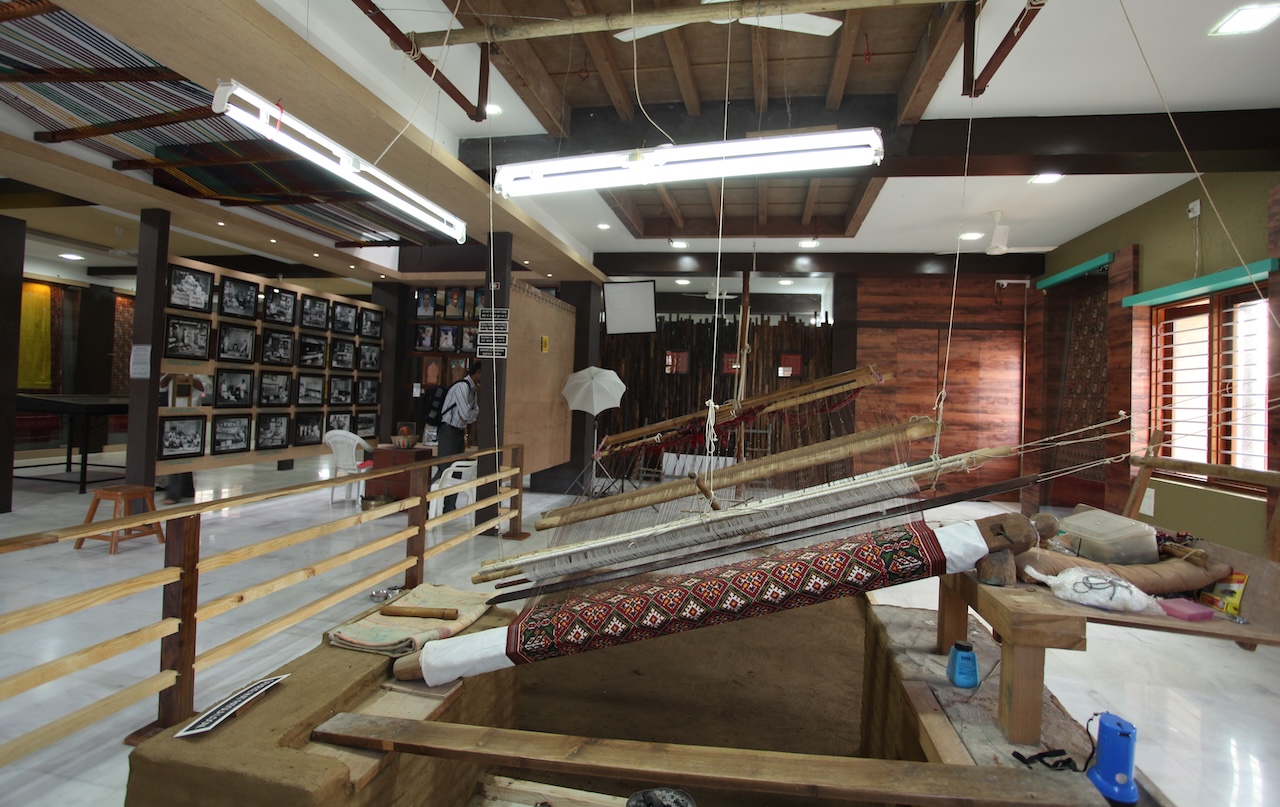
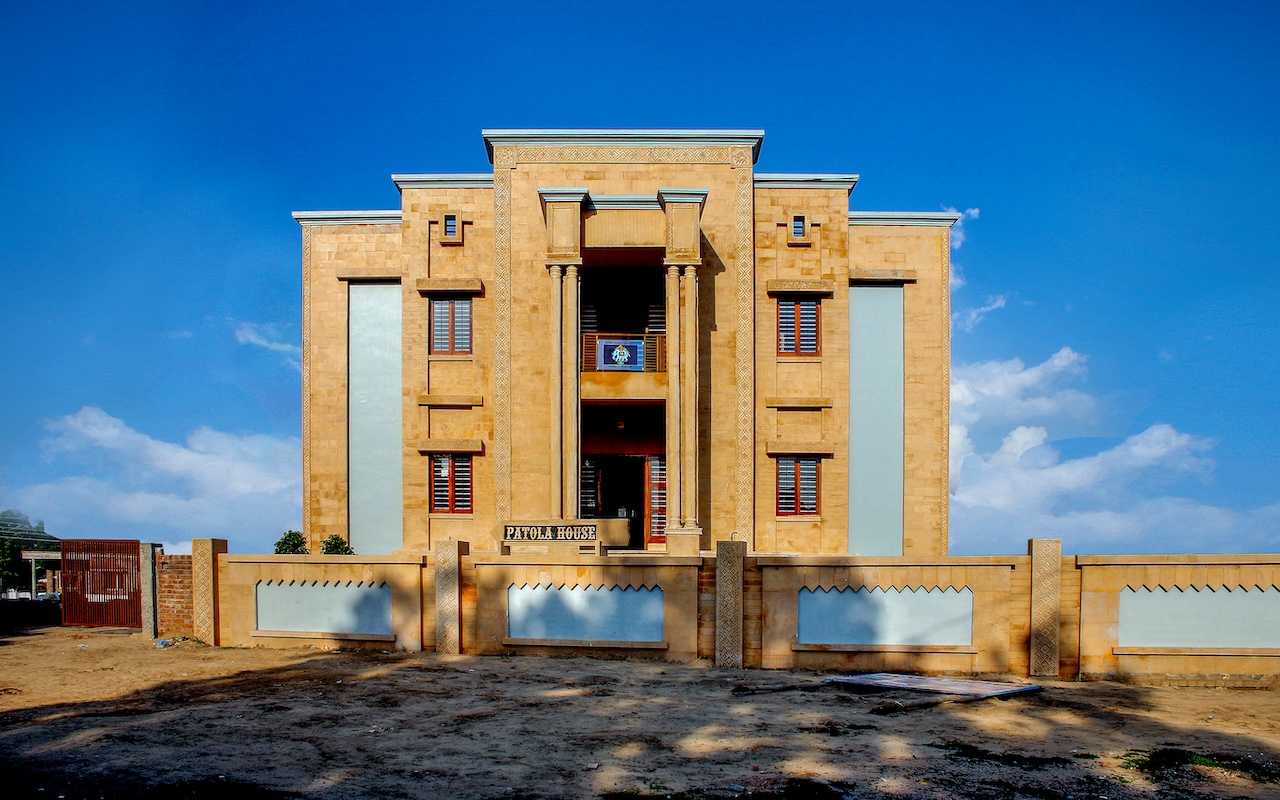
The Patan Patola Heritage museum. Photo: Rahul Salvi
At the museum of the Patan Patola Heritage brand, architect-turned-weaver Rahul Salvi curates both antique and contemporary examples – documenting the Salvi family’s centuries-old process. “Our goal is not just to weave but to preserve the knowledge system behind it,” he says.
Coveted by the contemporary elite
A genuine Patan Patola commands between 150,000 and 600,000 Indian rupees (S$2,180–S$8,750), depending on the intricacy of the design. Four weavers may labour for six months or more on a single sari. In contrast, mass-produced digital prints fetch a fraction of the price but lack what one textile historian calls “the weave’s mystical energy”.
Spindles with threads. Photo: Gustasp and Jeroo Irani
“The act of weaving is almost meditative,” writes Jasleen Dhamija in Sacred Textiles of India. “In the folds of the Patola lie a people’s history, rites of passage and collective memory.”
Its patterns – geometric, floral and sometimes figurative – have changed little over the centuries. Yet India’s top designers, including Sabyasachi Mukherjee and Gaurang Shah, are reinterpreting the weave for modern wardrobes, while designer Deepika Govind praises its fluidity: “It has a gliding, liquid quality when draped.”
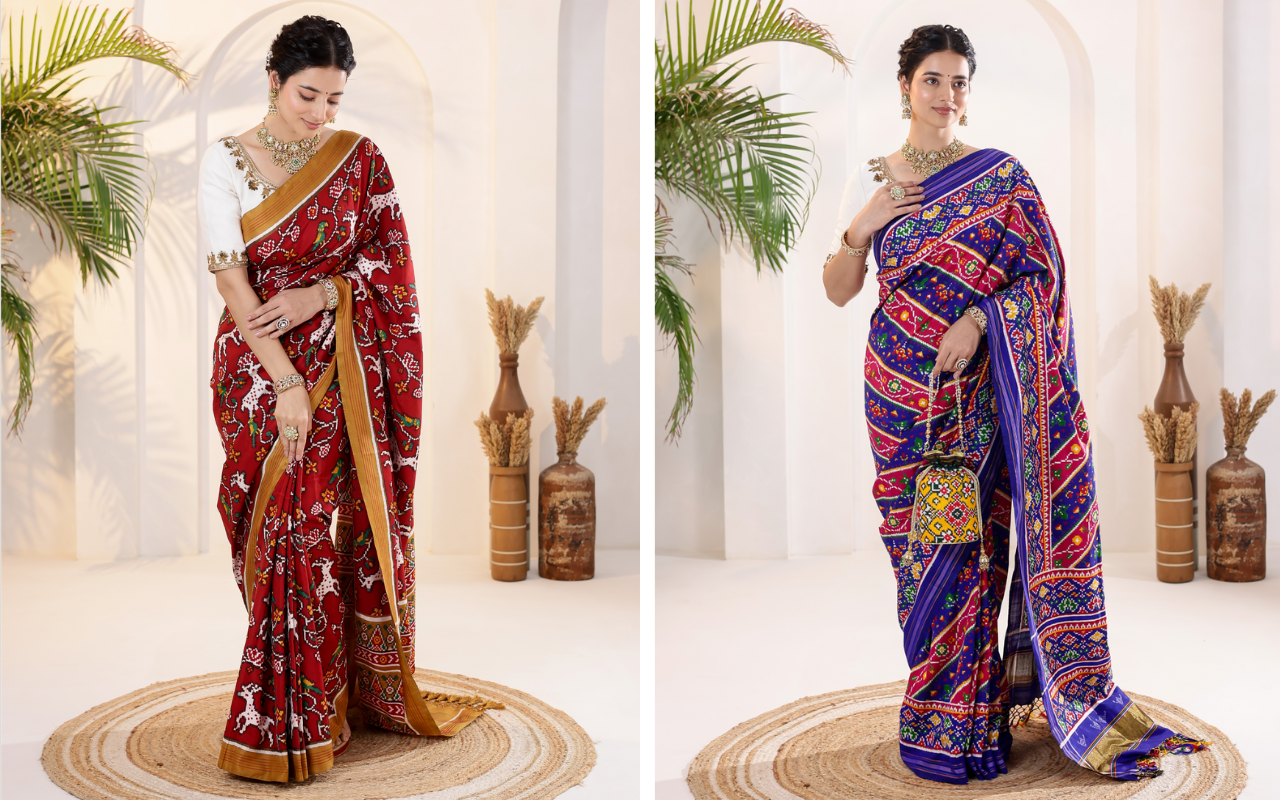
Patan Patola style in double ikkat saris. Photo: Navdip Tundiya
Today, Patolas grace red carpets and couture runways. Nita Ambani is said to own several, while her husband Mukesh Ambani and Prime Minister Narendra Modi favour Patola pocket squares – a modern nod to an ancient tradition.
Back in Ahmedabad, at Diwan’s Bungalow, a 150-year-old heritage property which houses carved woodwork and embroidered textiles, echoes of Patola linger. The property’s vintage fabrics aren’t mere décor but reminders of continuity – threads that connect artistry, memory and place. Running your hands across the silken weaves of Patan, you can sense more than craftsmanship. You can sense a lineage – a heartbeat pulsing through warp and weft, carrying the soul of Gujarat into the present.
For more information on Singapore Airlines’ flights to Ahmedabad, visit singaporeair.com.
Gone are the days when museums were ostentatious buildings with touch-me-not exhibits, where you felt like the chatter and inquisitive fingers of children would be frowned upon. While many modern museums include family-friendly exhibits, some are truly made for the young-at-heart. Here are museums to visit during the upcoming school holidays.
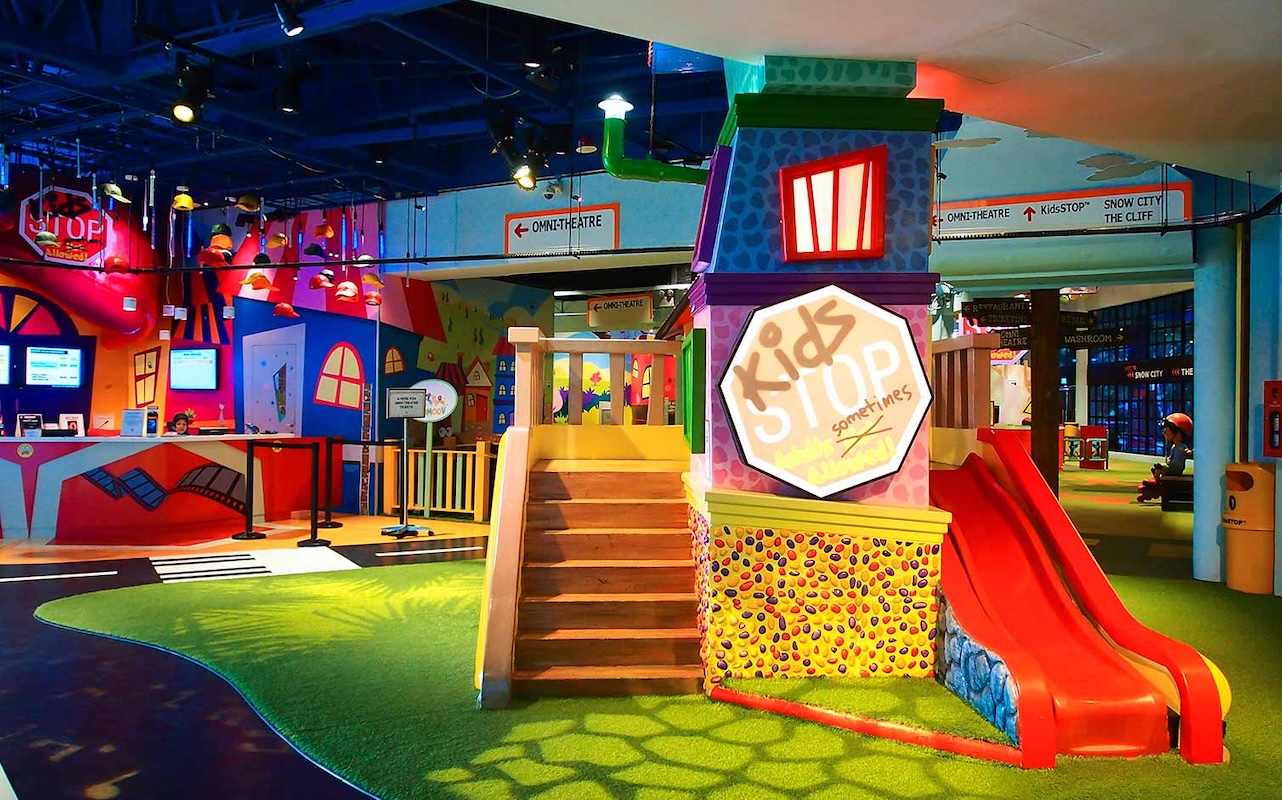
A dedicated children’s science gallery within the larger Science Centre campus, KidsSTOP offers roughly 3,000m² of interactive zones for children aged 8 and under, designed to spark inquiry, experimentation and imaginative play.
Photo Credit- KidsSTOP
Kids can role-play real-world scenarios (like grocery stores or urban planning), explore mini ecosystems and tinker with hands-on exhibits. The gallery operates separately from the main centre, with its own ticketing, and is tailored to younger minds.
Step into a pint-sized universe at Small Worlds Miniature Museum in Ariake, Tokyo, where imagination meets engineering. Spanning over 7,000m2, this indoor attraction is one of Japan’s largest miniature theme parks, with six intricately crafted “worlds” featuring bustling cityscapes, anime scenes, airports and even a lunar base.
Watch as tiny worlds come alive. Photo: Small Worlds Miniature Museum
Every model moves – trains glide, planes taxi and lights flicker to simulate day and night. Visitors can peer through transparent walkways for a bird’s-eye view or even 3D-scan themselves into a miniature figurine. It’s a fascinating blend of storytelling and technology that delights children and adults alike, just a short ride from central Tokyo.
The Children’s Discovery Museum, located beside Chatuchak Park, transforms learning into full-body play. Spread across more than 10,000m2, its three buildings and outdoor zones brim with activities: from fossil digs and bubble-making to eco-energy experiments and water play. A role-playing “City” lets kids explore real-world professions, while workshops nurture curiosity through art and science.
Enjoy both indoor and outdoor spaces for children. Photo: Children’s Discovery Museum
The open lawns and colourful water park add to its holiday-vibe charm. Entry is free, making it a family favourite among locals and tourists alike – an ideal respite between temple visits and market strolls in vibrant Bangkok.
Europe’s largest science museum, the Cité des Sciences et de l’Industrie in Paris turns complex ideas into hands-on fun. Housed within Parc de la Villette, its 30,000m2 of exhibits explore everything from genetics and robotics to deep-sea exploration.
La Cité des Enfants houses a fantastic interactive area for children. Photo: Cité des Sciences et de l’Industrie
Children flock to La Cité des Enfants, a dedicated wing for ages 2 to 10 where play equals discovery: think mini-construction sites, sensory tunnels and water experiments. Families can also tour the decommissioned Argonaute submarine or stargaze in the planetarium. Easily reached via Métro Line 7, the Cité’s immersive, multilingual displays make science accessible for visitors of all ages.
Part of the Wereldmuseum Amsterdam, Wereldmuseum Junior has been nurturing global curiosity since 1975. Designed “by and for children”, it invites ages 6 to 13 to see, touch, experience and participate. Each exhibition transforms into an immersive “world” – from Indonesian islands to African villages – where kids learn through music, art and storytelling.
A focus on learning through storytelling and the arts. Photo: Wereldmuseum Junior
Workshops encourage them to create, perform and share their own perspectives. The museum’s award-winning pedagogy emphasises empathy and cultural understanding over textbook facts. Located near Artis Zoo in the Plantage district, Wereldmuseum Junior is both playful and an exploration of humanity.
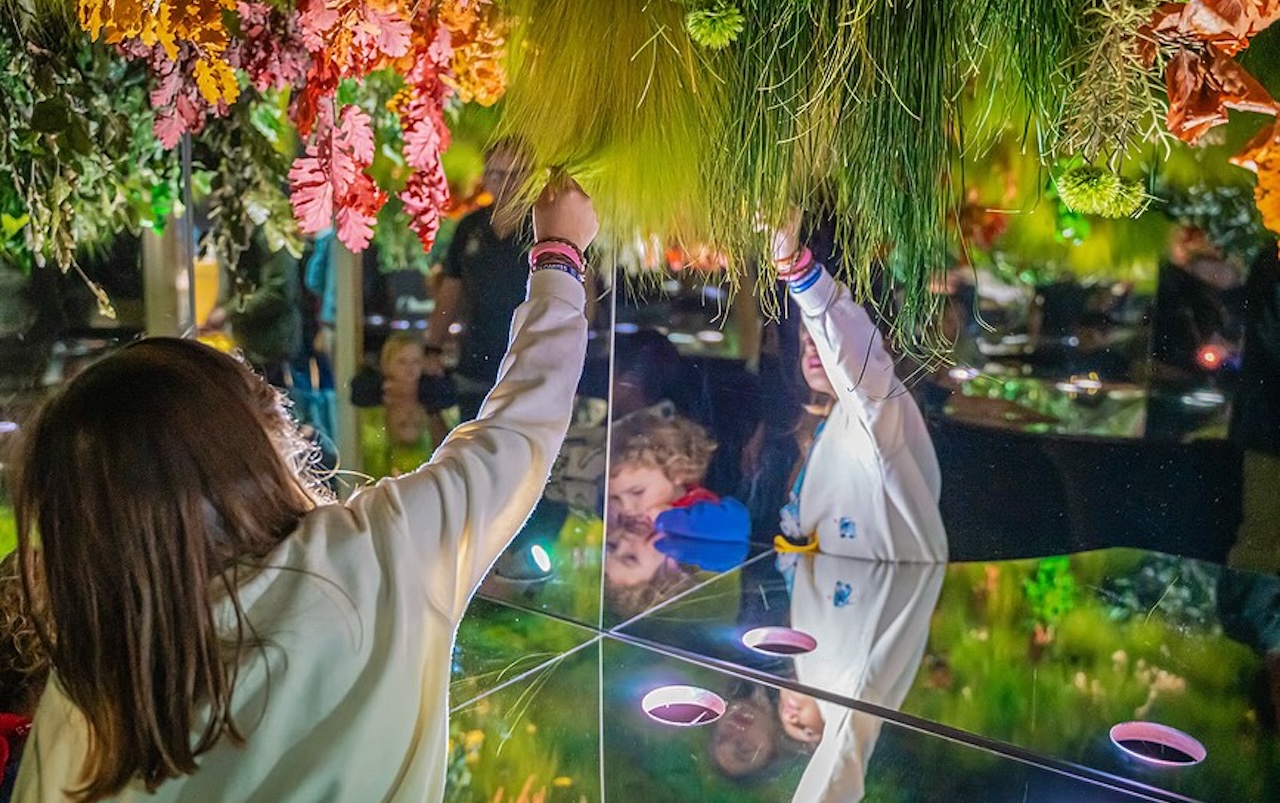
OliOli, meaning “joy” in Hawaiian, lives up to its name as Dubai’s most innovative play museum. Spread across eight themed galleries, it blends art, science and imagination through more than 45 interactive experiences. Children can launch air cannons, build wind-powered cars, splash through the Water Gallery or watch glowing threads dance in Glowtopia.
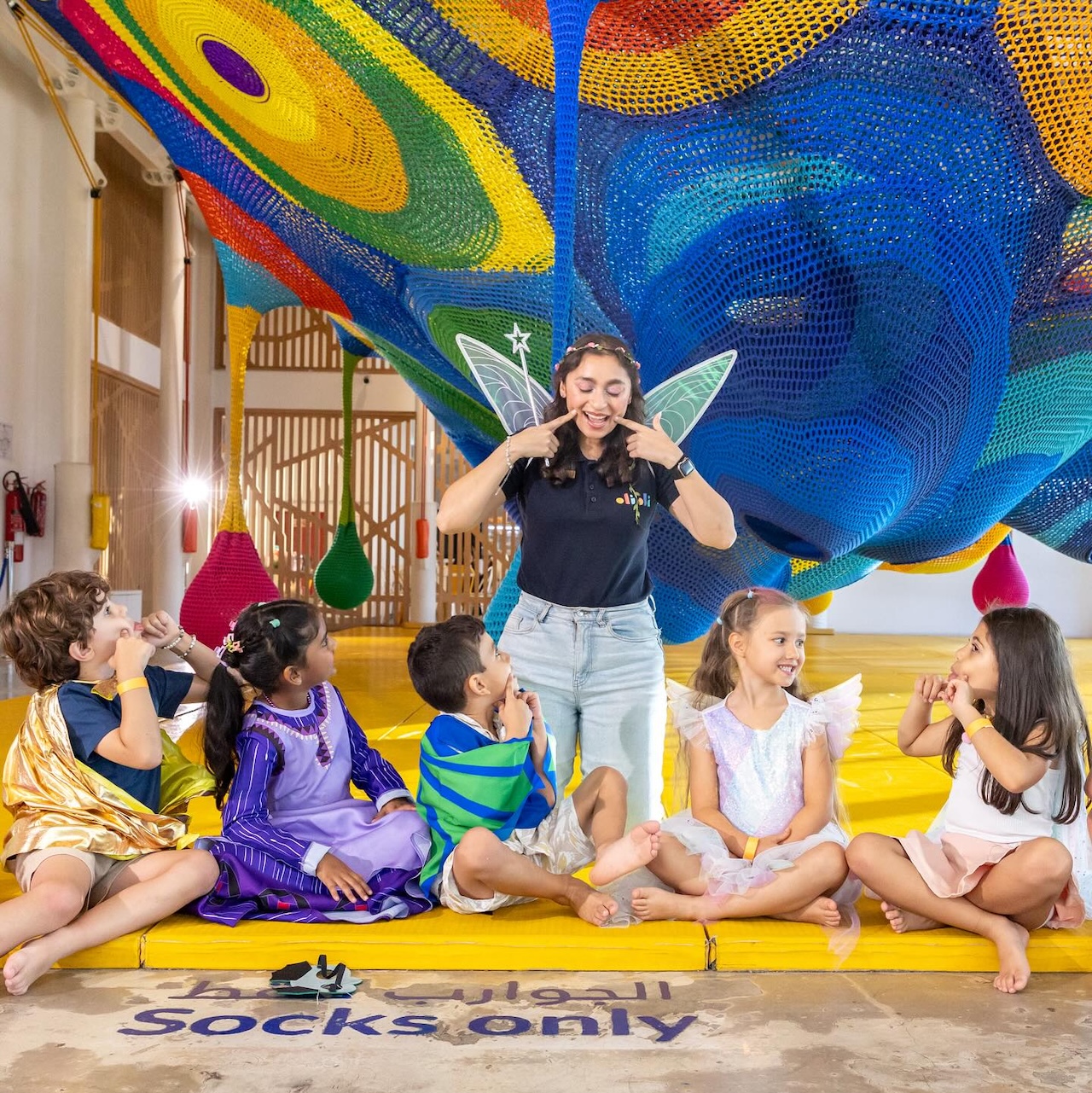
A mix of fun and education await at this multi-zoned museum. Photo: OliOli Children’s Play Museum
Every space, from Toshi’s Nets (a giant, crocheted climbing sculpture) to the toddler-friendly Baby Gallery, is crafted for open-ended exploration. Parents are encouraged to join in, ensuring playtime becomes family time. With an on-site café and workshops, OliOli is pure creative wonder under one roof.
Situated within Children’s Grand Park, the Seoul Children’s Museum invites young minds to “design happiness” through interactive learning. Its six-storey building (three above ground, three below) houses themed zones such as Space, Construction and Nature, each designed to teach through movement and touch.
Children discover more through movement and touch at this museum. Photo: Seoul Children’s Museum
Kids can build structures, experiment with air tunnels, observe ecosystems or explore the mysteries of the cosmos. Exhibits are bilingual (Korean and English), ensuring accessibility for tourists. Affordable admission and family-focused programming – from weekend art classes to science shows – make this museum a must-visit stop on any Seoul itinerary.
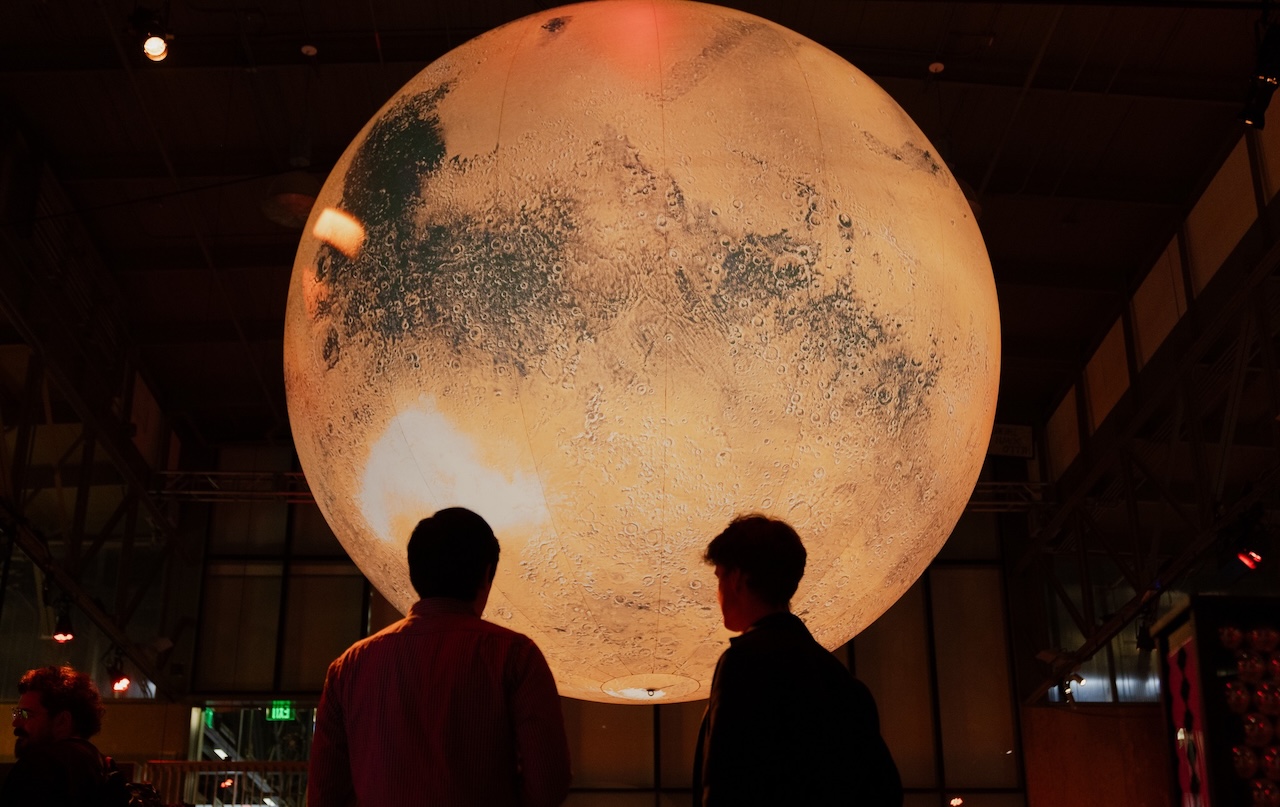
Perched on Pier 15 along the Embarcadero, the Exploratorium is a hands-on playground where science, art and curiosity collide. Founded in 1969 by physicist Frank Oppenheimer, this vast waterfront museum houses more than 700 interactive exhibits exploring perception, physics, biology and light.
Science and art come together at the Exploratorium. Photo: Exploratorium
Kids can crawl through the pitch-dark Tactile Dome, walk across the misty Fog Bridge or tinker with optical illusions and magnetic waves. Even the outdoor deck doubles as a learning lab overlooking the Bay. With its in-house Seaglass Restaurant and Seismic Joint Café, the Exploratorium proves that play and discovery can be deliciously intertwined for visitors of every age.
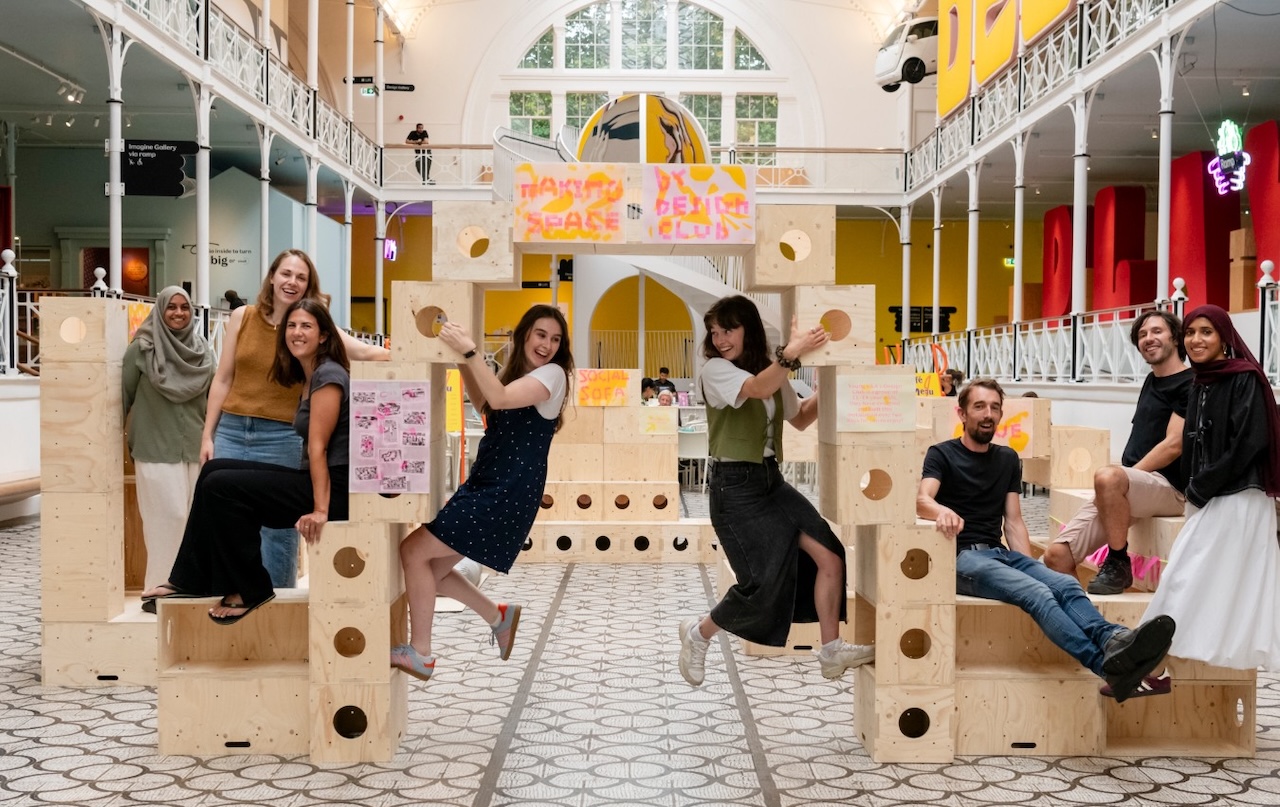
Once the Museum of Childhood, this institution in London’s Bethnal Green district reopened in mid-2023 as Young V&A. It offers a unique insight into how children might have lived, played and thought through the ages. The national collection of childhood-related artefacts that date from the 17th century till the present include the earliest surviving English rocking horse, early dollhouses and miniatures, as well as a seemingly infinite number of games and toys.
See and experience how children played through the ages. Photo: Young V&A
Besides rare hand-crafted objects, baby items – like ceramic milk bottles, wooden walkers and over 6,000 pieces of garments worn by children throughout history – may fascinate visitors young and old. Part of the Victoria and Albert Museum, Young V&A also won the Art Fund Museum of the Year 2024.
10. Saitama: The Railway Museum
Operate and ride on trains from the D51 steam locomotive – like Hiro in the popular children’s TV series Thomas & Friends – to the ultra-modern Shinkansen or “bullet” train on driving simulators. Assemble carriages and pretend to be a station master. Railway fans of all ages will enjoy these hands-on experiences at The Railway Museum where they can also view actual train cars, beautifully designed dioramas and learn about locomotives that date back to the early Meiji era.
Railway Museum Saitama childrens museum Silverkris
The museum in Saitama City – just a half-hour train ride out of Tokyo – was built in 2007 as part of the East Japan Railway Company’s 20th-anniversary memorial project.
Feature image credit: Kirsten Van Santen for Wereldmuseum Junior.
This story was originally written by Mandy Lim Beitler for Singapore Press Holdings in November 2016. It has been updated by Rebecca Wong in October 2025.
For more information on Singapore Airlines’ flights to the above destinations, visit singaporeair.com.
For writer and photographer Lester V. Ledesma, coffee is more than a morning ritual – it’s a lifelong fascination. His latest project, “Brewing Nostalgia”, is a collection of 24 black-and-white film photographs celebrating Southeast Asia’s oldest and most historic coffeehouses. The series will be on display at the Singapore Chinese Cultural Centre concourse from 2 December 2025 to 30 April 2026. More of Ledesma’s work can be seen on Instagram @mykopikamera.
Singapore’scoffee scene is flourishing, with trendy cafés offering every kind of artisanal brew imaginable. Yet behind this contemporary “third-wave coffee” craze lies an older and more storied culture.
You’ll still find it on almost every street corner – the humble kopitiam (kopi means “coffee” and tiam means “store”), born of Chinese immigrants who arrived in Singapore in the late 19th century. Using sock filters and tin kettles, they created a distinctly Southeast Asian style of kopi that remains the backbone of local coffee culture. Today, these old-school coffeehouses are part of daily life, their fragrant brews, simple dishes and unpretentious charm drawing patrons from every walk of life.
Little has changed at these neighbourhood coffeeshops like Keng Wah Sung, over the decades. Photo: Lester V. Ledesma
Though many kopitiams have modernised – some even becoming air-conditioned and upmarket – there are a handful of truly vintage ones that still cling proudly to the old ways. Visiting these time-honoured cafés feels like stepping into another era – and not even the most carefully designed retro spots can match their lived-in nostalgia. Here are six of Singapore’s oldest and most atmospheric kopitiams.
Heap Seng Leong: Influencer-approved
This coffeehouse looks straight out of the 1970s, with its tiled walls and marble-topped tables. An old abacus sits beside rows of reused jars filled with snacks, while the kitchen still relies on a charcoal stove for toasting bread.
Heap Seng Leong retains its seventies style and vibe. Photo: Lester V. Ledesma
Second-generation proprietor Shi Ting Chow took over the shop from his father in 1974 and now runs it solo. Recently, it has become a favourite of vloggers and influencers who come for its old-school vibe – and for a rare local beverage: kopi gu you, jet-black, ultra-strong coffee topped with a slab of butter.
10 North Bridge Road
Peking Room: On borrowed time
The name sounds posh, but Peking Room is as down-to-earth as it gets. Located within one of Singapore’s earliest public housing estates, this corner kopitiam has been serving the neighbourhood since 1967. It’s also a foodie favourite, thanks to its crispy carrot cake and flaky roti prata. Aside from its brightly coloured plastic chairs, little else has changed.
Peking Room will have to move after 60 years when its premises is renovated 2027. Photo: Lester V. Ledesma
Ceiling fans whir lazily above the counter where Mr Lee – the kopi uncle of 14 years – brews coffee with practised ease. Adding to its charm is the adjoining sundry shop, which looks and feels just as old. Visit soon – Tanglin Halt is slated for redevelopment, and this entire block will be vacated by 2027.
49 Tanglin Halt Road
Khong Guan: A prestige address
Regulars say their beloved Khong Guan is as old as the HDB block it occupies – making it one of Singapore’s longest-surviving coffeehouses at around 64 years old. Its building is among the first ever completed by the Housing and Development Board. Yet the kopitiam remains packed, with queues for its signature nasi padang – assorted Malay curries served over rice.
Khong Guan is one of the oldest traditional kopitiams left in Singapore. Photo: Lester V. Ledesma
Old photos and yellowed newspaper clippings line the walls, chronicling Queenstown through the decades. Amid the bustle, the two kopi aunties behind the counter still serve up the classic combo: freshly brewed kopi with half-boiled eggs and kaya toast.
49 Stirling Road
Kang Siang: Spirit of ’68
Gone are the days when the shipyards along the Kallang River sent a steady stream of thirsty workers to Kang Siang, the original coffee stall at the 57-year-old Jalan Benaan Kapal food court. Second-generation owner Quek Soon Kok still remembers delivering coffee to dockworkers back in the day.
KangSiang-kopitiams-SilverkrisFIlm
The neighbourhood now hosts sports facilities and fast-food chains, yet Kang Siang retains a loyal crowd drawn by its thick, syrupy brews and nostalgic prices – a cup of kopi still costs just 90 cents. Look closely behind the counter to spot vintage crockery and brewing tools that have survived the decades.
56 Jalan Benaan Kapal
Ban Kee Guan: Hidden gem
It’s a wonder how this place has stayed under the radar for nearly six decades. Tucked within an aging block of flats near Robertson Quay’s gleaming hotels, Ban Kee Guan feels like a time capsule from the 1980s. There’s the no-frills dining area with its antique metal fridge, the counter stacked with glass mugs and the ever-steaming tin coffee kettle.
Ban Kee Guan stands in contrast to the modernity around it. Photo: Lester V. Ledesma
Elderly patrons quietly read their newspapers while sipping kopi, a scene unchanged for generations. The lone food stall serves excellent fishball noodles, and though there’s no Wi-Fi, the timeless charm – coupled with the easy chatter of regulars – is reason enough to linger.
5 Jalan Minyak
Keng Wah Sung: Neighbourhood favourite
Geylang Road’s heritage shophouses form a fitting backdrop for Keng Wah Sung, a bustling corner kopitiam that’s been around since 1974. It’s the go-to coffee spot for locals from nearby shops and condominiums. Second-generation owner Ong Kee Liam keeps things classic – from the thick, aromatic kopi to the kaya toast made using family recipes.
Enjoy a local kopi throughout the day and night at Keng Wah Sung. Photo: Lester V. Ledesma
The spacious dining area is a mash-up of past decades: wood-lined signboards from the 1980s, handwritten price lists and walls showing their age. True to its roots, Keng Wah Sung opens well before sunrise and doesn’t close until midnight – ensuring that everyone gets their daily caffeine fix.
783 Geylang Road
For more information on Singapore Airlines’ flights to Singapore, visit singaporeair.com.
If you only have three days to spend in Singapore this October, make the Deepavali celebrations and Little India the cornerstone of your itinerary. The yearly festival – which falls on 20 October in 2025 – will see the neighbourhood sparkle with dazzling lights, serving as a backdrop for your jaunts through colourful shophouses and bustling marketplaces. Beyond Little India, there are also plenty of opportunities to explore the city’s other sights, including wildlife parks and temple visits. Here’s how to get the most out of your three days in the Little Red Dot.
Day 1: Foodie hotspots
Given Singapore’s humid climate, it’s important to stay well-fed and hydrated. Start your morning at one of the island’s most beloved hawker centres, Maxwell Food Centre, which is located between Chinatown and the financial district.
Maxwell Food Centre is a great spot to familiarise yourself with Singaporean cuisine. Photo: Vichy Deal/Shutterstock.com
Start the day like a local and order a spicy teh halia (black tea with evaporated milk and ginger) or a thirst-quenching cup of freshly squeezed sugarcane juice from the drink stalls. With such a packed itinerary, you’re going to want to fuel up with something substantial so opt for a piping hot and fiery red plate of mee goreng (fried noodles) from Maxwell Food Centre’s line of Indian-Muslim stalls. After a hearty breakfast, take a short stroll down Maxwell Road to the Singapore City Gallery at the URA Centre. A highlight of the upgraded gallery is the large model showing past, current and future developments on the island. You can also see the progress of the Little India enclave as it grew over the years.
To work up an appetite for lunch, take a stroll to the nearby Duxton Hill neighbourhood where you’ll come across Duxton Reserve. Housed within unified former 19th-century heritage shophouses, the hotel celebrates its Chinatown location through dramatic gold fans, oriental screens and calligraphy wallpaper set against bold hues of black and gold. Practically next door, the delightfully kitschy Xiao Ya Tou offers a unique mod-Sin menu which highlights contemporary takes on classic Singaporean dishes like Hokkien mee and beef kway teow.
Xiao Ya Tou offers quirky takes on classic Singaporean dishes. Photo: Xiao Ya Tou
After lunch, pay a visit to the nearby Thian Hock Keng, the oldest Chinese temple in Singapore. Built in 1839 to honour a sea goddess, its location was once at the waterfront before land reclamation moved it further inland. The temple is known for its traditional architecture and pavilions arranged around a central courtyard. Explore its interior before taking a short walk to Yixing Xuan Teahouse to sample and buy premium Chinese and Taiwanese teas.
Once you’ve explored the temple, it’s just a short walk to the charming Keong Saik Road where you’ll find Thevar, a modern Indian restaurant helmed by Penang-born chef Mano Thevar that clinched two Michelin stars in 2022. While the menu here remains anchored in traditional Indian flavours from the Malay Peninsula, the presentation is undeniably modern. Lunch and dinner menus are available from $298 per diner. Finally, round off the day with a nightcap at The Elephant Room which offers a range of intriguing cocktails inspired by India’s traditional flavours.
Day 2: Cultural immersion
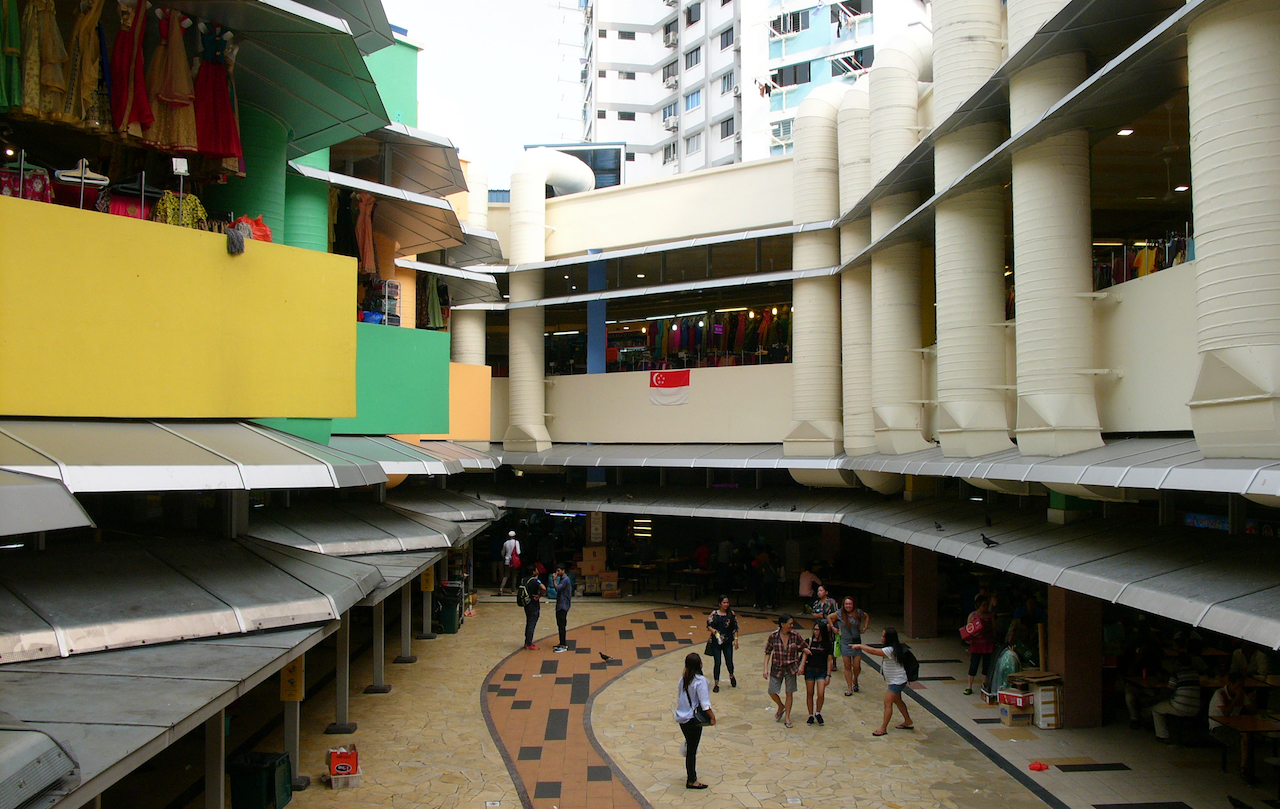
The Hindu festival of Deepavali celebrates the triumph of good over evil. Here, the festive event is marked by a public holiday (20 October, 2025) and sees parts of the city festooned in bright lights. After a leisurely breakfast at your hotel, head to Tekka Centre at the bottom end of Little India. This pastel building with shops and a hawker centre also houses one of the city’s most popular wet markets and offers a dazzling array of Indian food at remarkable prices.
Tekka Centre offers a vast variety of Indian food at affordable prices. Photo: Sultonyohe/Shutterstock.com
After this, head up Serangoon Road to Sri Veeramakaliamman Temple, known for its colourful entrance gopuram (tower). The temple is dedicated to the goddess Kali, the destroyer of evil, chosen by early Indian settlers to help them feel safe in their new homeland.
Sri Veeramakaliamman Temple’s colourful gopuram. Photo: Ronnie Chua/Shutterstock.com
Have lunch at the nearby Ananda Bhavan – open 24 hours – which specialises in vegetarian South Indian dishes like idli, dosa and appam. Alternatively, head to Mustard at Race Course Road where you can get a taste of authentic Bengali food. The restaurant also claims to be the first in Singapore specialising in the cuisine.
Walk off all that food at the Indian Heritage Centre. The angular four-storey glass and concrete structure examines the heritage of the Indian diaspora, tracing its origins and influences through a series of thematic galleries. Little India’s sole cinema showing Indian films – Rex Cinema – sadly closed a few years ago, but if you want to catch the latest Bollywood and South Indian blockbusters, you can take a quick cab ride to Carnival Cinemas in Golden Mile Tower.
Take in a bit of culture at the Indian Heritage Centre. Photo: r.nagy/Shutterstock.com
After your flick, get a taxi back to Serangoon Road after dark to enjoy the festive lights strung above the 1.5km stretch of road (the lights will remain until 9 November 2025). If you visit on or before 20 October, 2025, browse the festive markets at Campbell Lane and on Serangoon Road.
27 Degrees West blends traditional flavours and innovative new takes along Orchard Road. Photo: 27 Degrees West
For dinner, take another short cab ride to ADDA, a modern Indian restaurant in Singapore with a menu that puts contemporary renditions of classic street food at the forefront. Standout dishes include the Bombay-vada pav sliders, potli samosas and the Singapore-Indian fusion dish charred laksa salmon. Another option is 27° West at the edge of Orchard Road. With a menu by celebrity chef Varun Inamdar that features a modern take on traditional flavours and equally dynamic cocktails, this casual restaurant-bar is a great way to end the day in one of Singapore’s most popular shopping districts.
Day 3: On the water
In this island nation, seas and rivers are inescapable, offering novel ways to take in the sights of the city. The morning presents you with two options, depending on the kind of adventure that floats your boat. Your first choice is to wake up leisurely and take a taxi to River Wonders, a wildlife park in the greater Mandai Wildlife Reserve family that focuses on riverine habitats and is home to 11,000 animals including the threatened Mekong giant catfish.
Discover some of Asia’s most elusive creatures at River Wonders. Photo: Sheri Armstrong/ Shutterstock.com
Alternatively, fuel up with coffee, pandan pancakes and more at the casual Tolido’s Espresso Nook. Suitably charged, head over to the Singapore Sports Hub water sports centre to rent a kayak and paddle around the Kallang Basin; certified kayakers can venture further down alongside Gardens by the Bay, affording views of the gardens’ glass domes and otherworldly Supertrees, with Marina Bay Sands and the business district in the backdrop(photo identification is required for each visitor).
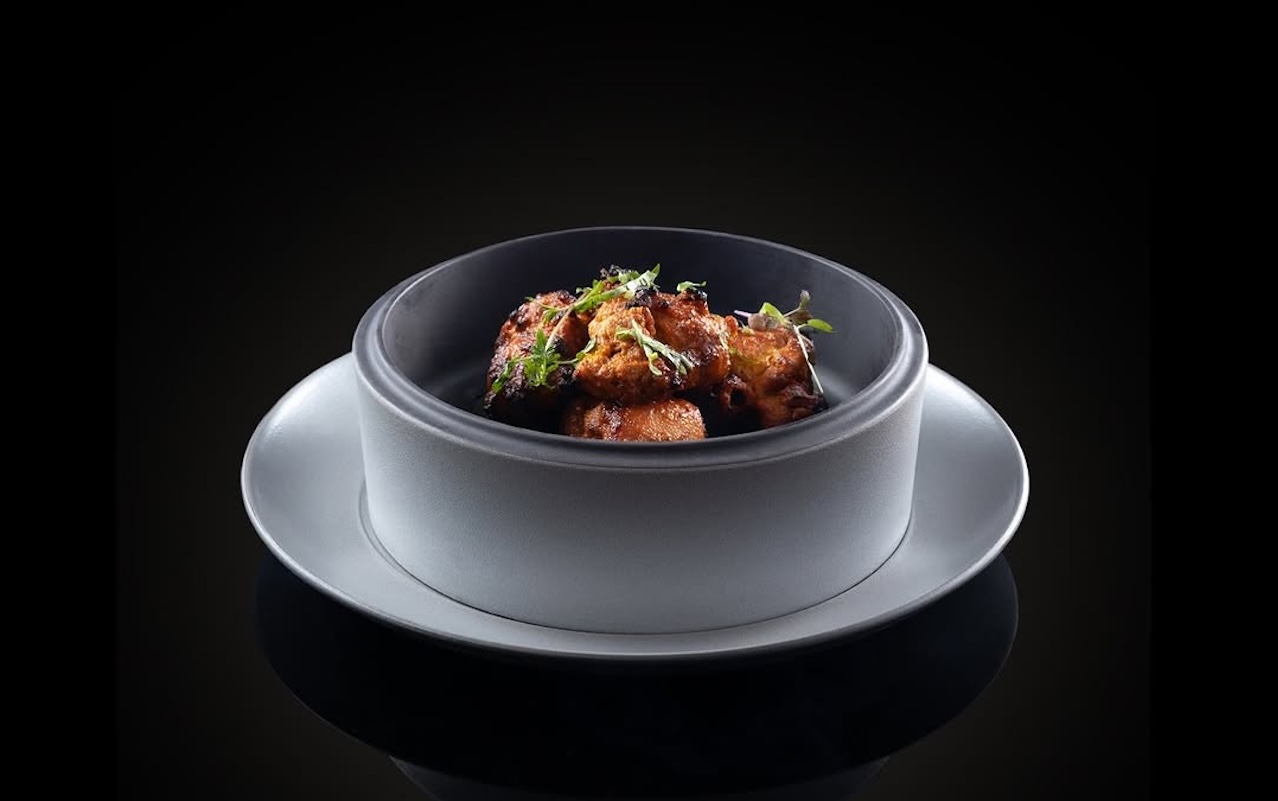
As a reward for your efforts, hop in a cab and make for Yantra at Tanglin Mall. This contemporary Indian restaurant is led by chef Pinaki Ray and culinary historian Pritha Sen, and boasts a menu that showcases niche ingredients from across Southeast Asia. In addition to well-executed classics like the Bolgatty fish fry and the murgh ka sula (charcoal barbecued chicken), you’ll also find modern creations like the keema pao (a soft bun stuffed with spiced minced mutton).
Murg ka sula is an ancient barbequed charcoal-chicken recipe originating in Rajasthan. Photo: Yantra
After a hearty meal, return to Little India for some souvenir shopping. The stretch of Serangoon Road closest to Little India MRT is replete with saree and tailor shops that offer ready-to-wear items as well as custom-made Western-Indian suits. If you’re flummoxed by the options, Dakshaini Silks is a great place to start thanks to their helpful and knowledgeable staff.
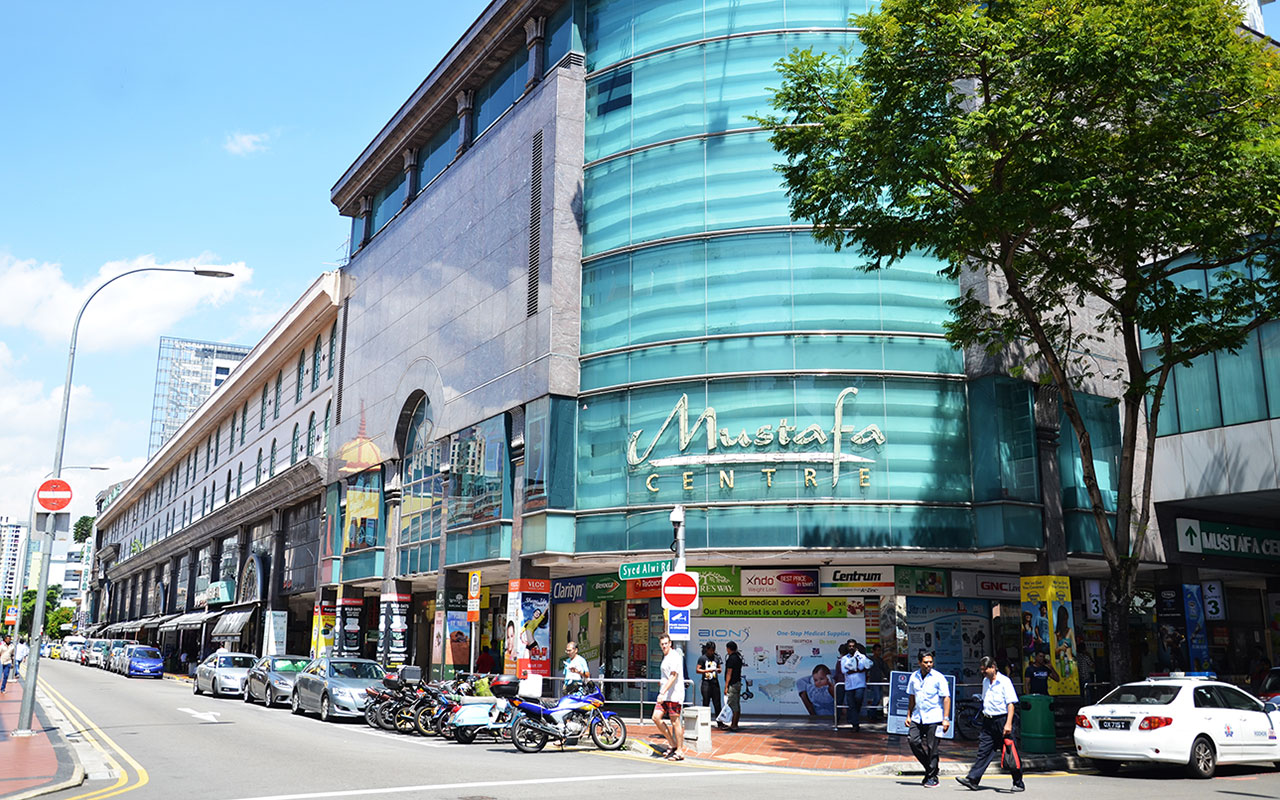
Of course, no shopping trip in the neighbourhood is complete without a visit to its most famous 24-hour shopping destination: Mustafa Centre. If you’ve been inspired by the Indian cuisine you’ve tried so far, the department store’s spice section is one of the best places to stock up for culinary experimentation at home. In addition, you’ll find a wide variety of products including watches, fountain pens, electronics and sports equipment.
Mustafa Centre is open 24-hours daily. Photo: Tang Yan Song/Shutterstock.com
End your three-day adventure with dinner and drinks at Firangi Superstar, one of the city’s buzziest restaurants (reservations are essential). Step in and it’s immediately apparent that it takes a maximalist approach to its cinematic portrayal of India. The restaurant features four themed spaces that invoke different facets of the country’s history.
The menu offers elevated takes on Indian classics like tandoori lamb, a Bengali-inspired salt-baked seabass and even a vegetarian tandoori spiced eggplant. After dinner, sink into the plush chairs at the “Officer’s Lounge” and sip on unique Indian-inflected cocktails like the Pesha Negroni which is crafted with banana peel rum, mace, vermouth and Aperol.
Feature image: Pete Burana/ Shutterstock.com
This article was originally published in the November 2018 issue of SilverKris magazine written by Sanjay Surana. It was significantly updated in October 2025 by Dinesh Ajith.
For more information on Singapore Airlines’ flights to Singapore, visit singaporeair.com.